Toilet leaking from the base in Tampa? The 5 most common causes — wax ring, loose bolts, cracked flange, cracked bowl, condensation — and exactly how to fix each one.
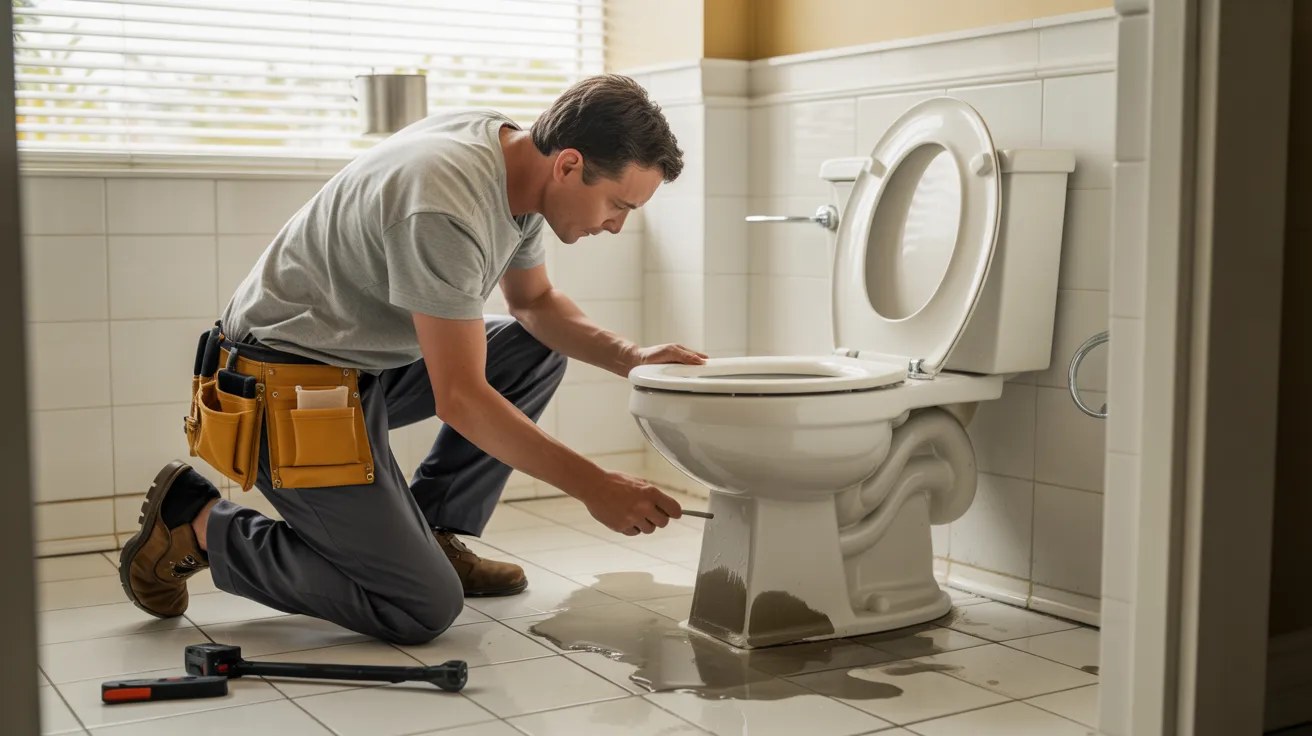
Water pooling around the base of your toilet is one of those problems that's easy to ignore for a few days — and expensive to ignore for a few months. In Tampa Bay homes, a slow toilet base leak often goes unnoticed until the subfloor beneath the tile is soft, the drywall at the base of the bathroom wall is stained, or there's a mold smell that won't go away. Here's what actually causes a toilet to leak at the base, how serious each cause is, and what the fix looks like.
5 Common Causes of a Toilet Leaking from the Base
1. Worn or Failed Wax Ring
The wax ring is a soft wax seal that sits between the bottom of the toilet horn (the outlet at the base of the toilet) and the toilet flange set into the floor. It creates a watertight, airtight connection that prevents sewer gases and waste water from escaping at the floor level. Wax rings typically last 20–30 years — but in Tampa's heat and humidity, toilets installed on concrete slab homes can develop micro-movement over time that breaks the wax seal gradually.
Symptoms of a failed wax ring: water appears at the base only when the toilet is flushed (not between flushes), the water may be slightly discolored from waste, and you may notice a sewer smell — especially in bathrooms that aren't used daily. This is the most common cause of toilet base leaks in Tampa Bay homes and accounts for the majority of the toilet calls we get.
Wax ring replacement is a plumbing fixture job we handle across Tampa Bay — see what's included: Toilet Installation & Repair in Tampa
2. Loose or Corroded Toilet Bolts
Two closet bolts run up through the toilet base and thread into the toilet flange embedded in the floor. They're secured with washers and nuts at the base of the toilet. Over time — especially in Florida's high-humidity environment — these bolts corrode, the nuts loosen, and the toilet develops a slight rocking motion that eventually breaks the wax seal beneath it.
To check: grab the toilet at the rim and gently rock it front to back and side to side. Any movement beyond a small amount is a problem. If the bolts are loose but not corroded, tightening the nuts (carefully — overtightening cracks porcelain) may stop the leak without replacing the wax ring. If the bolts are corroded through, the toilet needs to come off for new bolts and a fresh wax ring.
3. Cracked Toilet Bowl or Base
Hairline cracks in the porcelain at the base of the toilet bowl can leak slowly and be nearly invisible until water damage appears at the floor or wall. Cracks can develop from: thermal stress (cold water in a hot bathroom), impact from objects dropped on the toilet, or simply age and material fatigue in older cast-iron-era toilets still found in some Seminole Heights and South Tampa homes.
A cracked toilet bowl cannot be repaired — the toilet must be replaced. The silver lining: a crack that forces a toilet replacement is an opportunity to upgrade to a water-efficient comfort-height model, which most Tampa homeowners find much more comfortable and saves on water bills.
4. Faulty or Damaged Toilet Flange
The toilet flange is the fitting that sits inside the drain pipe in your floor and provides the surface the wax ring seals against and the closet bolts anchor to. Flanges are made of PVC, ABS, or cast iron depending on the era and type of your home's drain system. In older Tampa homes — particularly those built before 1970 with cast iron drain lines — flanges corrode, crack, or drop below the finished floor level as tile is added over years of renovation.
A flange that is cracked, broken, or sitting more than 1/4" below the finished floor surface will cause any wax ring to fail eventually. Flange repair or replacement is more involved than a simple wax ring swap — it requires access to the drain line and may require cutting the floor in CBS (concrete block slab) homes. This is the cause homeowners most frequently misdiagnose: they replace the wax ring themselves and the toilet leaks again within weeks because the flange was the real problem.
5. Condensation (Not Actually a Leak)
In Tampa's summer months — when outdoor humidity regularly hits 90%+ and air conditioning keeps bathroom interiors in the low 70s — the cold outer surface of a toilet tank sweats heavily. This condensation drips down the outside of the tank and puddles on the floor at the base of the toilet, creating the appearance of a leak from the bottom. Unlike a real base leak, condensation water is clean (no discoloration or odor) and appears throughout the day, not just after flushing.
The fix is improving bathroom ventilation (run the exhaust fan during and after showers), insulating the inside of the tank with a tank liner kit, or in severe cases, installing an anti-sweat valve on the supply line. In most Tampa homes, improving airflow with a properly sized exhaust fan is the most effective long-term solution.
What to Do Immediately If Your Toilet Is Leaking at the Base
Don't wait to diagnose the cause before taking these steps:
- Turn off the water supply: The shut-off valve is behind and below the toilet on the wall. Turn it clockwise until it stops. This stops water from refilling the tank after each flush
- Blot and dry the floor: Absorb standing water immediately with towels. Water sitting on a tile floor seeps into grout lines and reaches the subfloor below — in Tampa slab homes, that subfloor is typically cement board or plywood over concrete, both of which hold moisture and grow mold
- Don't flush: If the toilet is still draining (bowl empties when flushed), you can still use it once or twice for emergencies by manually pouring water into the bowl — but every flush without a working seal dumps waste-contaminated water under your floor
- Ventilate: Open the bathroom window and run the exhaust fan to start drying the subfloor area through the gap at the base of the toilet
- Document: Take a photo of the leak location and note when it appears (only after flushing vs. all the time) — this helps the technician diagnose faster
Moisture under a bathroom floor can cause drywall and subfloor damage that spreads fast. See what water damage repair looks like: Storm Damage Home Repairs in Tampa: What to Fix First
How to Fix a Toilet Leaking from the Bottom
Replacing the Wax Ring — The Most Common Fix
A wax ring replacement is a straightforward job for someone with plumbing experience, but it requires removing the toilet entirely — and a toilet in a Tampa home weighs 60–100 lbs. Here's what the job involves:
- Step 1 — Remove the toilet: Shut off water supply, flush to empty tank and bowl, disconnect the water supply line, remove the nuts from the closet bolts, and lift the toilet straight up off the flange. Set it on a tarp or cardboard
- Step 2 — Inspect the wax ring and flange: Scrape off the old wax from both the toilet horn and the flange. Inspect the flange for cracks, gaps, or low spots relative to the finished floor. If the flange is damaged, repair or replace it before setting new wax
- Step 3 — Install the new wax ring: Press a new wax ring onto the toilet horn (wax side facing away from the toilet) or onto the flange. Avoid wax rings with plastic extensions unless the flange is below floor level — standard rings work better for most installations
- Step 4 — Reset and test: Lower the toilet carefully onto the flange, aligning the bolt holes with the closet bolts. Press firmly and evenly — do not rock the toilet into position. Hand-tighten the nuts, alternate sides, and stop when snug. Reconnect supply, turn water on, flush 3–4 times and check for any seepage at the base
When to Call a Professional for a Toilet Base Leak in Tampa
Call a handyman or plumber rather than DIYing when:
- You replaced the wax ring yourself and it leaked again within weeks — the flange is likely the problem and needs assessment
- The toilet rocks significantly and the bolts are corroded through — bolt replacement requires removing the toilet
- There's visible damage to the floor around the toilet base (soft spots, discoloration, grout cracking) — subfloor assessment is needed before resetting the toilet
- You can see or smell mold at the base of the toilet or at the wall behind it — mold in a bathroom slab environment can spread into the wall cavity quickly
- The toilet is more than 15–20 years old and this is the second or third wax ring — replacement is often more cost-effective than continuing to service an aging fixture
- The flange appears to be cast iron and is at or below floor level — this requires a flange repair kit or flange riser and is not a first-time DIY job
Water damage around a toilet base can spread into walls quickly in Florida's humid climate. See how to catch and stop it: Florida Humidity & Your Home: Preventing Mold and Damage
How to Prevent Future Toilet Base Leaks
- Check for wobble annually: Grab the toilet rim and test for any rocking — catching a loose bolt early prevents wax ring damage
- Inspect the base caulk: Most toilets are caulked at the floor line. Cracked or missing caulk lets cleaning water seep under the base and is often mistaken for a leak
- Address sweating early: If your tank sweats heavily each summer, insulate the inside of the tank or add an anti-sweat valve — ongoing condensation dripping onto the floor can eventually damage the floor finish
- Replace toilets over 20 years old proactively: Older toilets use 3.5–5 gallons per flush vs. 1.28 gpf for modern low-flow models. A proactive replacement eliminates base leak risk and cuts water usage significantly
- Add to your annual maintenance check: Include a quick under-toilet inspection every year — look for discoloration at the grout lines around the base, any soft spots in the floor, and any corrosion on the supply line
Toilet inspection belongs on your annual home maintenance list alongside gutter cleaning, door adjustments, and caulking: Tampa Bay Annual Home Maintenance Checklist
Why Call Fenelon Handyman Services for a Toilet Leak in Tampa
A toilet base leak in a Tampa Bay home has added urgency because of Florida's moisture environment. What takes 2 weeks to cause subfloor damage in a dry climate can take 5–7 days in Tampa's summer heat and humidity. We diagnose and fix toilet base leaks across Tampa Bay — wax ring replacement, bolt replacement, flange assessment, and toilet replacement when the fixture itself is the problem.
We're Temple Terrace based, fully insured, and can usually schedule toilet repairs within 24–48 hours. Text (786) 509-5555 with your zip code and a description and we'll confirm availability quickly.
If the leak has been going on a while, check your bathroom's subfloor and drywall for water damage before the toilet goes back: Water Damage Drywall Repair in Tampa
Replacing rather than repairing? See what a full bathroom remodel costs in Tampa — and what you can do in stages: Bathroom Remodel Cost in Tampa: 2026 Pricing Breakdown
Frequently asked questions
- Why does my toilet only leak when I flush?
- Leaking only during or right after flushing — not between flushes — is the classic symptom of a failed wax ring. The wax ring seals the connection between the toilet horn and the floor flange. When it fails, each flush forces water (and waste) out around the base. Between flushes, nothing is flowing through the seal so nothing leaks.
- Is a toilet leaking from the base an emergency?
- Not a drop-everything emergency, but don't wait more than a day or two. In Tampa's climate, moisture trapped under a toilet base wicks into the subfloor and wall quickly. Turn off the water supply at the shut-off valve immediately, dry the floor, and schedule a repair for the next business day at the latest.
- Can I replace a toilet wax ring myself in Tampa?
- Yes, if you're comfortable: shutting off and disconnecting water supply lines, lifting a 60–100 lb toilet off its flange, scraping old wax, and resetting the toilet level. If the flange is damaged or below floor level, that changes the job significantly. Many homeowners who attempt this themselves call us anyway because the toilet leaks again — usually because the flange wasn't inspected.
- How much does it cost to fix a toilet leaking from the base in Tampa?
- A standard wax ring replacement in Tampa runs $150–$275 for labor and a new ring, assuming the flange is in good condition. If the flange needs repair, add $100–$250 depending on the type and access. A toilet replacement (if the bowl or base is cracked) runs $350–$650 including the new fixture and installation. Call for an accurate estimate — we give written quotes before any work starts.
- How long does a wax ring replacement take?
- For an experienced handyman, a straightforward wax ring swap takes 45–75 minutes: shutting off water, draining the tank, disconnecting supply, removing the toilet, replacing the ring, resetting and leveling the toilet, reconnecting, and testing. Add 30–60 minutes if the flange needs assessment or repair.
- What if the floor around my toilet is soft or damaged?
- Soft floor material around a toilet base means the subfloor has absorbed moisture — likely for weeks or months. The toilet needs to come off, the damaged subfloor material must be dried and replaced, and the flange inspected for damage before the toilet can go back. This is a multi-trade job (handyman + possible flooring contractor) and should not be skipped — resetting a toilet on a compromised subfloor will cause the problem to recur.
Toilet leaking at the base in Tampa? Call or text (786) 509-5555 — same-week scheduling, written estimates, fully insured. Schedule a toilet repair.
Bathroom Remodeling in Tampa, FL
Done-for-you by an insured local crew — free quotes, same-week scheduling.
Need a hand with this in Tampa?
Get a free quote from a 4.8★ local crew. We answer fast and show up on time.
We handle this kind of work across Tampa Bay — including handyman service in Citrus Park, handyman service in Wesley Chapel, handyman service in Zephyrhills and handyman service in Clearwater. See all service areas.