How to install bathroom grab bars safely in Tampa — correct heights, where to place them, how to anchor into studs, tile, and concrete block, weight ratings, and when to call a pro.
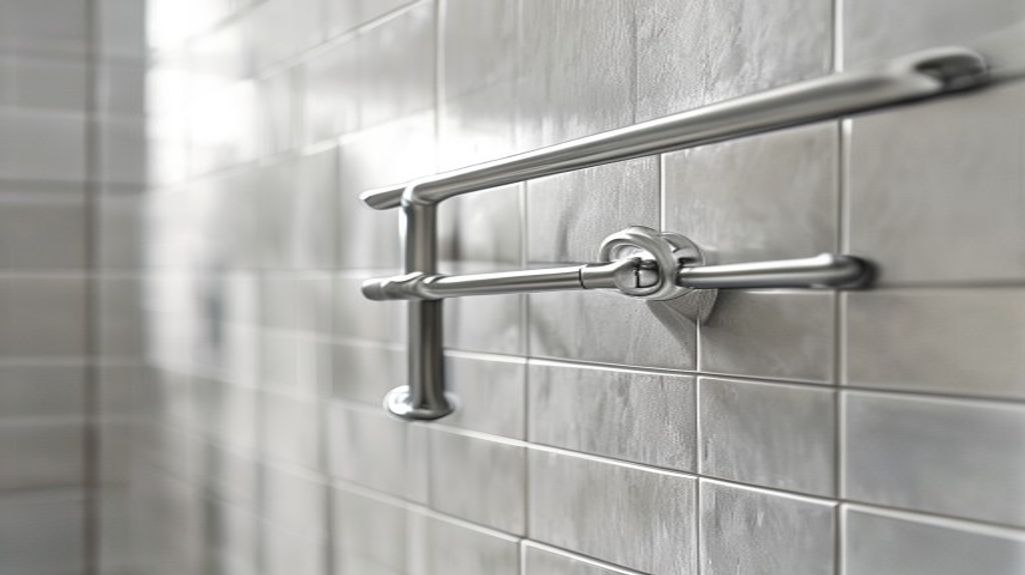
Falls are the leading cause of injury for adults over 65, and the bathroom — wet, hard surfaces, tight spaces — is where most of them happen. A grab bar is one of the cheapest, most effective safety upgrades you can make to a Tampa home, and demand is high here: Tampa Bay has one of the largest 55-plus populations in the country, from Largo and Clearwater retirees to multi-generational families caring for aging parents.
But a grab bar is only useful if it's installed correctly. A bar that pulls out of the wall the moment someone puts real weight on it is worse than no bar at all — because they were counting on it. The entire job comes down to one thing: anchoring it to something that can hold a sudden 250-plus-pound load. Here's how to do it right, including the tile and concrete-block walls that make Tampa bathrooms different.
The One Rule That Matters: Anchor Into Something Solid
Building safety standards call for a grab bar to withstand at least 250 pounds of force in any direction. A person catching themselves mid-fall can briefly exert more than their body weight, so this isn't a number to cut corners on. That load has to transfer into structure — not into a half-inch of drywall or tile.
- Best: anchor into wall studs. Long screws driven into the wood (or metal) framing behind the wall give the strongest, most reliable hold.
- Also strong: a mounting backer or solid blocking installed during a remodel, which lets you place the bar anywhere along the wall.
- Tampa reality — concrete block: many Tampa bathroom walls (especially on exterior walls) are concrete block. Block is extremely strong, but you must use masonry anchors and a hammer drill, not drywall anchors.
- Only if you must: heavy-duty grab-bar-rated toggle anchors (like WingIts or rated togglers) can be used where you genuinely can't hit a stud — but they must be products specifically rated for grab bars, installed exactly to spec. Standard plastic or self-drilling drywall anchors are never acceptable for a grab bar.
Not sure where the studs are behind your bathroom tile? Start here: How to Use a Stud Finder: A Tampa Homeowner's Guide
Where to Install Grab Bars
Placement matters as much as strength — a rock-solid bar in the wrong spot doesn't prevent the fall. The three highest-value locations in a Tampa bathroom:
Inside the shower or tub
A vertical or angled bar near the entry helps with stepping over a tub wall or onto wet tile, and a horizontal bar on the long wall gives support while standing and washing. Angled bars (mounted on a diagonal) suit a range of heights and movements and are popular for walk-in showers.
Beside the toilet
Sitting down and standing up from a toilet is a common fall point. A horizontal bar on the side wall, or a swing-up bar where there's no adjacent wall, provides the leverage to rise safely.
At the tub or shower entry
The transition in and out — over a threshold, onto a wet surface — is the single most dangerous moment. A vertical bar at the entry gives something solid to hold during that step.
Correct Grab Bar Heights
Accessibility guidelines give clear targets, and they're worth following even in a private home:
- Horizontal grab bars: mounted 33–36 inches above the floor, measured to the top of the bar.
- Toilet-side bars: 33–36 inches high and positioned so the bar extends in front of the toilet for leverage.
- Shower controls/seat bars: coordinate height with the shower seat and controls so the bar is reachable while seated.
- Vertical entry bars: bottom of the bar around 34–36 inches, extending up to a comfortable standing grip.
- Personalize it: in a private home, you can adjust to the actual user's height and mobility. If someone is much taller, shorter, or uses a wheelchair, fit the bar to them — the guidelines are a starting point, not a hard rule for a private residence.
How to Install a Grab Bar Into Studs (Step by Step)
- 1. Locate the studs. Use a stud finder to mark the framing. Position the bar so at least one (ideally both) mounting flanges land on a stud.
- 2. Mark the mounting holes. Hold the bar at the chosen height, level it, and mark the screw holes that align with studs.
- 3. Drill pilot holes. Through tile, start with a carbide or diamond bit at low speed to get through the glaze without cracking it, then switch to a wood bit for the framing. Tape over the spot first to keep the bit from wandering.
- 4. Seal the openings. In a wet area, run a bead of silicone into each hole and behind the flange before mounting — this keeps water from getting into the wall around the screws.
- 5. Fasten with the right screws. Use the manufacturer's stainless grab-bar screws (typically #12 or 1/4-inch) long enough to get solid bite into the stud — usually 2.5–3 inches accounting for tile and wallboard thickness.
- 6. Test it hard. Once mounted, pull and push on the bar with real force — lean your weight on it. It should not flex, shift, or creak. If it moves at all, stop and re-anchor.
Installing on Tile Over Concrete Block (the Tampa Case)
Many Tampa shower walls are tile set over concrete block or mortar bed. There's no stud to find — but block is excellent for grab bars when anchored correctly:
- Drill through the tile with a diamond or carbide bit, then through to the block with a masonry bit and a hammer drill.
- Use masonry anchors rated for the load — sleeve anchors or heavy-duty Tapcons into solid block hold extremely well.
- Seal every penetration with silicone — keeping water out of the wall is critical in a wet, humid Tampa bathroom.
- Go slow on the glaze. Cracking a shower tile turns a one-hour job into a tile-repair job. Low speed, light pressure, and a fresh bit make the difference.
Cracked or loose shower tile around the install? We handle that too: Tile Repair Services in Tampa
When to Call a Pro
Grab bars are within reach for a confident DIYer on a wall where studs are easy to find. Call a professional when:
- The wall is tile over block and you don't have a hammer drill and masonry anchors.
- There's no stud where the bar needs to go and it'll depend on heavy-duty anchors — getting this wrong has real safety consequences.
- It's for someone who has already fallen or has significant mobility loss — the margin for error is zero.
- You're outfitting a whole bathroom for aging-in-place (multiple bars, a shower seat, comfort-height toilet, threshold ramp) and want it done as a coordinated, code-aware project.
A typical grab bar installation in Tampa runs $100–$250 per bar installed, depending on wall type and whether tile or block drilling is involved — a small price for hardware someone will trust with their full weight.
Planning a full aging-in-place bathroom? See how we approach safe, accessible bathroom updates: Bathroom Remodeling & Accessibility in Tampa
Grab bars are the first move — the full room-by-room plan for making a Tampa home safe to grow old in is here: Aging in Place: Home Modifications for Tampa Seniors
Frequently asked questions
- Can a grab bar be installed without hitting a stud?
- Only with heavy-duty anchors specifically rated for grab bars (such as toggle-style grab-bar anchors), installed exactly to the manufacturer's spec. Standard drywall anchors are never safe for a grab bar. Whenever possible, anchor into a stud or into concrete block with masonry anchors — it's far more reliable, and a grab bar has to hold a sudden fall.
- How much weight should a grab bar hold?
- Safety standards call for a grab bar to withstand at least 250 pounds of force in any direction. Because someone catching a fall can briefly exert more than their body weight, the anchoring has to be solid — into framing or block, not drywall.
- What height should bathroom grab bars be?
- Horizontal grab bars are typically mounted 33–36 inches above the floor (measured to the top of the bar). In a private home you can adjust to the specific user's height and mobility, but 33–36 inches is the standard starting point.
- Can you install grab bars on a tiled Tampa shower wall?
- Yes. Many Tampa showers are tile over concrete block, which holds grab bars very securely when drilled with the right bits and anchored with masonry anchors. The keys are drilling through the tile glaze without cracking it and sealing every hole with silicone to keep water out of the wall.
- Does Fenelon Handyman install grab bars and bathroom safety equipment?
- Yes — grab bars, shower seats, comfort-height toilets, handheld showers, and threshold ramps are some of our most requested aging-in-place jobs across Tampa Bay, on tile, drywall, and concrete block. We anchor every bar to hold real weight and test it before we leave. Call or text (786) 509-5555.
Need a grab bar or bathroom safety equipment installed right — and tested to hold real weight? Call or text (786) 509-5555 for a fast, insured Tampa handyman. Get a free grab bar estimate.
Senior Home Modifications in Tampa, FL
Done-for-you by an insured local crew — free quotes, same-week scheduling.
Need a hand with this in Tampa?
Get a free quote from a 4.8★ local crew. We answer fast and show up on time.
We handle this kind of work across Tampa Bay — including handyman service in Zephyrhills, handyman service in Clearwater, handyman service in St Petersburg and handyman service in New Tampa. See all service areas.