Brown or yellow water stain on your ceiling? Here's what causes ceiling stains in Tampa homes — AC, roof, and plumbing leaks — how to find the source, and how to fix it so it never bleeds back.
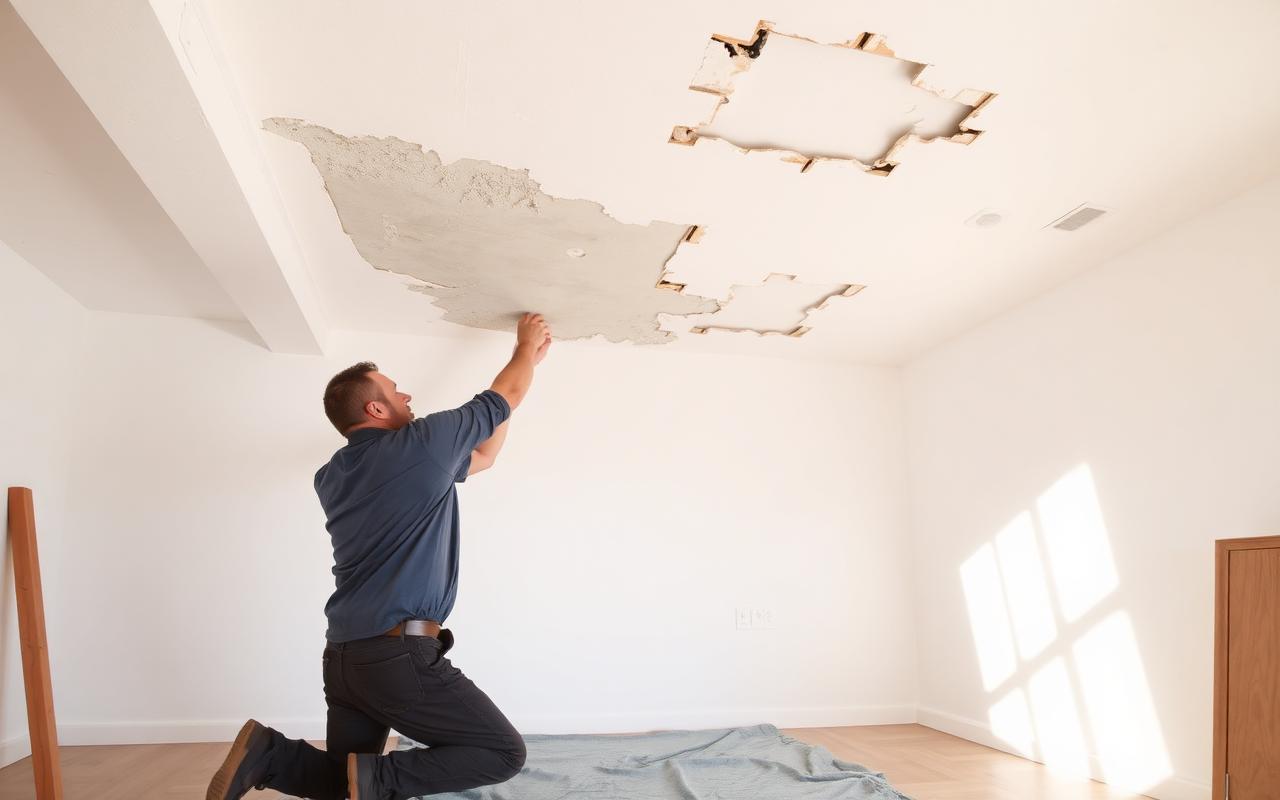
A water stain on the ceiling is never just a cosmetic problem. That brown or yellow ring means water has passed through — from the roof, the AC, or a pipe above — and even if the spot looks dry today, the source is often still there waiting for the next rain or the next humid week. The biggest mistake Tampa homeowners make is grabbing a can of paint and rolling over it. The stain bleeds right back through, and the moisture that caused it quietly grows mold. Here's how to find what's actually leaking, fix the stain so it stays gone, and know when it's a job for a pro.
What a ceiling stain is actually telling you
Water moves until it finds the lowest point it can escape, then it drips and leaves minerals and dirt behind as it dries — that's the brown ring. The stain is almost never directly below the leak; water can travel along a rafter or the top of the drywall and show up several feet away. So the stain marks where the water exited, not necessarily where it got in. That's why step one is always finding the source, not covering the symptom.
The likely sources in a Tampa home, most common first
- AC condensate — if the stain is under or near the air handler (often in an attic, closet, or garage), a clogged condensate drain line overflowing its pan is the number-one cause in Florida summers.
- Roof leak — stains near an exterior wall, a ceiling penetration (vent, skylight, plumbing stack), or that appear and worsen after heavy rain point to the roof. Tampa's storm season makes this common.
- Plumbing leak — a stain directly under a bathroom, kitchen, or laundry on the floor above usually means a supply line, drain, shower pan, or a toilet's wax ring. These often leak a little all the time rather than only when it rains.
- Sweating ductwork — poorly insulated AC ducts in a hot attic can condense Florida humidity and drip, mimicking a roof leak.
How to find the source without guessing
- Map it: is the stain under a bathroom (plumbing), under the attic air handler (condensate), or near the roofline or a roof penetration (roof)?
- Time it: does it appear or grow after heavy rain (roof), after the AC runs hard (condensate), or steadily regardless of weather (plumbing)?
- Go up: with a flashlight, look in the attic above the stain for wet or matted insulation, water tracks down the rafters, a rusted or overflowing AC drain pan, or daylight at the roof deck.
- Touch it (carefully): a stain that's soft, spongy, or sagging is actively wet and at risk of falling — keep people out from under it. A firm, dry, well-defined ring may be from an old leak that's already been fixed.
First and most important: stop the water
Do not start the cosmetic repair until the leak is fixed and the area is fully dry. Sealing and painting over an active leak traps moisture, guarantees the stain returns, and feeds mold. Find and fix the source first — that may be clearing an AC drain line, a roof repair, or a plumbing fix — then move on to the ceiling.
What you'll need
- An oil-based or shellac-based stain-blocking primer (this is the critical material — see Step 3).
- Ceiling paint to match, a brush and a small roller.
- A putty knife or scraper, and lightweight joint compound if the surface flaked.
- Drop cloths, painter's tape, and a fan for drying.
Step 1: Confirm the leak is fixed and the ceiling is dry
Give it time after the source is repaired — drywall holds water. Run a fan, and make sure the stained area is firm and dry to the touch before you prime. If it's still soft, it's not ready, and it may need to come out (Step 5).
Step 2: Scrape and prep
Scrape away any flaking paint, bubbled texture, or loose material around the stain. If the surface is uneven, skim a thin coat of joint compound, let it dry, and sand smooth. Tape and drop-cloth the area — primer and ceiling work drips.
Step 3: Seal with a stain-blocking primer
This is the step everyone gets wrong. A water stain will bleed straight through regular latex paint — and through water-based primer too. You must seal it with an oil-based or shellac-based stain-blocking primer made for water stains. Cover the stain plus a few inches around it and let it dry fully. This seals the discoloration so it can't telegraph through your finish coat.
Step 4: Repaint to match
Once the primer is dry, roll on ceiling paint. To avoid an obvious patch on a flat ceiling, feather the new paint out or, for the cleanest result, repaint the whole ceiling plane corner to corner — ceilings show patches more than walls do, especially under Florida's bright light.
Step 5: If the drywall is soft or sagging, replace it
Priming only works on sound drywall. If the ceiling is sagging, crumbling, or stays soft after drying, the board is compromised and needs to be cut out and replaced — and that section should be checked for mold before new drywall goes up. This is where a quick cosmetic fix turns into a proper repair.
The Florida footnote: mold
Wet drywall plus Tampa humidity grows mold fast — often within 24 to 48 hours. If the stain is large, recurring, or the drywall got saturated, assume mold is part of the picture and don't just seal over it. A musty smell in the room is a strong tell that moisture (and likely mold) is still in the ceiling cavity even if the surface looks dry.
When to call a pro
- The ceiling is sagging or soft — that's a collapse risk and a sign of saturation; keep people clear and get it looked at.
- The source is a roof leak (roofer), an AC system problem (HVAC tech), or a pipe inside a wall or floor (plumber) — fix the source through the right trade.
- The stained area is large, recurring, or smells musty — plan on drywall replacement and a mold check, not just primer.
- You'd rather it just disappear — repairing and repainting water-damaged ceilings is one of our most common Tampa jobs.
Not sure if it's a quick patch or a real repair? Here are the signs: Signs You Need Drywall Repair
A musty smell after a leak means moisture is still in the wall or ceiling: Why Your Florida House Smells Musty
Storm season is prime time for roof-leak ceiling stains — prep guide here: Storm Damage Repair in Tampa
Stained, sagging, or saturated ceiling? See our repair service: Water-Damage Drywall Repair in Tampa
Frequently asked questions
- What causes a brown water stain on the ceiling?
- Water passing through from above. In Tampa homes the most common sources are a clogged AC condensate drain line overflowing, a roof leak (especially after storms), or a plumbing leak from a bathroom or pipe on the floor above. The minerals and dirt in the water leave the brown or yellow ring as it dries.
- Can I just paint over a water stain on the ceiling?
- No — not with regular paint. A water stain bleeds straight through latex paint and even through water-based primer. You have to seal it first with an oil-based or shellac-based stain-blocking primer, then repaint. And you must fix the leak first, or the stain comes right back.
- How do I know if a ceiling water stain is old or new?
- Touch it and watch it. A firm, dry, sharply defined ring that doesn't change is likely an old, already-fixed leak. A stain that's soft or spongy, that grows, or that darkens after rain or AC use is active — the source is still leaking and needs to be found and fixed.
- Is a water stain on the ceiling dangerous?
- It can be. A sagging or soft ceiling is at risk of collapse and means the drywall is saturated. And wet drywall in Florida's humidity can grow mold within a day or two. A small, dry, old stain is mainly cosmetic, but anything soft, spreading, or musty-smelling should be taken seriously.
- Why does my ceiling stain keep coming back?
- Because the leak was never fixed, or the stain was painted over with regular paint instead of sealed. Find and repair the source first — AC, roof, or plumbing — let the area dry, then seal with a stain-blocking primer before repainting. If the drywall stayed wet, it may need to be replaced and checked for mold.
Brown ring or sagging spot on your Tampa ceiling? Call or text (786) 509-5555 — we find the source, repair the drywall, and repaint so the stain is gone for good. Get a ceiling repair quote.
Water Damage Drywall Repair in Tampa, FL
Done-for-you by an insured local crew — free quotes, same-week scheduling.
Need a hand with this in Tampa?
Get a free quote from a 4.8★ local crew. We answer fast and show up on time.
We handle this kind of work across Tampa Bay — including handyman service in Zephyrhills, handyman service in Clearwater, handyman service in St Petersburg and handyman service in New Tampa. See all service areas.