Learn how to install baseboards in your Tampa home — measuring, cutting inside and outside corners, scarf joints, nailing, and caulking for a clean, pro finish.
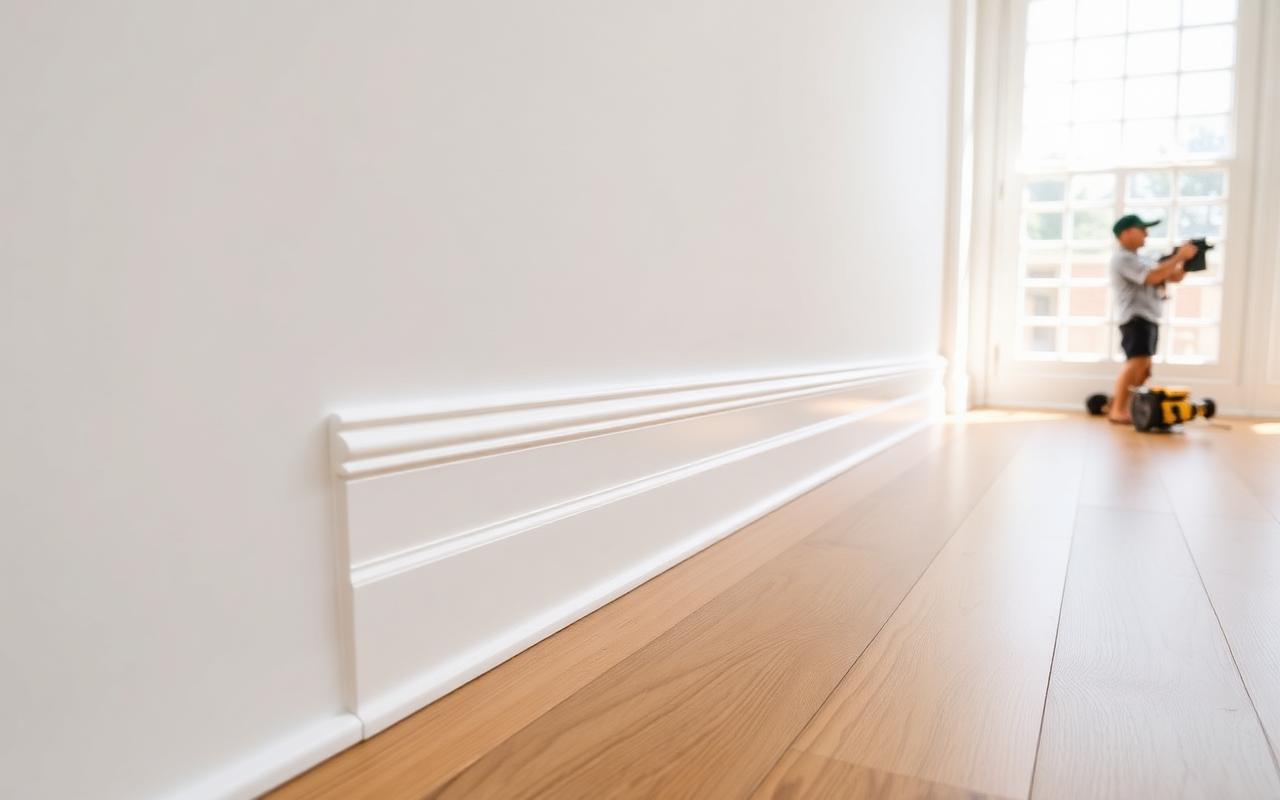
Baseboards are the trim that frames the bottom of every room — and worn, undersized, or paint-clogged baseboards quietly make a whole house look dated. Swapping them for taller, cleaner profiles is one of the most affordable upgrades there is, and it's a great first trim-carpentry project. With a miter saw, a nailer, and some patience on the corners, a motivated DIYer can do a room in an afternoon.
This guide walks through measuring, cutting inside and outside corners, joining long runs, and the caulk-and-fill finish that separates a clean install from an obvious one.
Choosing baseboard for a Tampa home
- Height: taller baseboards (5 1/4 inch and up) read as more upscale; 3 1/4–4 inch is the budget-friendly standard. Match or exceed what's already in the house for a cohesive look.
- Material: primed MDF is smooth, affordable, and the most common choice for painted baseboard in conditioned living areas. Solid wood (pine, poplar) is better for stained trim. For bathrooms, laundry rooms, and any spot that may see moisture, use PVC or a moisture-resistant trim so Florida humidity never swells it.
- Profile: simple modern (square or eased edge) is easy to cut and clean to caulk; ornate colonial profiles look traditional but take more care at the corners.
Tools and materials
- Miter saw (a 10- or 12-inch sliding saw handles tall base easily)
- Brad/finish nailer with 2-inch nails, or finish nails and a hammer with a nail set
- Stud finder, tape measure, pencil, and a coping saw (for coped inside corners)
- Painter's caulk, paintable wood filler, and a sanding sponge
- Construction adhesive (optional, for runs over masonry or uneven walls)
Step 1: Remove old base and prep
Score the caulk line at the top of the old baseboard with a utility knife so you don't peel paint off the wall, then pry the base off gently with a flat bar, working a putty knife behind it to protect the drywall. Pull or drive in any leftover nails, and knock down high spots of old caulk or paint so the new base sits flat.
Step 2: Measure and plan your cuts
Walk the room and map every corner before cutting. Mark which corners are inside corners (the common ones) and which are outside corners (around a closet or a wall return). Plan where long walls will need two pieces joined, and find the studs — mark them above the baseboard line so you know where to nail.
Step 3: Inside corners — cope, don't just miter
Tampa walls are rarely a perfect 90 degrees, so a simple inside miter often leaves a gap. The pro method is a coped joint:
- Run the first piece straight into the corner, square-cut, tight to the wall.
- On the second piece, cut a 45-degree inside miter to expose the profile, then use a coping saw to cut along that profile line, back-beveling slightly so only the front edge contacts.
- The coped end nests over the face of the first piece, hiding small wall inaccuracies and staying tight even if the corner isn't a true 90.
If coping feels like too much for a first project, a 45/45 inside miter still works on square corners — just expect to caulk the joint.
Step 4: Outside corners — matched miters
Outside corners get two matching 45-degree cuts that wrap the corner. Dry-fit first; if the corner is more or less than 90 degrees, nudge both angles a degree or two until the joint closes. A dab of wood glue on the miter keeps it from opening up later.
Step 5: Long walls — use a scarf joint
When a wall is longer than one piece, don't butt two square ends together — that seam always shows. Instead, cut overlapping 45-degree angles (a scarf joint) so one piece laps over the other. Locate the joint over a stud, glue it, and nail through both pieces; once caulked and painted it disappears.
Step 6: Nail it off
- Push the base tight to the floor (a scrap shim under it can help) and nail into the studs near the top and bottom of the board.
- Use two nails per stud on taller base so it can't bow off the wall.
- On wavy walls, a bead of construction adhesive plus nails pulls the base flat. Set any hand-driven nails below the surface with a nail set.
Step 7: Fill, caulk, and paint
This is where it all comes together. Fill the nail holes and any miter gaps with paintable wood filler, sand smooth, then caulk the top edge of the baseboard to the wall and any inside-corner seams. The top caulk line is what makes baseboard look built-in — it erases the shadow gap along wavy drywall. Prime any bare filler and paint (semi-gloss or satin wears best on trim).
When to call a pro
Baseboard is DIY-friendly, but consider hiring out when:
- You're trimming a whole house and want every corner coped tight and every seam invisible — speed and consistency matter at scale.
- You're installing tall, ornate, or stained profiles where every imperfect cut shows.
- Your floors or walls are badly out of level and the base needs scribing to fit.
- You're combining base with new flooring, shoe molding, and door casing as one finished package.
Finishing the top of the wall too? Crown molding pairs perfectly: Crown Molding Installation in Tampa
Need to hit studs cleanly for your nails? Here's how: How to Use a Stud Finder
Replacing the floor first? Pick the right one for Florida: Best Flooring for Florida Homes
Want it done fast and clean? See our baseboard installation service: Baseboard Installation in Tampa
Frequently asked questions
- Should baseboards be coped or mitered at inside corners?
- Coped joints are the pro standard for inside corners because walls are rarely a perfect 90 degrees — a coped end nests over the first board's profile and stays tight even on an imperfect corner. A 45/45 inside miter works on truly square corners but tends to gap and need caulk on out-of-square walls.
- What is the best baseboard material for Florida?
- Primed MDF is the affordable, smooth standard for painted baseboard in conditioned living areas. For bathrooms, laundry rooms, or anywhere moisture is possible, use PVC or moisture-resistant trim so Florida humidity won't swell it. Solid wood is best when you're staining rather than painting.
- Do you nail baseboards into studs or the wall?
- Nail into the studs whenever possible for a solid hold — mark the stud locations above the baseboard line first. Use two nails per stud on taller base, near the top and bottom of the board. On wavy walls, construction adhesive plus nails pulls the base flat to the wall.
- How do you hide the seam where two baseboards meet?
- Use a scarf joint — overlapping 45-degree cuts where one piece laps over the other — instead of butting two square ends together. Place the joint over a stud, glue it, nail through both pieces, then fill and caulk. Done this way the seam disappears after painting.
- Do you have to caulk baseboards?
- For a finished look, yes. Caulking the top edge of the baseboard to the wall erases the shadow gap along wavy drywall and makes the trim read as built-in. Fill the nail holes and miter gaps with wood filler first, then caulk, prime, and paint.
Want new baseboards installed with tight corners and a built-in finish in your Tampa home? Call or text (786) 509-5555 for a free quote. Get a baseboard quote.
Trim Carpentry in Tampa, FL
Done-for-you by an insured local crew — free quotes, same-week scheduling.
Need a hand with this in Tampa?
Get a free quote from a 4.8★ local crew. We answer fast and show up on time.
We handle this kind of work across Tampa Bay — including handyman service in Zephyrhills, handyman service in Clearwater, handyman service in St Petersburg and handyman service in New Tampa. See all service areas.