Thinking about crown molding for your Tampa home? Learn the cost per foot, material options, the easiest DIY approach, and when to hire a trim carpenter.
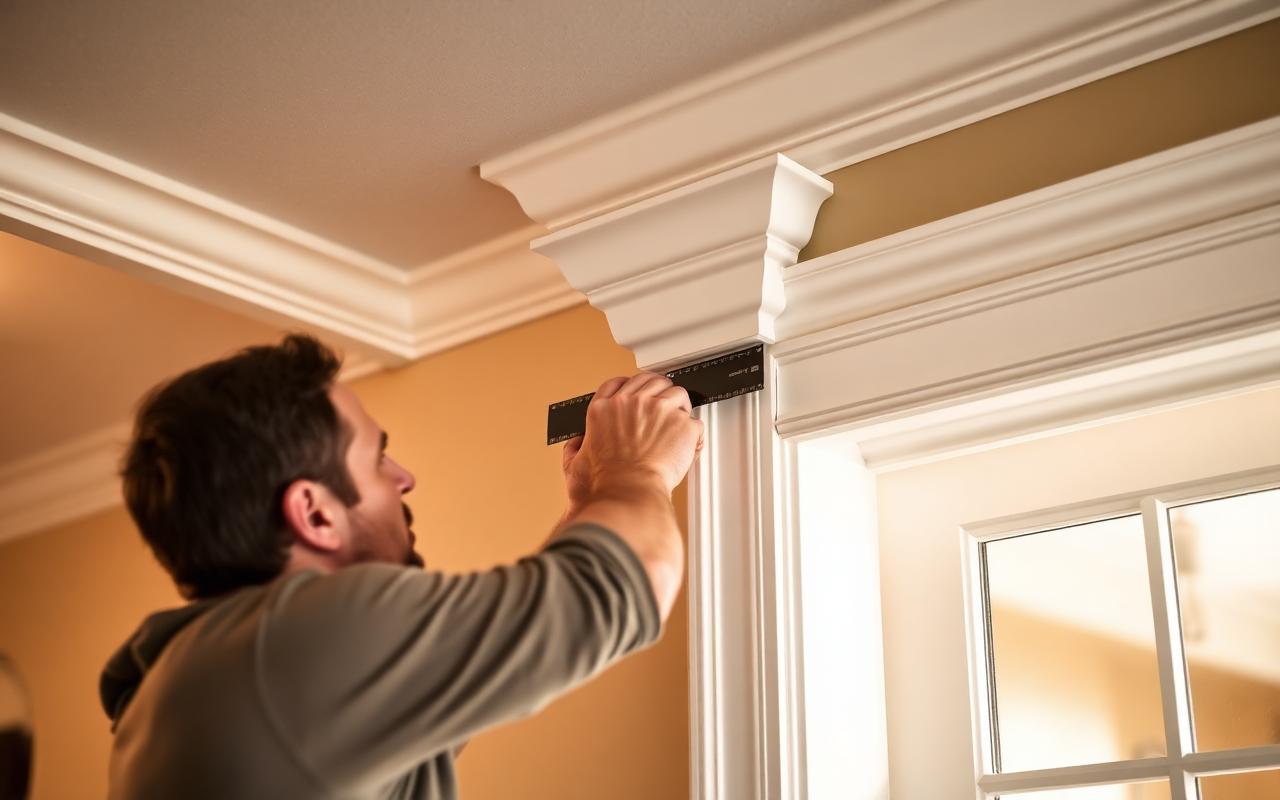
Few upgrades make a room feel more finished than crown molding. It draws the eye up, softens the hard line where wall meets ceiling, and reads as a custom, high-end detail — which is exactly why buyers notice it. For a relatively modest cost, it's one of the highest-impact trim upgrades you can make to a Tampa home.
Here's what crown molding costs in the Tampa area, which materials hold up best in Florida's humidity, and how to install it — including a beginner-friendly method that skips the dreaded compound miter math.
What crown molding costs in Tampa
Crown molding is usually priced by the linear foot, installed. In the Tampa area, expect roughly:
- Material only: about $1–$6 per linear foot depending on type — primed MDF and polyurethane are at the low end, solid wood and ornate profiles at the high end.
- Installed (labor + material): commonly $6–$14 per linear foot for standard profiles in rooms with straightforward corners.
- A typical 12x12 room (about 48 linear feet): often $300–$650 installed for a standard profile.
- Tall ceilings, intricate profiles, stacked/built-up crown, or lots of corners: more, because each adds cuts and labor.
The number of inside and outside corners drives labor more than the wall length does — corners are where the skill (and the time) goes. A simple square room is quick; a room with bump-outs, tray ceilings, or cabinetry is not.
Best crown molding material for Florida homes
Humidity matters here. The material you choose affects how the molding holds up and how easy it is to install:
- Polyurethane (e.g., foam-style crown): lightweight, completely moisture-proof, won't rot or warp, and great for bathrooms or humid rooms. Easy to handle solo. Costs more per foot but installs fast.
- MDF (primed): smooth, paint-ready, and affordable — the most common choice for painted interior crown. It's fine in conditioned living spaces but swells if it gets wet, so keep it out of damp areas.
- Solid wood (pine, poplar): traditional and strong, ideal if you're staining rather than painting. Costs more and can move slightly with humidity swings.
- PVC / cellular composite: waterproof, used where moisture is a real concern. Common for trim that needs to shrug off humidity.
For most Tampa living rooms, bedrooms, and hallways that will be painted, primed MDF or polyurethane is the sweet spot. For bathrooms and laundry rooms, lean toward polyurethane or PVC so humidity never becomes a problem.
How to install crown molding (the beginner-friendly way)
Traditional crown is cut 'on the flat' with compound miter angles, which trips up a lot of DIYers. There are two ways to make it much more approachable: use a crown molding jig (or cut it 'in position' against the saw fence), or use modern corner blocks that eliminate angled cuts entirely.
Tools and materials
- Miter saw (a compound saw helps, but isn't required if you use corner blocks)
- Brad nailer or finish nails and a hammer
- Stud finder, tape measure, and a pencil
- Construction adhesive, painter's caulk, and wood filler
- Crown molding plus inside/outside corner blocks if you're going the no-miter route
Step by step
- Measure each wall and find the studs (and the ceiling joists where you can), marking them lightly along the wall.
- Decide your approach: corner blocks mean every wall run is a simple straight (square) cut between blocks — by far the easiest. If you're mitering, cut a couple of test pieces on scrap first to dial in the angle.
- Run a bead of construction adhesive on the back edges of the molding; this carries much of the load so the nails just hold it while the adhesive sets.
- Set the crown into the corner of wall and ceiling at a consistent spring angle, and nail into studs along the bottom edge and ceiling framing along the top.
- For long walls, plan a scarf joint (overlapping 45-degree cuts) rather than a butt joint so the seam disappears.
- Fill nail holes and any gaps with wood filler, caulk the top and bottom edges to the wall and ceiling, then prime and paint.
Caulk is what makes crown look professional. Even a tight install has hairline gaps along wavy Tampa walls and ceilings — a thin bead of paintable caulk top and bottom makes the whole run read as seamless.
When to hire a trim carpenter
Crown is one of those jobs where the difference between DIY and pro shows. Consider hiring out when:
- You have tall or vaulted ceilings that require working off tall ladders or staging.
- The room has tray ceilings, lots of corners, or you want stacked/built-up crown for a richer profile.
- You're running crown through a whole house and want every corner tight and every seam invisible.
- You want it stained rather than painted — stained wood shows every imperfect cut, so the bar is much higher.
A trim carpenter brings the saw setup, fills and caulks like a pro, and gets corners that look poured-in-place. For a feature room or a whole-home package, it's usually worth it.
Want another wall feature with big impact? Wainscoting is a great pairing: Wainscoting in Tampa
Finishing the bottom of the wall too? Here's the baseboard guide: How to Install Baseboards
Looking for a no-build accent instead? Try an accent wall: Accent Wall Ideas for Tampa Homes
Want it done right the first time? See our trim carpentry service: Trim Carpentry in Tampa
Frequently asked questions
- How much does crown molding cost per foot installed in Tampa?
- Installed crown molding in the Tampa area typically runs about $6–$14 per linear foot for standard profiles, including labor and material. A standard 12x12 room (around 48 linear feet) often falls in the $300–$650 range. Tall ceilings, ornate or built-up profiles, and lots of corners push it higher.
- What is the best crown molding for Florida humidity?
- Polyurethane (foam-style) and PVC are the most humidity-proof — they won't rot, warp, or swell, so they're ideal for bathrooms and damp rooms. For painted crown in conditioned living spaces, primed MDF is affordable and smooth. Solid wood is best when you're staining rather than painting.
- Can I install crown molding myself?
- Yes, especially if you use inside/outside corner blocks, which turn every wall run into a simple straight cut and eliminate compound miters. Construction adhesive plus a brad nailer holds it, and caulk hides gaps. Traditional mitered crown has a steeper learning curve — practice on scrap first.
- Do corner blocks make crown molding easier?
- Significantly. Corner blocks sit in each corner, so the crown between them is cut square (straight) rather than at a compound angle. That removes the hardest part of the job for beginners, at the cost of a slightly different, more decorative look at the corners.
- Does crown molding add value to a home?
- It adds perceived value and helps a home show better. Buyers read crown molding as a custom, finished detail, particularly in living rooms, dining rooms, and primary bedrooms. It's a relatively low-cost upgrade with a strong visual payoff.
Want crown molding installed cleanly in your Tampa home — tight corners, invisible seams, no fuss? Call or text (786) 509-5555 for a free quote. Get a trim carpentry quote.
Trim Carpentry in Tampa, FL
Done-for-you by an insured local crew — free quotes, same-week scheduling.
Need a hand with this in Tampa?
Get a free quote from a 4.8★ local crew. We answer fast and show up on time.
We handle this kind of work across Tampa Bay — including handyman service in St Petersburg, handyman service in New Tampa, handyman service in Seminole Heights and handyman service in Valrico. See all service areas.