Install curtain rods the right way — mounting height and width, anchoring into studs and Tampa concrete block, center supports for wide windows, and mounting above sliding glass doors.
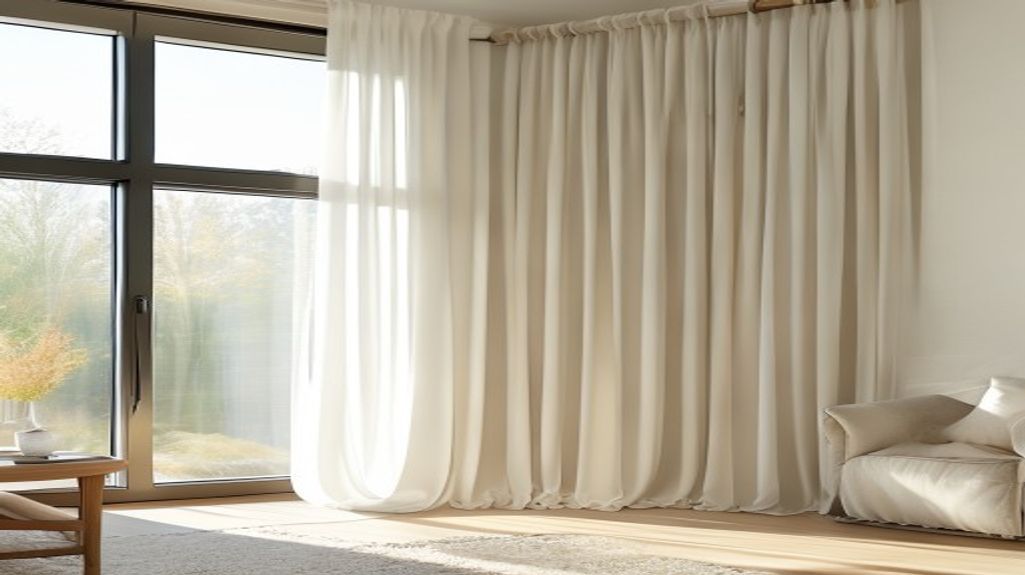
Curtain rods seem like the simplest wall job there is, yet they pull out of the wall more than almost any other fixture. The reason: the brackets usually land just above the window frame where there's often no stud, the rod carries the constant weight of fabric, and people tug the curtains open and closed multiple times a day. That repeated load on a weak anchor adds up fast.
Done right, though, a curtain rod is a quick win that makes a room look dramatically better. Here's how to mount one that holds — and how to handle Tampa's concrete-block walls and the sliding glass doors in nearly every home here.
Step 1: Hang High and Wide
Before anchoring, get the placement right — this is the trick that makes windows look bigger and rooms feel taller:
- Hang high: mount the rod 4–6 inches above the window frame, or go all the way up near the ceiling for a dramatic, tall look. Mounting the brackets right on the frame makes windows look squat.
- Hang wide: extend the rod 3–6 inches past each side of the window frame. This lets the curtains stack off the glass when open, so they don't block light and the window looks wider.
- Length: curtains should just kiss the floor or break slightly. Measure from the rod to the floor before buying panels.
Step 2: Anchor the Brackets Properly
Because brackets rarely land on a stud, anchoring is where most curtain rods fail. Match the method to the wall:
- If a bracket lands on a stud, screw directly into it — the strongest option.
- If there's no stud (common above windows), use rated toggle or molly anchors, not the flimsy plastic plugs that come in the box. Heavy drapes especially need real anchors.
- Tampa concrete block: above-window walls are often block. Drill with a hammer drill and masonry bit and use masonry anchors — block makes an extremely solid curtain-rod mount.
- Heavy or wide drapes: add a center support bracket (below). Heavier blackout or velvet panels can easily out-weigh light anchors over time.
Want to check for a stud above the window first? Here's how: How to Use a Stud Finder: A Tampa Homeowner's Guide
Step 3: Don't Skip the Center Support on Wide Windows
This is the most-skipped step and the number-one reason rods sag or pull out. Any rod over about 48 inches — and especially the wide rods over Tampa's sliding glass doors and picture windows — needs a center support bracket. Without it, the weight of the fabric bows the rod in the middle and puts all the strain on the two end brackets until one lets go. A center bracket (anchored into a stud or block) carries the middle of the load and keeps the rod straight.
Mounting Above Sliding Glass Doors (Very Tampa)
Almost every Tampa home has at least one sliding glass door to a lanai or pool deck, and they're prime spots for wide curtains or drapes. A few specifics:
- Extend the rod wide enough that the curtains fully clear the glass when open — sliders are wide, so the panels need somewhere to stack.
- The wall above a slider is frequently concrete block or has a structural header — use a hammer drill and masonry anchors, and expect solid material to drill into.
- Wide slider rods almost always need one or two center supports given the span and the weight of full-length drapes.
- Mount high enough to clear the door track and operation, and so the curtains hang straight without catching on the door handle.
Working on the sliding door itself too? See our door services: Door Repair & Sliding Door Services in Tampa
When to Call a Pro
A single standard window is an easy DIY rod install. Call a handyman for wide windows and sliders that need center supports and block-wall anchoring, heavy drapes that demand serious anchors, a whole house of windows you want done quickly and consistently, or when you want every rod at the same height for a clean, uniform look. A typical curtain-rod installation in Tampa runs $60–$150 per window depending on width, drape weight, and wall type.
Rod is up — now hang the panels so they actually look right: height, width, and fullness the designer way: How to hang curtains the right way
Rod is up and the curtains hang right — if the afternoon sun is still winning, blinds are the next layer to install: How to Install Window Blinds in Tampa
Frequently asked questions
- How high should I hang a curtain rod?
- Mount the rod 4–6 inches above the window frame, or higher toward the ceiling for a taller look — never right on the frame, which makes the window look squat. Also extend the rod 3–6 inches past each side so the curtains can stack off the glass when open.
- Why do my curtain rods keep falling out of the wall?
- Usually because the brackets landed in hollow drywall above the window with no stud, held only by lightweight plastic plugs, and the constant weight of the fabric plus daily tugging worked them loose. Use rated toggle/molly anchors or hit a stud, anchor into block on Tampa exterior walls, and add a center support on wide rods.
- Do I need a center support bracket for my curtain rod?
- Yes for any rod over about 48 inches, and definitely for the wide rods over sliding glass doors and picture windows. Without a center support, the fabric's weight bows the rod and overloads the end brackets until one pulls out. The center bracket should anchor into a stud or block.
- How do I mount a curtain rod above a sliding glass door in Tampa?
- Extend the rod wide so curtains clear the glass when open, mount high enough to clear the door track, and add one or two center supports for the span. The wall above a slider is often concrete block or a header — use a hammer drill and masonry anchors for a solid mount.
- Does Fenelon Handyman install curtain rods and window treatments?
- Yes — curtain rods, blinds, shades, and drapery hardware are routine for us across Tampa Bay, including wide sliders and concrete-block walls. We mount everything level, at a consistent height, and anchored to hold heavy drapes. Call or text (786) 509-5555.
Curtain rods, blinds, or shades to install — level, uniform, and anchored to hold? Call or text (786) 509-5555 for a fast, insured Tampa handyman. Get a free window-treatment estimate.
General Handyman in Tampa, FL
Done-for-you by an insured local crew — free quotes, same-week scheduling.
Need a hand with this in Tampa?
Get a free quote from a 4.8★ local crew. We answer fast and show up on time.
We handle this kind of work across Tampa Bay — including handyman service in Mango, handyman service in Progress Village, handyman service in Thonotosassa and handyman service in Odessa. See all service areas.