Florida deck staining guide: when to stain around the rainy season, semi-transparent vs. solid stain, prep and application steps, how long it lasts in Tampa sun, and maintenance.
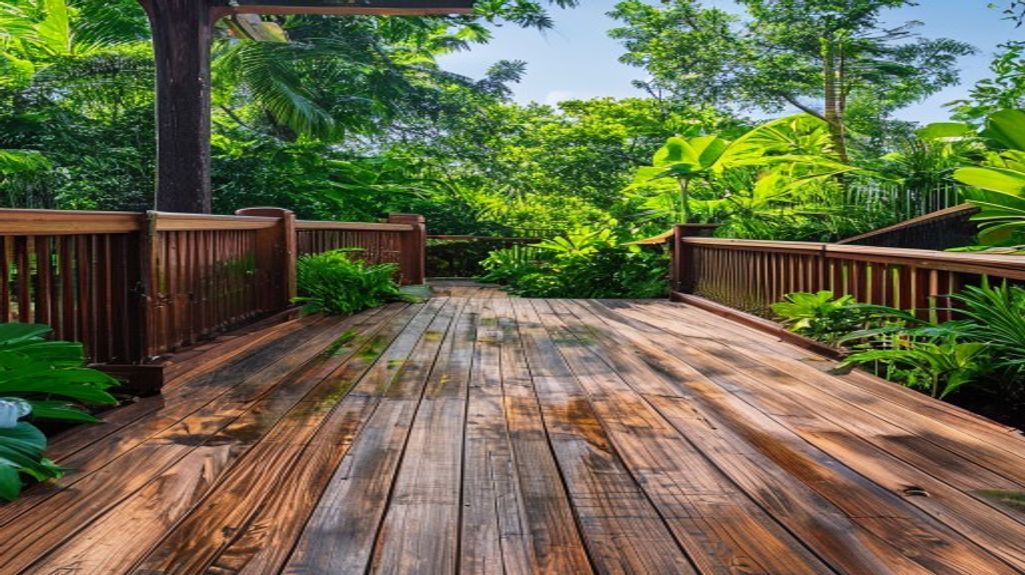
A wood deck in Tampa lives a hard life. Summer UV here is brutal enough to gray bare wood in a single season, afternoon storms soak it from June through September, and the humidity in between keeps it damp enough to feed mildew year-round. An unfinished or badly finished deck in Florida doesn't age gracefully — it grays, checks, splinters, and starts rotting at the fasteners. A good stain-and-seal job is the difference between a deck that lasts twenty-five years and one that needs boards replaced in ten.
This guide covers the Florida-specific timing (which matters more here than anywhere), choosing between transparent, semi-transparent, and solid stains, the prep that determines whether the finish lasts, application steps, and the realistic maintenance schedule for Tampa sun.
Timing Is Everything in Florida
Stain needs dry wood going on and dry weather while it cures — and Tampa's rainy season is openly hostile to both. Plan around three rules:
- Stain in the dry season. October through May is your window. Trying to stain in July means gambling on a 48-hour dry stretch that the afternoon storm pattern rarely grants. If you're reading this mid-summer, prep now and stain when the storms shut off in fall.
- The wood must be dry, not just the sky. After rain or a wash, pressure-treated deck boards need several dry days before they'll take stain. Test with a few drops of water: if water beads on the surface, the wood is too wet (or still has mill glaze); if it soaks in within a couple of minutes, you're ready.
- New pressure-treated wood needs to season first. A freshly built deck is saturated with treatment solution and often too wet to stain for one to three months in our climate. Stain too early and it peels within the year — the single most common Florida deck-finish failure.
The full timeline for when new pressure-treated wood is ready for finish — and how to test it — is here: Painting and staining pressure-treated wood in Tampa
Choosing a Stain: Transparent, Semi-Transparent, or Solid
Deck finishes trade wood-grain beauty against UV protection, and Florida's sun punishes the beautiful end of that spectrum.
- Clear sealers show the most grain and give the least UV protection — expect to recoat annually in full Tampa sun, because clear film does almost nothing to stop graying.
- Semi-transparent stain is the sweet spot for most Florida decks: pigment blocks a meaningful amount of UV while the grain still shows. Realistic life on a Tampa deck floor is two to three years.
- Solid stain performs like paint: maximum UV protection, hides older gray or mismatched boards, lasts the longest on the vertical parts — but it films over the wood, shows wear paths on the floor, and commits you to solid stain forever (you can't go back to transparent without aggressive stripping).
- Whatever the opacity, buy a quality exterior deck stain with mildewcide. In our humidity, bargain stain without mildew resistance turns gray-black within a year or two, especially on shaded decks.
A practical Florida pattern: semi-transparent on the deck boards where wear and UV are worst and you'll recoat anyway, and solid on railings and skirting where finishes last longer and old wood benefits from the coverage.
Prep Decides How Long It Lasts
Stain fails from below, not above. Finish applied over mildew, gray fibers, or old failing stain peels no matter how good the product is.
- 1. Repair first. Reset or replace popped nails and screws, replace soft or cracked boards, and probe suspect spots — staining over rot just hides it while it spreads.
- 2. Clean the wood. A deck cleaner or brightener plus a stiff brush, or careful low-pressure washing, removes gray fibers, mildew, and old loose finish. High pressure up close shreds soft Florida-grown pine — keep the wand moving and the pressure modest.
- 3. Strip if needed. If old semi-transparent stain is failing unevenly, a stain stripper beats sanding the whole deck. Solid stain that's peeling needs real stripping or sanding — this is where jobs turn pro-sized.
- 4. Let it dry. After washing, give the deck two to four rain-free days before staining. Re-run the water-drop test.
- 5. Sand where you walk. A quick once-over with 60–80 grit on the deck boards knocks down raised fibers from washing and helps stain absorb evenly. Vacuum or blow off the dust.
If the deck needs board replacement, joist repair, or railing work before finishing, price that first: Deck repair costs in Tampa
Application: How to Get an Even, Lasting Coat
- 1. Check the forecast: you want no rain for 24–48 hours after application and temperatures under about 90°F. In warm months, work in the morning shade — stain applied to sun-hot boards flashes dry and laps.
- 2. Do railings, balusters, and verticals first, then the floor, so drips land on unfinished boards you haven't coated yet.
- 3. Work board by board, end to end. Stopping mid-board leaves a lap mark that shows forever in raking light. Two or three boards at a time, full length, keeping a wet edge.
- 4. Thin coats win. One thin, worked-in coat beats a thick flood coat that sits on the surface and peels. With penetrating stains, apply what the wood absorbs and back-brush the excess in.
- 5. Get the end grain and gaps. Board ends drink water and rot first — hit them generously. Run a brush down the gaps between boards where a roller can't reach.
- 6. Respect recoat rules. If the product calls for a second coat, apply it within the stated window (often while the first is still slightly fresh) — a second coat over fully cured penetrating stain can just sit on top and stay tacky.
The Florida Maintenance Rhythm
In Tampa sun, deck finishes are maintenance, not events. The rhythm that keeps a deck healthy: rinse or wash off pollen and mildew every spring, water-drop test the boards each fall, and recoat the deck floor every two to three years (verticals go twice as long). A one-day maintenance coat every couple of years is vastly cheaper than the strip-sand-restain marathon that a fully failed finish demands — the whole game is never letting it fully fail.
When to Call a Pro
- The old finish is peeling and needs full stripping or sanding — the hardest, longest part of any deck job and the reason many DIY restains stall.
- Boards, joists, or railings need structural repair before finishing.
- The deck is large, elevated, or has lots of railing — baluster-by-baluster brushing is where weekends go to die.
- You want the wash, dry window, and stain scheduled around Tampa weather in one efficient pass.
- It's a pool deck or dock with special coating needs — traction, salt, and constant splash change the product choice.
From Westchase to Brandon, a wash-and-recoat visit in the dry season is one of the best value jobs we do — the deck looks new for a fraction of what replacing gray, checked boards costs later.
Frequently asked questions
- When is the best time of year to stain a deck in Tampa?
- October through May — the dry season. Stain needs dry wood going on and 24–48 rain-free hours after, which the June-through-September afternoon storm pattern rarely allows. Fall is ideal: the summer rains shut off, temperatures drop out of the 90s, and the finish cures before the next rainy season.
- How long does deck stain last in Florida?
- Shorter than the can suggests. In full Tampa sun, expect clear sealers to last about a year, semi-transparent stain two to three years on the deck floor, and solid stain three to five. Verticals like railings last roughly twice as long as the floor. Recoat when water stops beading and the color thins in traffic paths.
- Should I use semi-transparent or solid stain on my deck?
- Semi-transparent is the best all-around choice for most Florida decks — real UV protection while the grain still shows, and it recoats easily without stripping. Choose solid to hide gray, weathered, or mismatched boards and get maximum protection, but know it films like paint, shows wear paths, and is effectively permanent.
- Can I stain a brand-new pressure-treated deck?
- Not immediately. New pressure-treated lumber arrives saturated and typically needs one to three months of drying in Tampa's climate before it will absorb stain. Test with water drops: if they soak in within a couple of minutes, it's ready. Staining too early is the most common reason new-deck finishes peel in the first year.
- Do I need to pressure wash before staining?
- The deck needs to be clean — gray fibers, mildew, and loose old finish all cause peeling — but high pressure up close tears up soft pine. A deck cleaner with a stiff brush, or a careful low-pressure wash, does the job safely. Then let the wood dry two to four days before stain.
Need repairs, washing, and staining handled as one project? Our deck team covers all of Tampa Bay: Deck repair and restoration in Tampa
Deck going gray and splintery? Fenelon Handyman Services repairs, cleans, and stains decks across Tampa Bay — scheduled around the weather so the finish actually lasts. Call (786) 509-5555 for a free quote. Get a free deck staining quote.
Deck Repair & Building in Tampa, FL
Done-for-you by an insured local crew — free quotes, same-week scheduling.
Need a hand with this in Tampa?
Get a free quote from a 4.8★ local crew. We answer fast and show up on time.
We handle this kind of work across Tampa Bay — including handyman service in Sulphur Springs, handyman service in Riverside Heights, handyman service in Ybor City and handyman service in Palma Ceia. See all service areas.