Floating click-lock laminate is one of the most DIY-friendly floors there is. Here's how to install laminate flooring step by step — subfloor prep, layout, expansion gaps, and the mistakes to avoid.
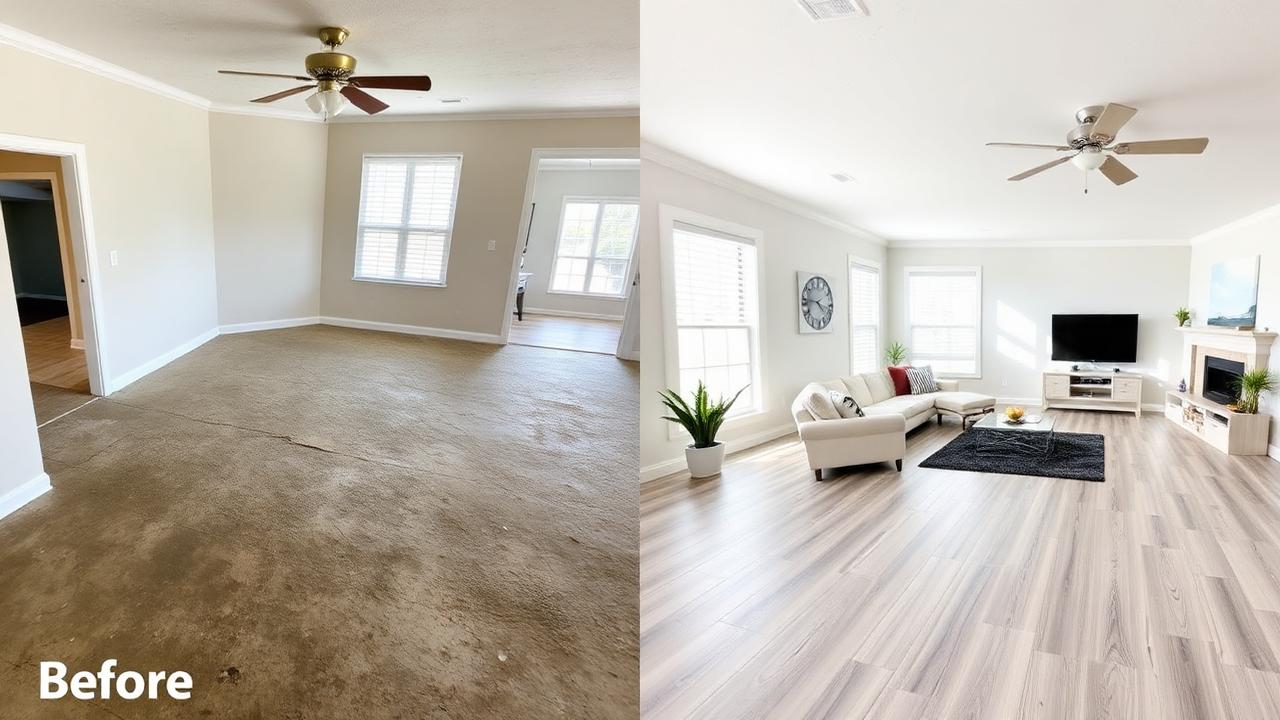
Laminate is one of the most DIY-friendly floors you can install. It's a 'floating' floor — the planks click together and rest on top of the subfloor with no glue or nails — so a patient beginner with basic tools can do a room in a weekend. Get the prep and the expansion gaps right and it'll look great and last for years; rush those and it'll buckle or gap.
Here's the full process, from prep to the last row, plus the mistakes that trip up first-timers.
Before You Start: Acclimate and Prep
- Acclimate the planks: leave the boxes flat in the room for 48 hours so the laminate adjusts to the home's temperature and humidity. This matters even more in Florida — skipping it is a top cause of buckling.
- Prep the subfloor: it must be clean, dry, and flat (within about 3/16 inch over 10 feet). Sand high spots and fill low spots; laminate telegraphs every bump underneath.
- Check for moisture on concrete slabs: many Tampa homes are on slab, and laminate needs a moisture barrier underlayment over concrete or it can warp from slab moisture.
Tools & Materials
- Laminate planks (buy about 10% extra for cuts and mistakes), and underlayment if it's not pre-attached.
- A saw (circular, miter, or a laminate cutter), a tapping block, a pull bar, spacers, a tape measure, and a utility knife.
- Transition strips and quarter-round/baseboard to finish the edges.
Step-by-Step Installation
- Roll out the underlayment (if not pre-attached), seams taped, covering the whole floor.
- Plan your layout so you don't end with a sliver-width last row — measure the room and adjust the first row's width if needed.
- Lay the first row along the longest, straightest wall with the tongue side facing the wall, using spacers to hold a 1/4–3/8 inch expansion gap at the walls.
- Stagger the end joints at least 8–12 inches row to row, both for strength and a natural look — never line up seams.
- Click each plank into the previous one (end first, then the long side) and snug it with the tapping block.
- Cut around door jambs, vents, and obstacles; undercut door casings so planks slide underneath.
- Use the pull bar for the last plank in each row and the final row against the wall, keeping the expansion gap.
- Remove the spacers and install transition strips and baseboard/quarter-round to cover the gap.
The Expansion Gap (Don't Skip This)
Laminate expands and contracts with temperature and humidity — a big deal in Florida's climate swings. You must leave a 1/4–3/8 inch gap at every wall and fixed object, hidden later by baseboard or quarter-round. A floating floor pinned tight to the walls has nowhere to go and will buckle and peak. This single detail is the most common reason DIY laminate fails.
Common Mistakes to Avoid
- Skipping acclimation or the moisture barrier — the top causes of buckling in Florida.
- Installing over an uneven subfloor — every dip and bump shows and can cause flexing and joint failure.
- No expansion gap (or caulking the planks to the wall) — guarantees buckling.
- Lining up the end seams — weak and unattractive; always stagger.
- Forcing planks together — if they don't click cleanly, the previous plank isn't seated; back up and reseat.
When to Call a Pro
Laminate is genuinely DIY-friendly, but call a pro if: your subfloor needs significant leveling, you're working over a slab with moisture concerns, the room has lots of angles, doorways, and obstacles, or you simply want a fast, flawless result. We install laminate and LVP across Tampa Bay and handle the subfloor prep that makes or breaks a floating floor.
Deciding between laminate, LVP, and tile for a Florida home? Here's the comparison: Best Flooring for Florida Homes
Considering waterproof LVP instead? Here's how it compares to tile: LVP vs. Tile Flooring in Tampa
Want it installed for you? See our flooring service and pricing: Flooring Installation in Tampa
Comparing to vinyl plank instead? Tampa-specific pick: How to Install Vinyl Plank Flooring
Still deciding between tile and vinyl? Humidity matters: Tile vs. Vinyl Flooring (Tampa Humidity)
Frequently asked questions
- Is laminate flooring easy to install yourself?
- Yes — it's one of the most DIY-friendly floors. The click-lock planks float over the subfloor with no glue or nails, so a patient beginner can do a room in a weekend. The keys are acclimating the planks, a flat subfloor, and leaving expansion gaps.
- Do I need underlayment under laminate?
- Yes, unless it's pre-attached to the planks. Underlayment cushions the floor, reduces noise, and — critically in Florida — provides a moisture barrier over concrete slabs. Skipping the moisture barrier over a slab can cause the floor to warp.
- How big should the expansion gap be for laminate?
- About 1/4 to 3/8 inch at every wall and fixed object, hidden later by baseboard or quarter-round. Laminate expands and contracts with Florida's humidity swings, and a floor pinned tight to the walls will buckle. It's the most important detail in the whole install.
- Can you install laminate over concrete?
- Yes — common in Tampa homes on slab — but you must use a moisture-barrier underlayment and confirm the slab is dry and flat. Slab moisture is a leading cause of laminate damage in Florida, so don't skip the barrier.
- Why is my laminate floor buckling?
- Almost always no (or too small) an expansion gap, skipped acclimation, or moisture from below an unprotected slab. Laminate needs room to move with humidity; pin it tight or expose it to slab moisture and it peaks and buckles.
Want laminate or LVP installed right — with proper subfloor prep — in your Tampa home? Call or text (786) 509-5555 for a free quote. Get a flooring quote.
Flooring Install & Repair in Tampa, FL
Done-for-you by an insured local crew — free quotes, same-week scheduling.
Need a hand with this in Tampa?
Get a free quote from a 4.8★ local crew. We answer fast and show up on time.
We handle this kind of work across Tampa Bay — including handyman service in Citrus Park, handyman service in Wesley Chapel, handyman service in Zephyrhills and handyman service in Clearwater. See all service areas.