Replacing a light fixture with a ceiling fan is a doable DIY project — if you have the right electrical box. Here's how to install a ceiling fan safely, step by step, plus when to call a pro.
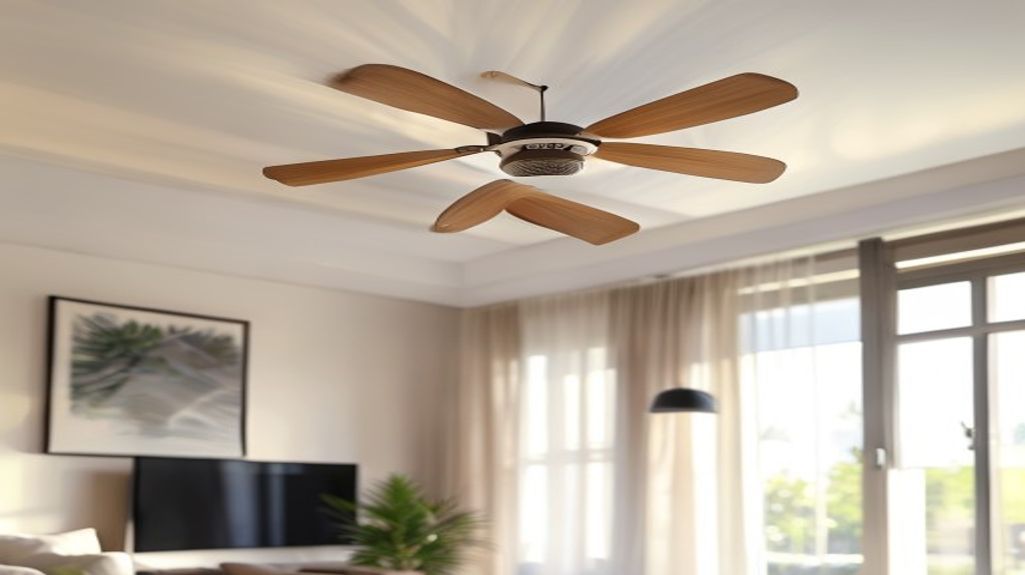
A ceiling fan is one of the best comfort-per-dollar upgrades in a home — it makes a room feel several degrees cooler, lets you ease off the AC, and replaces a boring light fixture with something far more useful. If you're swapping a fan in where a light or old fan already exists, it's a very doable DIY project. There's just one part you cannot cut a corner on: the electrical box.
Here's how to install a ceiling fan safely, what makes a box 'fan-rated,' the step-by-step, and when the job crosses into call-an-electrician territory.
Safety: Kill the Power First
Turn off the breaker for that circuit — not just the wall switch — and confirm the wires are dead with a non-contact voltage tester before touching anything. Working on a ceiling means a ladder and an awkward angle, so have a helper for the heavy parts.
The One Thing That Matters Most: A Fan-Rated Box
A ceiling fan weighs more than a light fixture and it moves, so it must hang from a fan-rated (fan-braced) electrical box — not a standard light box, which can loosen and drop a fan over time. A fan-rated box is marked 'For Ceiling Fan Support' and is anchored to the framing or a brace bar. If your existing box isn't fan-rated, it has to be replaced with one before you hang a fan. This is the step DIYers skip — and the reason fans fall.
Tools & What You'll Need
- The fan kit, a screwdriver, a non-contact voltage tester, wire nuts, and a ladder.
- A fan-rated mounting box (if your current box isn't one).
- A helper to hold the fan while you wire and mount it.
Step-by-Step Installation
- Turn off the breaker and test the wires to confirm they're dead.
- Remove the old fixture, supporting it as you disconnect the wires.
- Confirm the box is fan-rated; if not, install a fan-rated box now.
- Mount the fan's ceiling bracket to the box with the included screws.
- Assemble the fan's downrod and motor per the instructions, then hang the motor on the bracket's hook so your hands are free to wire.
- Connect the wires: white to white (neutral), black to black (hot/fan), blue or striped to the light, and the bare/green ground to ground — matching the fan's instructions.
- Tuck the wires up, attach the canopy, then install the blades and light kit.
- Restore power and test all speeds and the light.
Balancing It So It Doesn't Wobble
If the fan wobbles, it's usually blade balance or a loose mounting — most fans come with a balancing kit (small clip-on weights). Make sure every blade screw is tight and the bracket is snug to the box first, then use the kit to fine-tune. A properly mounted, balanced fan should run quiet and still.
When You Need an Electrician (Not a DIY Job)
Replacing an existing fixture is DIY-friendly. You need a licensed electrician — not a DIY or handyman fix — when there's no existing wiring or box at the location (running a new circuit and switch), when the wiring is old or there's no ground, or when you're adding a wall control that requires new wiring. In Florida, new circuits and wiring are licensed electrical work.
Fan wobbling after install? Here's how to diagnose and fix it: Why Is My Ceiling Fan Wobbling?
See our fan installation service for Tampa homes: Ceiling Fan Installation in Tampa
New fan still wobbling? Diagnose the cause here: Why Is My Ceiling Fan Wobbling?
Replacing the wall switch with the fan? Step-by-step: How to Replace a Light Switch
Frequently asked questions
- Can I install a ceiling fan myself?
- Yes, if you're replacing an existing light or fan and the box is fan-rated — it's a doable DIY project with basic tools and a helper. You need an electrician when there's no existing wiring/box at the spot, the wiring is old or ungrounded, or a new circuit is required.
- Do I need a special electrical box for a ceiling fan?
- Yes — a fan-rated (fan-braced) box marked 'For Ceiling Fan Support.' A standard light-fixture box isn't built to carry a fan's weight and motion and can loosen and drop the fan. If your existing box isn't fan-rated, replace it before hanging a fan.
- Why does my new ceiling fan wobble?
- Usually blade imbalance or a loose mount. Tighten every blade screw and make sure the bracket is snug to the box, then use the balancing kit (clip-on weights) that came with the fan. A correctly mounted, balanced fan runs quiet and still.
- How long does it take to install a ceiling fan?
- Replacing an existing fixture typically takes 1–2 hours. Add time if you have to install a fan-rated box. A first-timer should plan for the longer end and have a helper for holding the fan while wiring.
- Which way should a ceiling fan spin in summer?
- Counterclockwise (when you look up at it) in summer, which pushes air down and creates a cooling breeze — helpful in Tampa's heat so you can raise the thermostat. Reverse it to clockwise on low in winter to circulate warm air.
Want a ceiling fan installed right — fan-rated box and all — in your Tampa home? Call or text (786) 509-5555 for a free quote. Get a ceiling fan install quote.
General Handyman in Tampa, FL
Done-for-you by an insured local crew — free quotes, same-week scheduling.
Need a hand with this in Tampa?
Get a free quote from a 4.8★ local crew. We answer fast and show up on time.
We handle this kind of work across Tampa Bay — including handyman service in New Tampa, handyman service in Seminole Heights, handyman service in Valrico and handyman service in Seffner. See all service areas.