A running toilet wastes gallons of water and money — but it's usually a $10–$20 part and a 20-minute fix. Here's how to diagnose and fix a constantly running toilet, step by step.
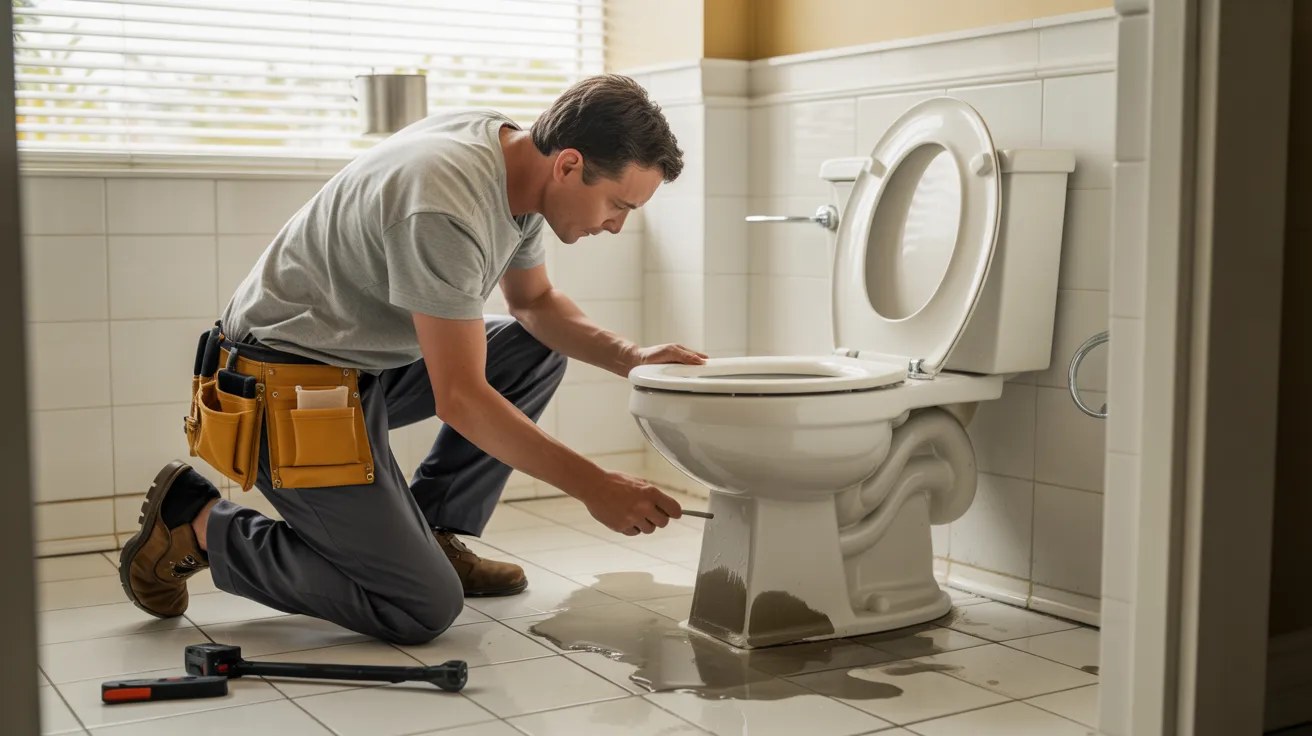
A running toilet is one of the most common — and most wasteful — household problems. A toilet that runs constantly can waste hundreds of gallons of water a day, quietly adding to your water bill. The good news is it's almost always caused by a cheap, easily replaced part inside the tank, and most homeowners can fix it in about 20 minutes with no special tools.
Here's how a toilet works, how to find the cause, and how to fix each one — from the most common culprit to the least.
How a Toilet Tank Works (30-Second Version)
When you flush, the flapper at the bottom of the tank lifts and lets the tank water rush into the bowl. The flapper then drops to seal the tank, and the fill valve refills the tank until the float rises and shuts it off. A toilet 'runs' when something keeps water leaking out of the tank — so the fill valve never stops refilling. Find what's leaking, and you've found the fix.
Step 1: Check the Flapper (the Usual Culprit)
Take the tank lid off and look at the rubber flapper at the bottom. Over time it warps, hardens, or gets a mineral film that stops it from sealing — so water trickles into the bowl and the toilet keeps refilling. To confirm: put a few drops of food coloring in the tank, wait 15 minutes without flushing, and check the bowl. If color appears in the bowl, the flapper is leaking. Replacing a flapper costs a few dollars and takes five minutes — unclip the old one, clip on a matching new one, reconnect the chain.
Step 2: Check the Chain
The chain connects the flush lever to the flapper. If it's too long, it gets caught under the flapper and holds it open; if it's too short, the flapper can't fully seal. Adjust the chain so there's just a little slack when the flapper is closed. This is a 30-second fix that solves a surprising number of running toilets.
Step 3: Check the Float and Water Level
If water is running into the overflow tube (the open vertical pipe in the middle), the water level is set too high. Lower it by adjusting the float — bend the float arm down slightly on older toilets, or turn the adjustment screw/clip on modern fill valves. The water should sit about an inch below the top of the overflow tube.
Step 4: Replace the Fill Valve
If the flapper, chain, and float are all good but the toilet still runs or won't shut off, the fill valve itself has worn out. A universal fill valve is inexpensive and replaceable in about 20 minutes: shut off the water at the wall, flush to empty the tank, disconnect the supply line, unscrew the old valve, and install the new one per the instructions. It's the most involved of these fixes but still well within DIY range.
A Tampa Note: Hard Water
Tampa's hard water leaves mineral deposits that shorten the life of flappers and fill valves and can cause the very film that keeps a flapper from sealing. If you're replacing parts, it's worth doing the flapper and fill valve together — they tend to wear out around the same time here.
When to Call a Pro
Most running toilets are a confident DIY fix. Call a pro if: the toilet still runs after replacing the flapper and fill valve, the shutoff valve at the wall is stuck or leaking, the toilet also rocks or leaks at the base, or you'd simply rather have it handled in one visit. These are quick jobs for a handyman, and a good time to bundle other small repairs.
Toilet leaking at the base instead of running? That's a different fix: Why Is My Toilet Leaking From the Bottom?
Need a toilet repaired or replaced in Tampa? See our service: Toilet Installation & Repair in Tampa
For other fixture plumbing — faucets, valves, and more: Plumbing Fixture Services in Tampa
Frequently asked questions
- Why does my toilet keep running?
- Almost always because water is leaking out of the tank, so the fill valve never shuts off. The most common cause is a worn or misaligned flapper; other causes are a tangled chain, a too-high water level, or a worn-out fill valve. The food-coloring test (color in the bowl = leaking flapper) pinpoints it fast.
- How do I know if my flapper is bad?
- Put a few drops of food coloring in the tank and wait 15 minutes without flushing. If color seeps into the bowl, the flapper isn't sealing and should be replaced — a cheap, five-minute fix. Warped, hard, or mineral-coated flappers are the usual culprits.
- How much water does a running toilet waste?
- A continuously running toilet can waste hundreds of gallons a day — potentially thousands over a month, which shows up clearly on your water bill. Fixing it usually costs only a few dollars in parts, so it pays for itself almost immediately.
- How much does it cost to fix a running toilet?
- DIY, usually under $20 in parts (a flapper is a few dollars; a fill valve $10–$20). If you hire a handyman, a running-toilet repair is a quick, low-cost visit and a good one to bundle with other small jobs.
- Why does the flapper keep wearing out in Tampa?
- Tampa's hard water leaves mineral deposits that harden and coat rubber flappers, stopping them from sealing. If you're in a hard-water area, expect flappers and fill valves to wear faster, and consider replacing both at once.
Toilet still running after a DIY attempt — or you'd rather just have it done? Call or text (786) 509-5555 for a fast Tampa fix. Get a toilet repair quote.
Bathroom Remodeling in Tampa, FL
Done-for-you by an insured local crew — free quotes, same-week scheduling.
Need a hand with this in Tampa?
Get a free quote from a 4.8★ local crew. We answer fast and show up on time.
We handle this kind of work across Tampa Bay — including handyman service in Tampa, handyman service in South Tampa, handyman service in Temple Terrace and handyman service in University. See all service areas.