A practical aging-in-place guide for Tampa homes: the room-by-room safety audit, bathroom modifications that prevent falls, grab bars anchored right, lighting, thresholds, handrails, smart locks for caregivers, and what to budget first.
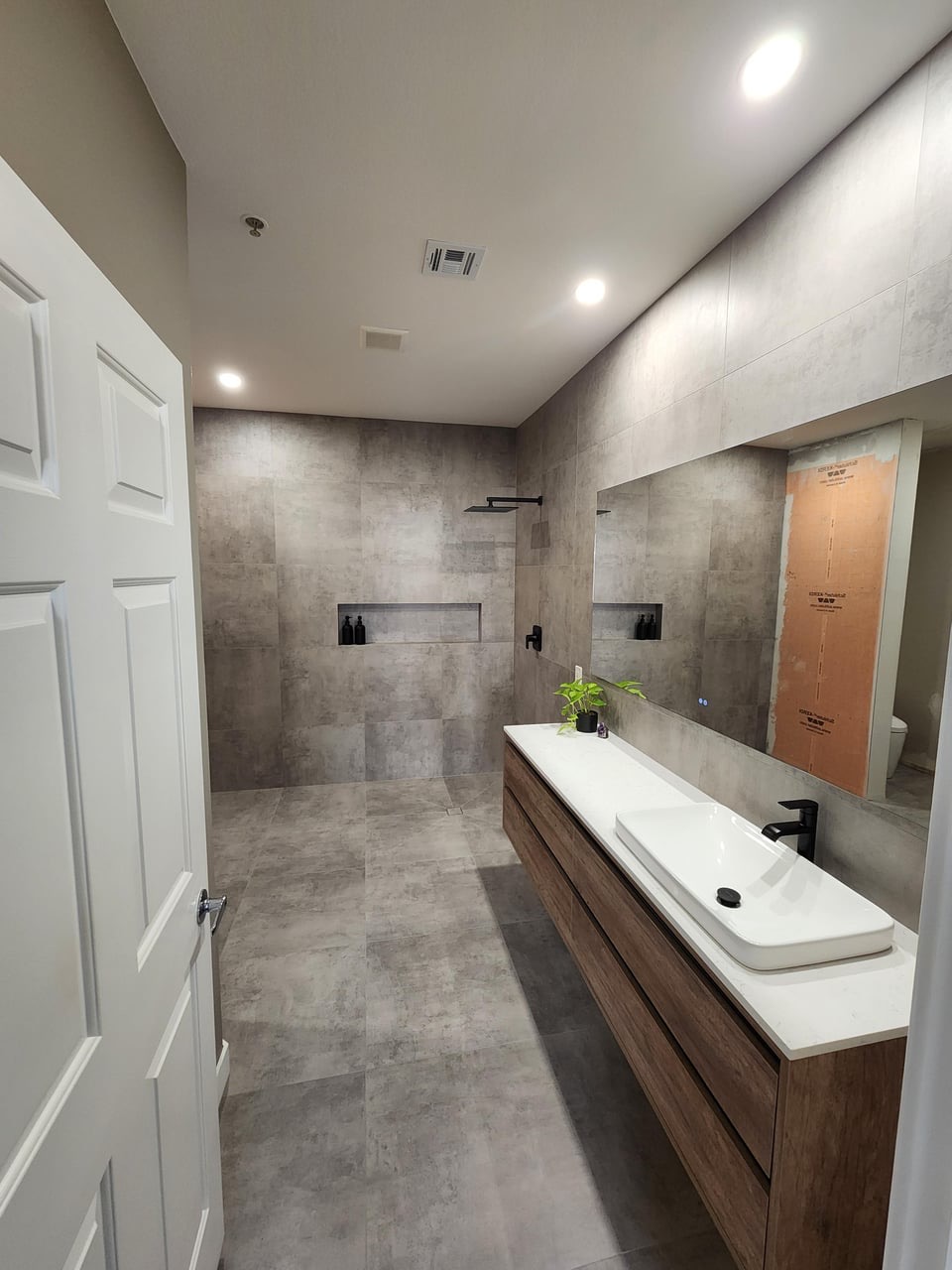
Nearly every survey says the same thing: the overwhelming majority of older adults want to stay in their own homes as long as possible. And the biggest threat to that plan isn't illness — it's a fall. Falls are the leading cause of injury among adults 65 and older, and most of them happen at home, in predictable places: the bathroom, the bedroom-to-bathroom path at night, and the steps at the entry.
Here's the encouraging part, and it's especially true in Tampa Bay: our housing stock is practically built for aging in place. The typical one-story, slab-on-grade block home has no staircase, wide-ish halls, and a walkable lot. What it usually lacks is a hundred small details — grab bars, lighting, lever handles, threshold fixes — that together decide whether a home is safe at 80. Most of them are handyman-scale jobs, not renovations. This guide walks the house the way we do, room by room.
Start With a Walk-Through Audit
Before buying anything, walk the house looking for three things: trip hazards, grab points, and light. Walk the actual daily paths — bed to bathroom, kitchen to recliner, car to front door — and note every rug edge, threshold, dark stretch, and place where a hand instinctively reaches for a towel bar or door frame. That reach list is your grab bar map: towel bars and door casings will tear out of the wall under real body weight, and they're exactly what people grab on the way down.
The Bathroom First — It's Where the Falls Are
Wet tile, hard surfaces, and the physics of standing up: bathrooms produce more senior falls than any other room, so they're where the first dollars go.
- Grab bars at the toilet and in (and entering) the shower or tub — real stainless bars rated for body weight, anchored into studs, blocking, or Tampa's concrete block walls with proper anchors. Never suction-cup bars as a permanent solution.
- A handheld shower head on a slide bar, so bathing can happen seated, plus a sturdy shower chair or built-in bench.
- A comfort-height (17 to 19 inch) toilet, or a riser with integrated arms — standing from a standard 15-inch bowl is a genuine strain on bad knees.
- Non-slip surfaces: textured adhesive strips or an anti-slip treatment in the tub or shower pan, and low-profile rubber-backed mats outside it — never loose towels on tile.
- Longer-term, a low-threshold or curbless shower conversion removes the single biggest bathroom obstacle: the blind, wet, one-legged step over a tub wall.
Placement heights, blocking, and the right anchors for tile and block walls — the full grab bar guide is here: Grab bar installation in Tampa
Light the Nighttime Paths
Aging eyes need two to three times more light, and the classic fall scenario is the 2 a.m. bathroom trip through a dark hallway. The fixes are cheap and mostly plug-in: brighter bulbs in existing fixtures (go to the fixture's max rated wattage equivalent in LED), plug-in motion-sensor night lights staged from bedside to bathroom, motion or photocell lighting at exterior doors and the garage entry, and rocker-style switch plates that a full hand can operate. While you're at it, check that every staircase or step-down has a switch at both ends — carrying anything through a dark step-down is how ankles get broken.
Floors, Rugs, and Thresholds
- Throw rugs are the classic villain: remove them, or commit to rug tape or gripper pads on every single one. Half-measures are worse than none.
- Tampa's glossy ceramic tile is beautiful and unforgiving — high-traction luxury vinyl plank over slick tile is a popular retrofit that's easier on joints and far less slippery wet.
- Interior thresholds and settled transitions higher than about a half inch want a beveled transition strip; a quarter-inch lip is invisible to a shuffle-step gait.
- Clear the routes: furniture arranged so there's a 36-inch path through main rooms, cords rerouted along walls, and clutter off the floor — boring advice that prevents more falls than any gadget.
Entries, Steps, and Handrails
Most Tampa homes have only a step or two at the entry — which is exactly why they're neglected. A single unrailed step is more dangerous than a full staircase with rails, because nobody treats it with respect. Add a proper graspable handrail (1-1/4 to 2 inches around, returned to the wall or post at both ends) at every entry step, garage step-down, and lanai transition. Rails on both sides doubles the safety for anyone using a cane. For wheelchair or walker access, a threshold ramp solves a single step, and a modest wooden or aluminum ramp handles two or three — at a comfortable 1:12 slope, plan about 12 inches of ramp length per inch of rise.
Building a rail that can actually take weight — heights, brackets, and code — is covered here: How to install a stair handrail
Doors, Handles, and Everyday Friction
Round doorknobs and arthritis are enemies: swapping knobs for lever handles house-wide is an afternoon of work that pays off every single day. The same logic applies to faucet handles (single-lever), cabinet knobs (D-pulls), and lamp switches (rocker or touch conversions). For doorways that are genuinely too narrow for a walker or chair — common at Tampa bathroom doors, which are often 24 inches — offset 'swing-clear' hinges buy about two inches without moving a stud, and a full door widening is the bigger fallback. In the kitchen, pull-out shelves in base cabinets and moving daily-use items between knee and shoulder height eliminate both the step stool and the deep bend, the two riskiest kitchen moves.
Smart Add-Ons That Earn Their Keep
- A smart lock with codes lets family and caregivers enter without hidden keys, and lets an adult child unlock the door remotely in an emergency.
- A video doorbell answers the door from the recliner — both a convenience and a screening tool against door-to-door scams that target seniors.
- Smart plugs and voice assistants turn lamps on before entering a dark room; scheduled lighting handles the dusk transition automatically.
- Check the basics while you're there: working smoke and carbon monoxide detectors on every level and in every bedroom hallway, with 10-year sealed batteries so ladder trips to silence chirps aren't part of anyone's routine.
Choosing and installing a keypad or smart lock — including block-wall door frames — is covered here: Smart lock installation in Tampa
Budgeting: What to Do First
The honest sequencing, if the budget arrives in phases: grab bars, bathroom traction, and nighttime lighting first — a few hundred dollars that addresses the statistically riskiest scenarios. Handrails at every step and threshold fixes come second. Lever handles, smart locks, and kitchen pull-outs third. Save the big-ticket items — curbless shower conversion, door widening, whole-house flooring — for when they're actually needed or when another remodel opens the walls anyway. A focused first-phase package (several grab bars, a handheld shower, rails at two entries, lighting) typically lands in the $500 to $1,500 range installed; a full bathroom conversion runs into the thousands. On funding: original Medicare generally doesn't pay for home modifications, but some Medicare Advantage plans, VA programs, and Florida community-care waivers can help — worth a phone call before assuming it's all out of pocket.
When to Call a Pro
- Anything that holds body weight — grab bars, handrails, ramps — where a failed anchor is a fall with a handle attached. Tampa's tile-over-block bathroom walls in particular need the right anchors and technique.
- A curbless shower conversion, toilet replacement, or door widening — real plumbing and carpentry with waterproofing consequences.
- A whole-home audit and one-visit punch list: it's dramatically cheaper to do fifteen small modifications in one scheduled day than piecemeal.
- Ramps that need to meet slope and landing guidelines to be safe in the rain.
- Any job that has a family member on a ladder or their knees when they'd rather not be — that's the entire point of hiring it out.
We install aging-in-place modifications across Tampa Bay every week — often coordinated with adult children arranging the work from out of state. One walk-through, one quote, one visit, and the house is measurably safer.
Frequently asked questions
- What home modifications should be done first for aging in place?
- Bathroom safety and lighting: grab bars at the toilet and shower, non-slip surfaces, a handheld shower head, and motion night lights along the bed-to-bathroom path. Then handrails at every entry step. These target where senior falls actually happen and cost a few hundred dollars, not thousands.
- How much do aging-in-place modifications cost?
- A meaningful first phase — several grab bars, bathroom traction, a handheld shower, entry handrails, and lighting — typically runs $500 to $1,500 installed. Bigger projects scale up: a low-threshold shower conversion is usually several thousand dollars, and door widening runs a few hundred to over a thousand per door depending on what's in the wall.
- Does Medicare pay for grab bars or home modifications?
- Original Medicare generally does not cover home modifications like grab bars or ramps. Some Medicare Advantage plans offer limited home-safety benefits, and veterans and Florida community-care programs have their own grant options. It varies by plan and year — check before assuming, but budget as if it's out of pocket.
- Can grab bars be installed on tile or concrete block walls?
- Yes — and in Tampa they usually have to be. Tile over block or over studs each call for different anchors: into studs or solid blocking where available, or heavy-duty masonry anchors into block, never drywall anchors or suction cups. Properly installed bars are rated for 250-plus pounds; the install quality is the whole product.
- Is a walk-in tub worth it?
- For most homes, a low-threshold or curbless shower with a bench and handheld sprayer delivers more safety per dollar. Walk-in tubs are expensive, slow to fill and drain (you sit in the tub while both happen), and hard to resell around. They make sense for specific therapy needs — otherwise the shower conversion usually wins.
Grab bars, rails, ramps, lever handles, and full safety punch lists — professionally anchored and done in one visit: Senior home modification services in Tampa
Helping a parent stay safely at home — or future-proofing your own? Fenelon Handyman Services installs grab bars, handrails, and complete aging-in-place packages across Tampa Bay. Call (786) 509-5555 for a free walk-through quote. Get a free safety assessment quote.
General Handyman in Tampa, FL
Done-for-you by an insured local crew — free quotes, same-week scheduling.
Need a hand with this in Tampa?
Get a free quote from a 4.8★ local crew. We answer fast and show up on time.
We handle this kind of work across Tampa Bay — including handyman service in Temple Terrace, handyman service in University, handyman service in Carrollwood and handyman service in Brandon. See all service areas.