Wood rot repair in Tampa — where Florida rot starts, the screwdriver test, epoxy repair vs. replacement, costs, and how to keep it from coming back.
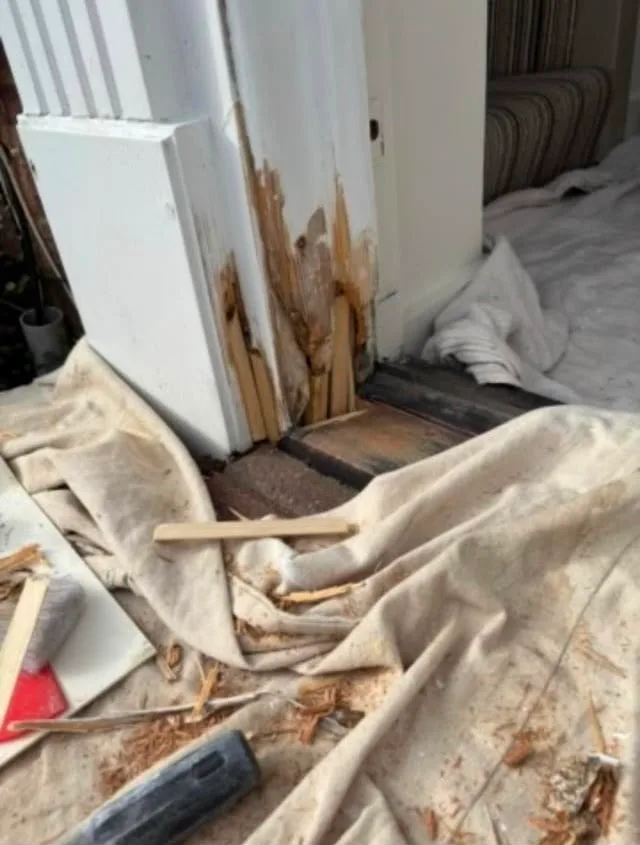
Tampa is about the toughest environment in America for exterior wood. Daily summer storms soak it, the humidity never lets it fully dry, sprinklers hit it twice a day, and the sun bakes the protective paint film until it cracks. The result is wood rot — soft, crumbling door frames, fascia boards, window sills and trim — and it spreads quietly until a screwdriver (or a home inspector) finds it.
The good news: caught early, rot repair is routine handyman work, and there are smart repair options well short of tearing everything out. Here's where it starts, how to test for it, what repairs cost in Tampa, and how to keep it from coming back.
Why Tampa eats exterior wood
- Rain + humidity — wood gets wet daily in summer and the damp air keeps it from drying out between soakings.
- Sprinkler spray — irrigation heads aimed at the house keep door frames and siding trim constantly wet; it's the #1 cause of localized rot we see.
- Failed paint and caulk — once the protective film cracks, water wicks into the end grain and the rot fungus gets everything it needs.
- Ground and concrete contact — trim and posts that touch soil or sit on wet slab edges wick moisture from below.
- Gutter problems — overflowing or leaking gutters pour water across fascia boards and soffits until they crumble.
Where rot shows up first on Tampa homes
- Bottom 12 inches of exterior door frames and garage door trim — splash zone plus sprinkler spray.
- Fascia boards and soffits, especially behind gutter problems.
- Window sills and the horizontal trim above windows and doors.
- Wood siding corners and the trim where two boards meet (water sits in the joint).
- Deck boards, stair stringers and post bases.
The screwdriver test
Rot hides under paint — a board can look fine and be mush underneath. Take a flathead screwdriver and press the tip firmly into the suspect wood. Sound wood resists; rotted wood gives way softly, flakes, or lets the tip sink in. Probe the bottom of door frames, the underside of sills, and fascia near gutter joints once a year. Finding rot at the one-inch stage instead of the whole-board stage is the difference between a $150 repair and a $1,500 one.
Rot or termites? Know the difference
Florida homeowners often find damage and can't tell whether it's rot or termites — and the fixes are completely different. Rot is fungal: the wood is soft, damp or crumbly, often with darkened or stringy fibers. Termite damage tends to follow the grain in clean galleries, often with mud tubes nearby and frass (pellet) piles below. If you see galleries or mud tubes, get a termite inspection before repairing anything — patching over an active infestation just hides it. (Often it's both: termites prefer wood that rot has already softened.)
Repair options, from least to most invasive
Epoxy repair (small, contained rot)
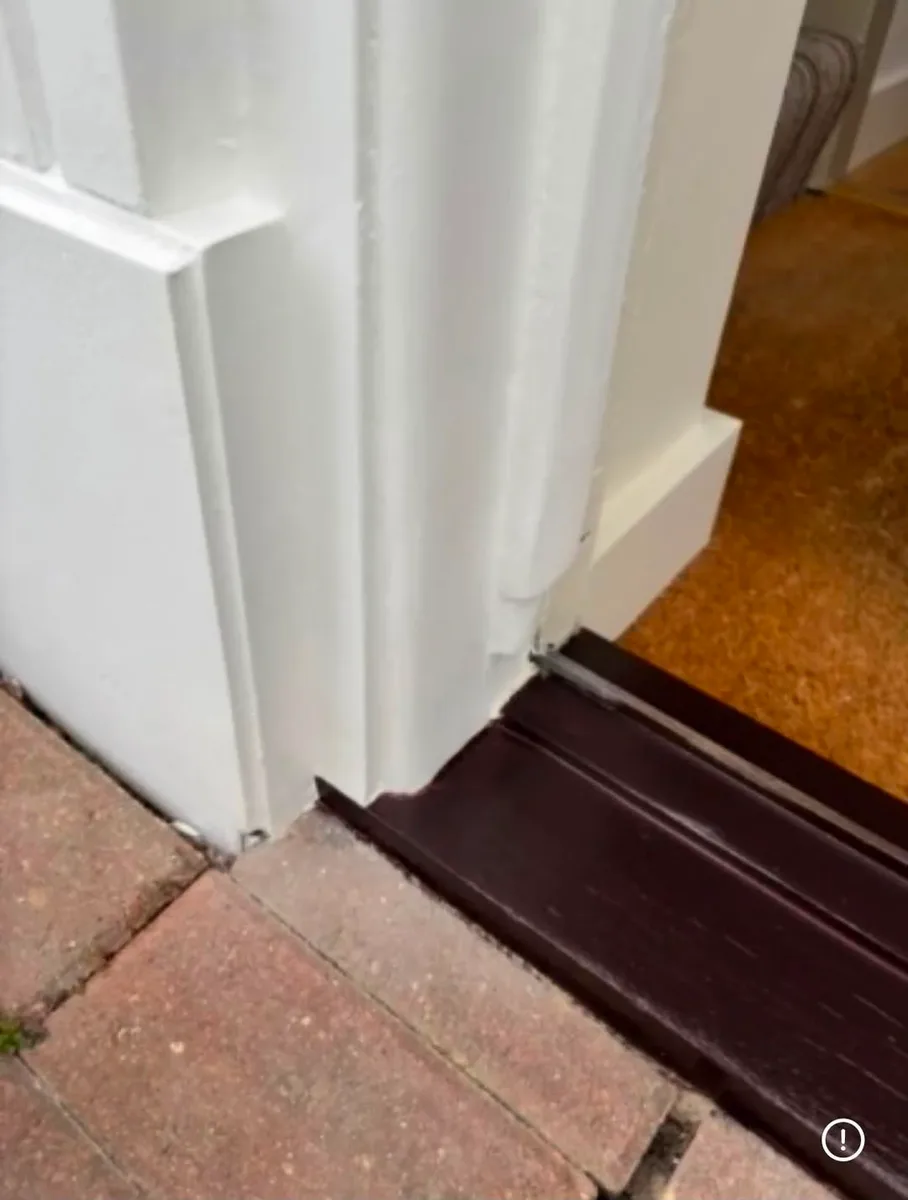
For rot limited to a small area in an otherwise solid piece — a corner of a door jamb, a section of sill — the wood can be saved. We dig out everything soft, treat the cavity with a liquid wood hardener, then rebuild the profile with a structural two-part epoxy filler, sand it and paint. Done right, the repaired section is harder than the original wood. This is the smart fix for decorative or hard-to-replace profiles.
Partial replacement (a 'dutchman' splice)
When the bottom of a door frame or a stretch of trim is gone but the rest is solid, we cut out the rotted section, splice in new wood (PVC or treated lumber in splash zones), glue and fasten it, then fill, caulk and paint the joint invisible. You replace only what failed.
Full replacement
When a board is rotted along its length — common with fascia and brick mold that's been wet for years — replacement is faster and cheaper than heroics. This is the moment to upgrade: PVC trim, composite fascia, or pre-primed treated wood in the spots that get wet, so the same board never rots again.
What wood rot repair costs in Tampa
- Epoxy repair of a small section (door jamb corner, sill patch): roughly $150–$400.
- Door frame bottom splice with PVC or treated wood: $250–$600 per door, depending on the frame and paint work.
- Fascia board replacement: commonly $6–$12 per linear foot, more on second stories or behind gutter removal.
- Window sill or trim replacement: $200–$500 per opening.
- Add paint-matching and caulking — usually included in a quality repair, since bare wood is how the rot started.
Keeping it from coming back
- Re-aim or throttle sprinkler heads so spray never hits the house — the cheapest rot prevention there is.
- Keep paint and caulk intact: recaulk joints and repaint exposed wood before the film fails, not after.
- Fix gutter leaks and overflows the season they appear — fascia pays the price for every year you wait.
- Use PVC or treated material anywhere wood touches concrete or stays in a splash zone.
- Walk the house with a screwdriver once a year (spring, before the rains) and probe the usual suspects.
When to call a pro
- Rot in a door frame that's letting the door sag or the weatherstrip gap open — frame and alignment work together.
- Fascia or soffit rot — usually tied to gutter problems and often needs second-story ladder work.
- Rot that keeps returning in the same spot — there's a water source (flashing, gutter, sprinkler) that has to be fixed first.
- Any sign of termite galleries or mud tubes — inspection first, repair second.
- Structural members: posts, beams or stair stringers that are soft need proper replacement, not filler.
Fascia and soffit rot has its own playbook — here it is: Soffit & Fascia Repair in Tampa
Sealing wood the right way after a repair? Read this first: Painting & Staining Pressure-Treated Wood
How humidity quietly damages Florida homes — and what to check: Florida Humidity & Your Tampa Home
Need rotted trim cut out and rebuilt clean? See our carpentry service: Trim Carpentry in Tampa
Here is that exact repair on a real Tampa door — the rotted jamb bottom, the epoxy rebuild, and the finished frame, in four photos: Rotted door frame repair: before and after
Frequently asked questions
- How much does wood rot repair cost in Tampa?
- Small epoxy repairs run roughly $150–$400; splicing the rotted bottom out of a door frame runs $250–$600; fascia replacement is commonly $6–$12 per linear foot. Catching rot early — while it's inches, not feet — is the biggest factor in keeping the bill small.
- Can rotted wood be repaired without replacing the whole board?
- Often, yes. Small contained rot can be dug out, treated with wood hardener and rebuilt with structural epoxy filler. A partially rotted board can have just the bad section cut out and new wood spliced in. Full replacement is for boards that are rotted along their length.
- How do I tell wood rot from termite damage?
- Rot is fungal — soft, damp, crumbly wood that gives under a screwdriver. Termite damage follows the grain in clean galleries, often with mud tubes or pellet piles nearby. If you see galleries or tubes, get a termite inspection before repairing; the two problems often occur together.
- What's the best rot-proof material for repairs in Florida?
- PVC (cellular) trim and composite fascia can't rot and are the smart upgrade for splash zones, door frame bottoms and anywhere that stays wet. Pre-primed pressure-treated wood is the budget option — just keep paint and caulk maintained on it.
- Why does the same spot on my house keep rotting?
- Because the water source is still there. Repairing the wood without fixing the sprinkler spray, gutter overflow, failed flashing or open caulk joint that feeds it guarantees a repeat. A good repair always starts with finding and stopping the moisture.
Found soft wood on your door frame, fascia or trim? Call or text (786) 509-5555 — we'll fix the rot and the water problem that caused it. Get a rot repair quote.
General Repairs in Tampa, FL
Done-for-you by an insured local crew — free quotes, same-week scheduling.
Need a hand with this in Tampa?
Get a free quote from a 4.8★ local crew. We answer fast and show up on time.
We handle this kind of work across Tampa Bay — including handyman service in Riverview, handyman service in Apollo Beach, handyman service in Ruskin and handyman service in Sun City Center. See all service areas.