A door that won't close or latch is usually a quick fix — loose hinges, a misaligned strike plate, or a swollen door. Here's how to diagnose and fix each cause, step by step.
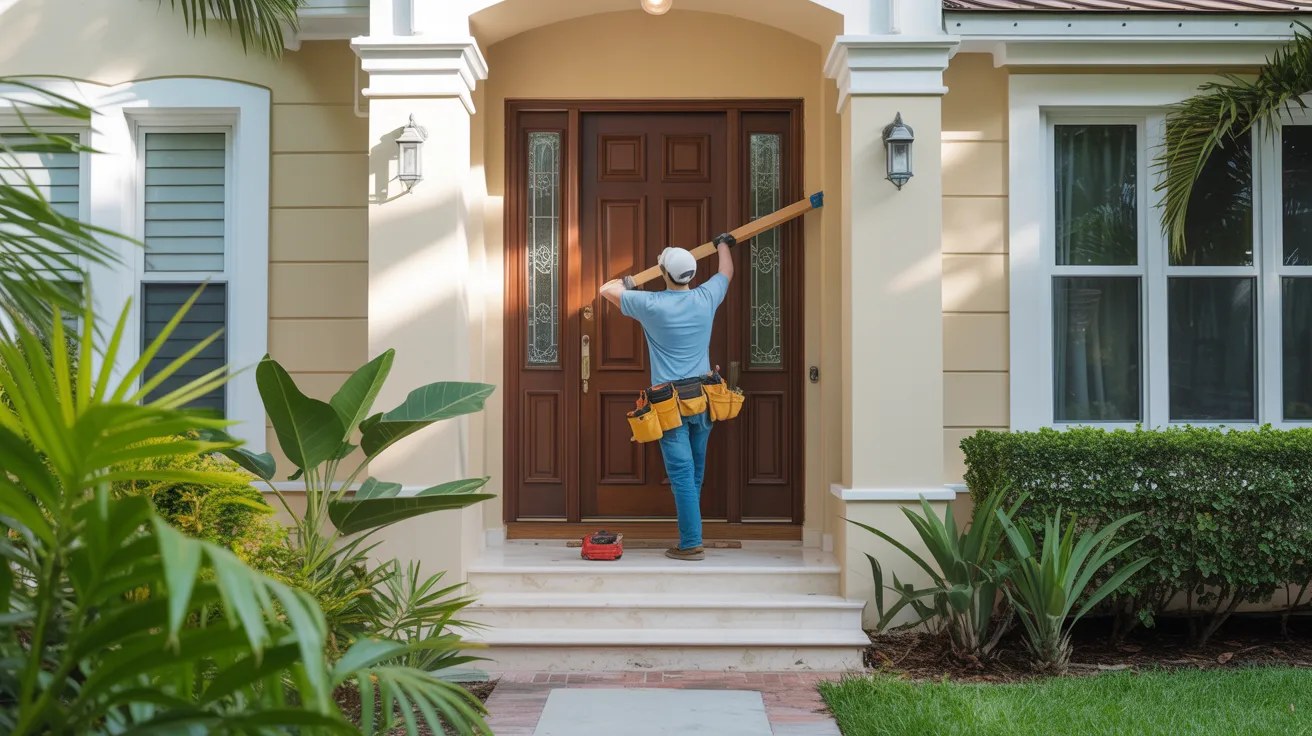
A door that won't close, sticks, drags on the frame, or won't latch is one of the most common little household annoyances — and the good news is it's almost always a quick fix once you figure out the cause. In Tampa, humidity adds one more culprit (swelling), but most of the time it's something simple like a loose hinge or a strike plate that's slightly out of line. Here are the five usual causes and how to fix each.
First: Diagnose Where It Binds
Watch the door as you slowly close it. Where does it stick or stop? Top corner, latch side, bottom, or does it close but not latch? The location tells you the cause: rubbing at the top-latch corner usually means loose hinges; not latching means a strike-plate alignment issue; rubbing along a whole edge often means swelling or a settled frame.
Cause 1: Loose Hinge Screws (the Most Common)
Over time, hinge screws loosen and the door sags, making it rub the frame at the top corner opposite the hinges. The fix: tighten all the hinge screws. If a screw just spins and won't tighten (stripped hole), replace it with a longer 3-inch screw that reaches into the wall framing — this pulls the door back up into alignment and fixes a surprising number of sticking doors.
Cause 2: Misaligned Strike Plate (Won't Latch)
If the door closes but the latch doesn't click into the strike plate, the latch and the hole are slightly out of line. Close the door and look at where the latch hits — if it's just barely off, you can file the strike-plate opening slightly larger, or unscrew the strike plate and move it a hair. If the latch hits well above or below, the door has dropped (see loose hinges) or the frame has shifted.
Cause 3: A Swollen Door (Florida Humidity)
In Tampa's humidity, wood doors absorb moisture and swell, so a door that closed fine in winter binds in the wet season. If the rubbing is seasonal, try addressing the humidity first (AC, a dehumidifier) before cutting anything. If it's persistent, lightly sand or plane the edge that's rubbing — but go easy, because the door will shrink back when it dries and you can end up with a gap. Seal the planed edge with paint or primer so it doesn't keep absorbing moisture.
Cause 4: A Settled or Out-of-Square Frame
If your house has settled, the door frame can be out of square, so the door binds along a whole edge no matter what you do to the hinges. Minor cases can be handled by planing the rubbing edge or adjusting the hinges; significant racking may need the frame reset, which is a bigger job.
Cause 5: Sticking at the Bottom / Dragging
If the door drags on the floor or threshold, it may have dropped (tighten hinges first) or new flooring/carpet may have raised the floor height. The fix is usually re-hanging or, if needed, trimming the bottom of the door slightly.
When to Call a Pro
Most sticking doors are a confident DIY fix with a screwdriver. Call a pro when: the frame is clearly out of square or racked, the door needs to be trimmed or re-hung, it's an exterior door where weather-sealing matters, or you've tried the hinge and strike fixes and it still binds. We handle door repairs and adjustments across Tampa Bay.
Confused about door parts (jamb vs. frame)? Here's the breakdown: Door Jamb vs. Door Frame: What's the Difference?
For door repairs, adjustments, and replacements in Tampa: Door Repair Services in Tampa
Door also squeaking? Five-minute fix: How to Fix a Squeaky Door
Sliding glass door dragging or sticking instead? Different fix: Sliding Glass Door Roller Replacement
Thinking about a barn door for the problem opening? Barn Door Installation in Tampa
And if the door closes fine but sports a doorknob-sized hole in the middle, that repair is easier than it looks too: Hollow-Core Door Hole Repair
If the bottom of the frame is soft rather than the door being swollen, you are past adjustment — here is what that repair looks like: Rotted door frame repair in Tampa
Frequently asked questions
- Why won't my door close or latch?
- Usually loose hinge screws (the door sags and rubs) or a misaligned strike plate (the latch misses the hole). Both are quick fixes. In Florida, a humidity-swollen door is another common cause, especially in the wet season.
- How do I fix a door that sticks at the top?
- Tighten the hinge screws — and if a screw spins without tightening, replace it with a longer 3-inch screw that reaches the wall framing. This pulls the sagging door back into alignment and fixes most top-corner rubbing.
- Why does my door stick only in summer?
- Humidity. Wood doors absorb moisture and swell in Tampa's wet season, so a door that closed fine in winter binds in summer. Try managing humidity first; if it persists, lightly sand or plane the rubbing edge and seal it with paint so it stops absorbing moisture.
- How do I fix a door that won't latch?
- The latch and strike plate are misaligned. Look at where the latch hits the strike plate — if it's slightly off, file the strike opening a bit or move the plate a hair. If it's well above or below the hole, the door has dropped (tighten the hinges).
- Should I plane a sticking door?
- Only as a last resort, and lightly. Planing removes wood permanently, and a humidity-swollen door will shrink back when it dries, leaving a gap. Tighten hinges and adjust the strike first; if you do plane, seal the edge with paint.
Door still sticking, dragging, or won't latch? Get it fixed fast in Tampa — call or text (786) 509-5555. Get a door repair quote.
Door Repair in Tampa, FL
Done-for-you by an insured local crew — free quotes, same-week scheduling.
Need a hand with this in Tampa?
Get a free quote from a 4.8★ local crew. We answer fast and show up on time.
We handle this kind of work across Tampa Bay — including handyman service in Citrus Park, handyman service in Wesley Chapel, handyman service in Zephyrhills and handyman service in Clearwater. See all service areas.