
A dripping faucet, a door that won’t close right, a bathroom that hasn’t been updated since the ’90s, these are the kinds of problems that pile up when life gets busy. So what does a handyman do, exactly? The short answer: a handyman handles the repairs, installations, and smaller upgrades that keep a home functional and comfortable. The longer answer is more nuanced, because the scope of handyman work has grown well beyond tightening a few screws.
At Fenelon Handyman Services, we’ve been doing this work across the Tampa area since 2014. From basic fixes like patching drywall to larger projects like kitchen remodeling and flooring installation, we see firsthand how wide this profession actually stretches. That experience gives us a practical perspective on what handymen handle, and, just as importantly, where the line sits between handyman work and jobs that require a specialized licensed contractor.
This article breaks down the full range of tasks a handyman typically performs, including general repairs, installation work, and home upgrades. Whether you’re thinking about hiring one or just trying to figure out who to call for a specific problem, you’ll walk away with a clear picture of what to expect. We’ll also cover licensing, pricing, and how to choose the right person for the job.
What a handyman does and where the line is
A handyman is a skilled generalist. Unlike a plumber who only touches pipes or an electrician who only works with circuits, a handyman covers a broad range of residential and commercial tasks without being locked into a single trade. When people ask what does a handyman do, the honest answer is that the role spans repairs, replacements, installations, and light renovation work across multiple categories. That flexibility is exactly what makes hiring one practical for homeowners who have a list of unrelated problems to solve.
The core of handyman work
Most handyman work falls into a few predictable categories: fixing things that are broken, installing new fixtures or components, and upgrading spaces that are functional but outdated. On any given week, a handyman might patch holes in drywall, install ceiling fans, replace cabinet hardware, repair a running toilet, hang shelving, or caulk around a shower. The work requires a mix of trade knowledge, the right tools, and the ability to problem-solve on the spot.
A good handyman doesn’t just complete the task in front of them; they look at the surrounding area and flag related issues you should know about before they grow into bigger problems.
What separates a solid handyman from an unreliable one is attention to detail and honest communication. Before starting any job, a professional should walk you through the problem, explain the available options, and give you a transparent, all-inclusive quote. At Fenelon Handyman Services, we provide at least three solution options at different price points so you can make an informed decision based on your budget, not just the first option handed to you.
Where licensed contractors take over
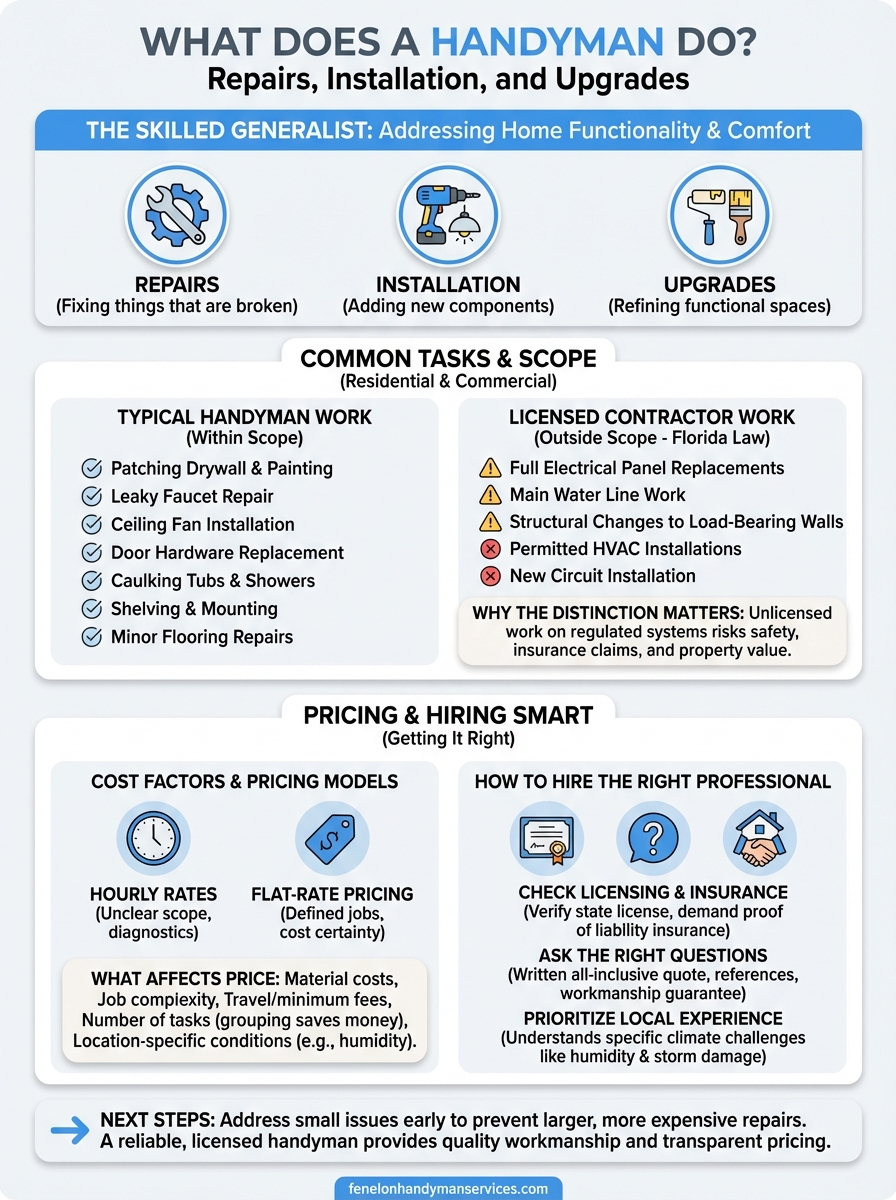
Handymen have real limits, and understanding those limits protects you as a homeowner. In Florida, certain types of work require a licensed contractor by law, regardless of how experienced the person performing it may be. Full electrical panel replacements, main water line work, structural changes to load-bearing walls, and permitted HVAC installations all fall outside what a handyman should legally or safely handle without proper licensure.
The distinction matters because unlicensed work on regulated systems can void your homeowner’s insurance, create problems when you sell the property, and put your household at risk. A reputable handyman will tell you upfront when a job crosses into licensed contractor territory rather than taking the work and cutting corners to get it done.
A large share of common home repair tasks still sit comfortably within handyman territory. Replacing a light fixture, swapping out a faucet, installing a new toilet, repairing drywall, and painting rooms all fall within the typical scope. The key is finding someone who knows exactly where their work ends and where a specialist needs to step in, and who is straightforward enough to tell you the difference before a single tool comes out of the bag.
Common handyman services for homes and businesses
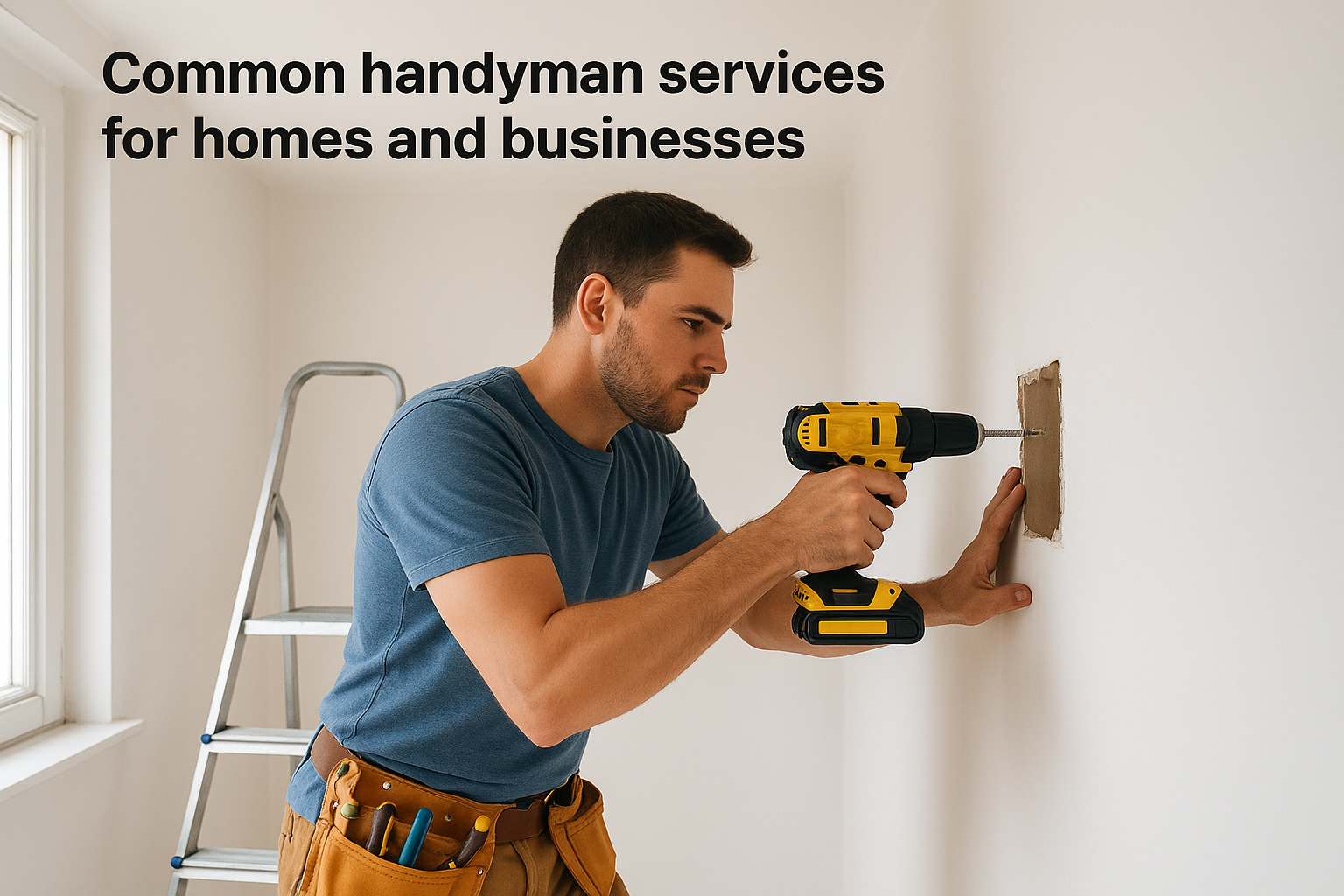
When people ask what does a handyman do for a typical household or small business, the answer covers more ground than most expect. Repairs, installations, and aesthetic upgrades sit at the center of the job, but the specific tasks vary widely depending on what a property needs. A handyman’s value comes from handling multiple items in a single visit, which saves you time and reduces the number of different contractors you need to coordinate.
Home repair and maintenance
Ongoing maintenance is where most homeowners first turn to a handyman. Cracked drywall, leaky faucets, broken tile grout, and damaged gutters are all common calls. These are jobs that don’t require a licensed specialist but still need someone with the right tools and experience to get done properly.
Ignoring small maintenance items almost always leads to larger, more expensive repairs down the line, so addressing them early is the smarter financial move.
Common home repair and maintenance tasks include:
- Patching and repainting drywall
- Replacing caulking around tubs, showers, and windows
- Fixing running toilets and leaky faucets
- Cleaning and repairing gutters
- Replacing damaged flooring tiles or planks
Installation and upgrade work
Installation jobs make up a significant portion of what a handyman handles for both residential and commercial clients. Ceiling fans, light fixtures, shelving units, door hardware, and bathroom accessories all fall into this category. These tasks take the right tools and a steady hand, but they don’t require a full contractor engagement.
Commercial clients often need a different mix of services, including mounting displays, installing shelving systems, patching walls between tenant changes, and handling routine fixture replacements. A reliable handyman keeps your property looking sharp and functioning properly without the overhead of a larger contracting firm.
Upgrade work, like installing new flooring, refreshing interior paint, or adding custom trim and built-in shelving, sits in a middle space between pure repair and full renovation. These upgrades add measurable value to your property and fall well within the typical handyman’s wheelhouse, especially when the scope stays focused and manageable.
What a handyman cannot do and why it matters
Understanding what does a handyman do also means understanding where the work stops. A handyman’s broad skill set has real legal and safety boundaries, and knowing those boundaries before you hire someone protects your property, your insurance coverage, and your family. Hiring the wrong person for the wrong job is one of the most common and costly mistakes homeowners make.
Work that requires a licensed contractor in Florida
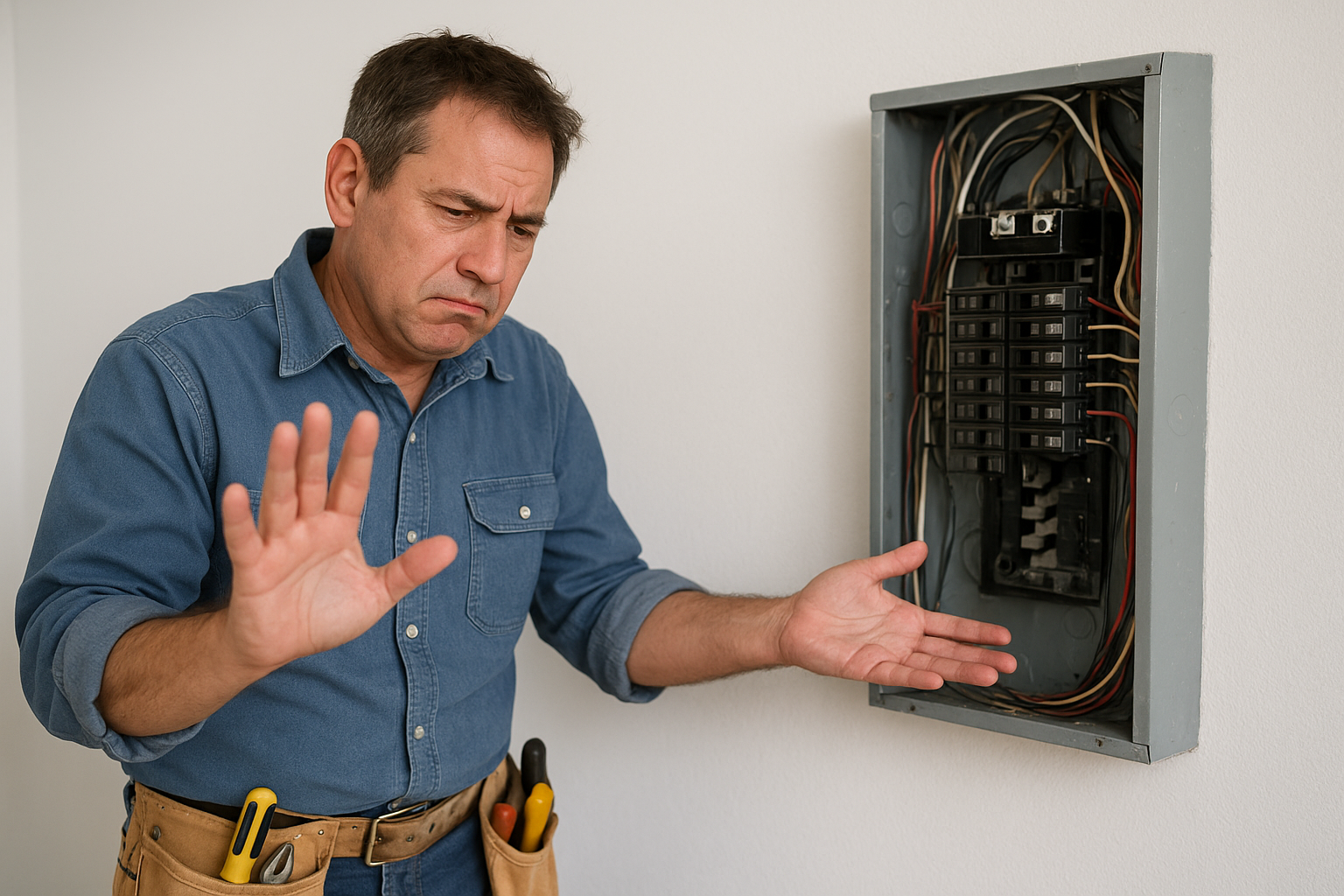
Florida law reserves specific categories of work for licensed contractors, and those rules exist for good reason. Full electrical panel upgrades, new circuit installation, main water line repairs, structural modifications to load-bearing walls, and permitted HVAC system installations all require a state-licensed professional. These aren’t arbitrary restrictions. Each of these systems carries real safety risk when handled incorrectly, and improper work can lead to fires, flooding, or structural failure.
If a handyman quotes you on a full panel replacement or tells you they can pull a structural permit, that’s a clear warning sign to walk away.
A reputable handyman will identify these situations upfront and point you toward the right licensed contractor rather than take the job. That kind of honest boundary-setting is a mark of professionalism, not a limitation.
Why unlicensed work puts you at risk
The consequences of unlicensed work on regulated systems go well beyond the immediate repair. If something goes wrong after an unlicensed person touches your electrical or plumbing systems, your homeowner’s insurance can deny the claim entirely. Beyond insurance, unpermitted work creates serious problems when you sell your home, since inspectors will flag it and buyers or lenders may require costly remediation before closing.
Florida’s contractor licensing system exists to protect you, not to complicate your project. Licensed contractors carry liability insurance and bonding, which means you have legal recourse if work fails or causes damage. Always verify a contractor’s license through the Florida Department of Business and Professional Regulation before committing to any regulated project. For the broad range of tasks that fall within standard handyman scope, a licensed and insured handyman service gives you that same layer of protection without the overhead of a full contracting firm.
Handyman costs and what affects the price
When you’re working through what does a handyman do for your specific situation, pricing is usually the next question. Handyman rates vary widely depending on your location, the type of work, and the professional you hire. In the Tampa area, hourly rates typically run between $60 and $120 per hour, while flat-rate pricing applies to clearly defined jobs like ceiling fan installation, toilet replacement, or drywall patching.
Hourly vs. flat-rate pricing
Hourly billing works well for jobs where the scope is unclear at the start, such as diagnosing a plumbing issue or troubleshooting a problem that could have multiple causes. Flat-rate pricing gives you cost certainty upfront, which most homeowners prefer for straightforward installations and repairs. At Fenelon Handyman Services, we provide all-inclusive quotes that lock in your price so there are no surprises once work begins.
A quote that includes parts, labor, and cleanup from the start is always more reliable than an estimate that gets revised once the technician is already on-site.
What drives the final number
Several factors push the price up or down on any given job. Material costs are a direct driver since higher-end fixtures, flooring, or hardware cost more than basic options. Job complexity also matters; a straightforward faucet swap takes far less time than reconfiguring a vanity with new plumbing connections behind the wall.
Other factors that affect your total include:
- Travel and minimum fees: Many handymen charge a minimum call-out fee regardless of job size, so bundling tasks into a single visit lowers your cost per item.
- Number of tasks: Grouping several repairs into one appointment is almost always more cost-efficient than scheduling separate visits.
- Florida-specific conditions: Humidity-related damage, mold remediation requirements, or storm repairs often add scope that changes the final number.
Choosing the cheapest available option rarely delivers the best result. Licensed and insured professionals carry overhead that reflects real protection for your property. Paying a fair rate for quality workmanship from a reliable service is a stronger investment than paying twice because the first attempt had to be corrected.
How to hire the right handyman in Tampa
Knowing what does a handyman do is only half the equation. The other half is finding someone in Tampa who does it reliably and honestly. The Tampa area has no shortage of people offering handyman services, but the quality gap between a professional and an unreliable operator is wide. A few targeted steps before you hire will save you significant headaches and money.
Check licensing and insurance first
Every handyman you hire should carry liability insurance and, where required, a valid Florida license. Insurance protects your property if something gets damaged during the work. A license confirms the person has met state standards for regulated tasks. You can verify contractor licensing directly through the Florida Department of Business and Professional Regulation before signing anything.
Skipping this step is one of the most common ways homeowners end up paying for the same repair twice.
Ask for proof of insurance in writing, not just a verbal confirmation. Any professional who hesitates to provide this documentation is someone you should move on from quickly.
Ask the right questions before committing
Once you’ve confirmed basic credentials, the conversation itself tells you a lot about who you’re dealing with. A reliable handyman will give you a clear scope of work, explain your options, and provide a written quote that covers parts, labor, and cleanup with no hidden additions after the job starts.
Before you commit, ask these questions:
- Do you provide written, all-inclusive quotes before starting work?
- How do you handle unexpected complications discovered mid-job?
- Can you share references from recent projects in the Tampa area?
- Do you offer any guarantee on your workmanship?
Prioritize local experience in Tampa
Tampa’s climate creates specific maintenance challenges that a handyman with local experience will recognize immediately. High humidity drives wood rot, mold growth, and paint failure faster than in drier regions. Storm damage from Florida’s weather patterns requires someone who understands proper repair methods for the local environment.
A handyman who has worked in the Tampa area for years brings that contextual knowledge to every job, which translates directly into better repairs and fewer callbacks. Local reputation also matters because it’s easier to verify through neighbors, community boards, and direct references.
Next steps for your home to-do list
Now that you understand what does a handyman do across repairs, installations, and upgrades, the next move is straightforward. Look at your current list of home problems and sort them by urgency. Small issues like dripping faucets, damaged drywall, or worn caulking are worth addressing now before they grow into larger, more expensive repairs.
For Tampa homeowners dealing with humidity damage, storm wear, or a backlog of deferred maintenance, the right service makes a measurable difference. Licensed, insured, and experienced professionals give you the combination of quality workmanship and transparent pricing that protects your home and your budget. At Fenelon Handyman Services, you get written quotes with no hidden costs, at least three solution options per job, and a satisfaction guarantee that backs every project.
Ready to work through your list? Contact Fenelon Handyman Services to schedule an estimate and get started.