
Whether you’re refreshing a single bedroom or repainting your entire Tampa home, the first question is almost always the same: what will this actually cost? The interior painting cost per square foot ranges anywhere from $2 to $6 depending on factors like wall condition, paint quality, and room complexity. That’s a wide spread, and without a clear breakdown, it’s tough to know whether a quote you’ve received is fair or inflated.
At Fenelon Handyman Services, we handle interior painting projects across the Tampa–St. Petersburg area every week. We see the quotes homeowners get, we know what materials actually cost in this market, and we understand how Florida-specific conditions like humidity and mold-prone surfaces affect prep work and pricing. That hands-on experience is exactly what shaped this guide, real numbers grounded in real local work, not national averages pulled from a database.
In this 2026 pricing guide, we’ll break down what drives interior painting costs, explain how square footage calculations actually work, and give you the detail you need to budget with confidence. You’ll also learn where costs tend to spike unexpectedly and how to avoid overpaying without cutting corners on quality.
Why interior painting cost per square foot matters
Knowing the interior painting cost per square foot before you start calling painters puts you in a far better position than walking into conversations blind. Most homeowners receive quotes without understanding what a reasonable range looks like, which means they either accept a padded price because it sounds professional, or they choose the cheapest option without realizing it likely cuts corners on prep or materials. Either outcome costs more in the long run, whether through inflated invoices or through peeling walls that need repainting within two years.
It gives you a reliable baseline before you call anyone
When you understand what painters charge per square foot in your area, you can do a rough calculation before anyone sets foot in your home. Take your total wall surface area, multiply it by a realistic cost range, and you have a working budget number to plan around. This matters especially for larger projects like repainting a full house, where the difference between $2 and $6 per square foot can easily translate to several thousand dollars on the final bill.
Having that baseline also changes how you communicate with contractors. You can ask the right questions, like why a specific bid runs higher than average or what detailed prep work justifies an elevated price. Informed homeowners consistently get better project outcomes, not because painters are dishonest by default, but because clear expectations on both sides lead to more precise scopes of work and fewer unexpected charges when the job wraps up.
The best time to understand painting costs is before you ask for your first quote, not after you’ve already committed to a contractor.
It helps you spot pricing that doesn’t add up
Low bids can be just as misleading as high ones. A quote that falls well below the going rate often signals missing line items, such as primer coats, surface repairs, or careful masking of trim and ceilings. When those steps get skipped or rushed to protect a contractor’s margin, you end up with paint that peels early, uneven coverage along edges, or stain bleed-through within the first year.
On the other side, some quotes run high not because the job is genuinely more complex, but because the contractor assumes you won’t question the numbers. In Tampa specifically, painters sometimes add broad humidity-prep line items without explaining what that prep actually involves or whether your specific walls require it. Knowing standard per-square-foot costs gives you the leverage to ask for a line-by-line breakdown instead of accepting a single lump-sum figure.
Comparing multiple bids through a cost-per-square-foot lens makes patterns obvious fast. You can quickly identify which contractors are pricing the actual scope and which ones are building in extra margin or skipping steps to win the job on price alone. That same comparison helps you decide where to spend more, such as on higher-grade paint or thorough surface prep, and where standard materials are perfectly sufficient for the results you want.
2026 price ranges per square foot
The interior painting cost per square foot in 2026 sits between $2 and $6 for most residential projects, but where your job lands within that range depends on several concrete factors. Understanding the tiers before you budget helps you set realistic expectations rather than anchoring to the low end and being surprised later.
Standard rooms and basic finishes
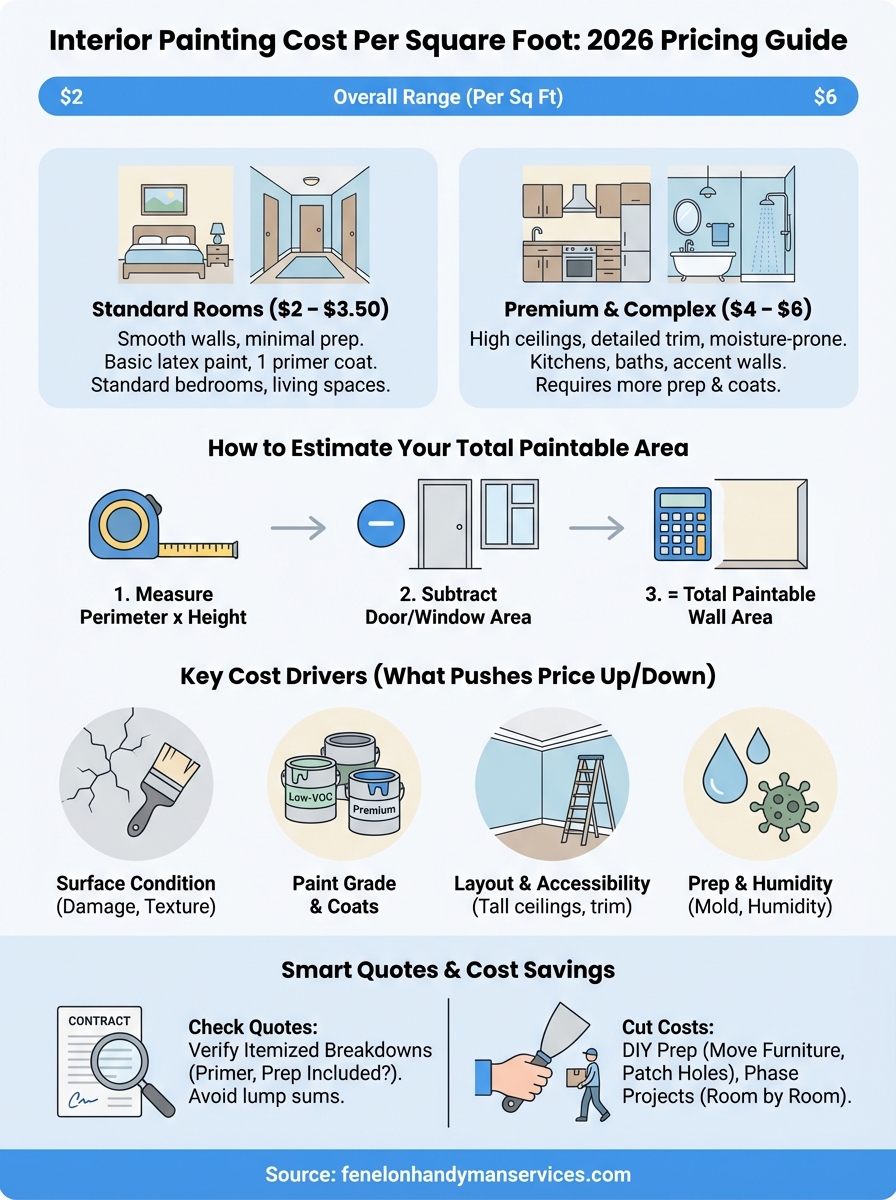
For a typical single-story room with smooth, well-maintained walls, painters in the Tampa area generally charge between $2 and $3.50 per square foot. This tier covers standard latex paint, one coat of primer where needed, and clean masking of trim and outlets. Bedrooms, hallways, and living spaces with minimal surface prep usually fall in this range.
| Room Type | Typical Cost Per Sq Ft |
|---|---|
| Standard bedroom | $2.00 – $3.00 |
| Living room | $2.50 – $3.50 |
| Hallway | $2.00 – $3.00 |
| Home office | $2.00 – $3.50 |
These figures assume walls don’t need significant repair work. If your surfaces show minor scuffs or small nail holes, most painters will handle those at no extra charge within this tier, but anything beyond light touch-ups moves the price up.
Premium work and complex spaces
Kitchens, bathrooms, and rooms with high ceilings or detailed trim work push costs toward the $4 to $6 per square foot range. These spaces require more masking, additional coats to handle moisture or existing stains, and more careful cutting around cabinets, tiles, and fixtures.
In Tampa’s humid climate, bathrooms and kitchens often need a mold-resistant primer as a base coat, which adds both material and labor cost compared to standard rooms.
Specialty finishes like satin, semi-gloss, or custom colors requiring multiple coats also land in the upper range. If you’re repainting a textured ceiling, adding an accent wall with a deep color, or working in a space that hasn’t been painted in over a decade, budget toward $5 to $6 per square foot to avoid being caught short.
How to estimate your total paint job cost
You don’t need a contractor to run your first estimate. The basic math behind the interior painting cost per square foot takes about 20 minutes and just a tape measure. Once you have your total paintable wall area, you can multiply it against the price ranges covered above and land on a realistic budget window before anyone walks through your door.
Calculate your paintable wall area
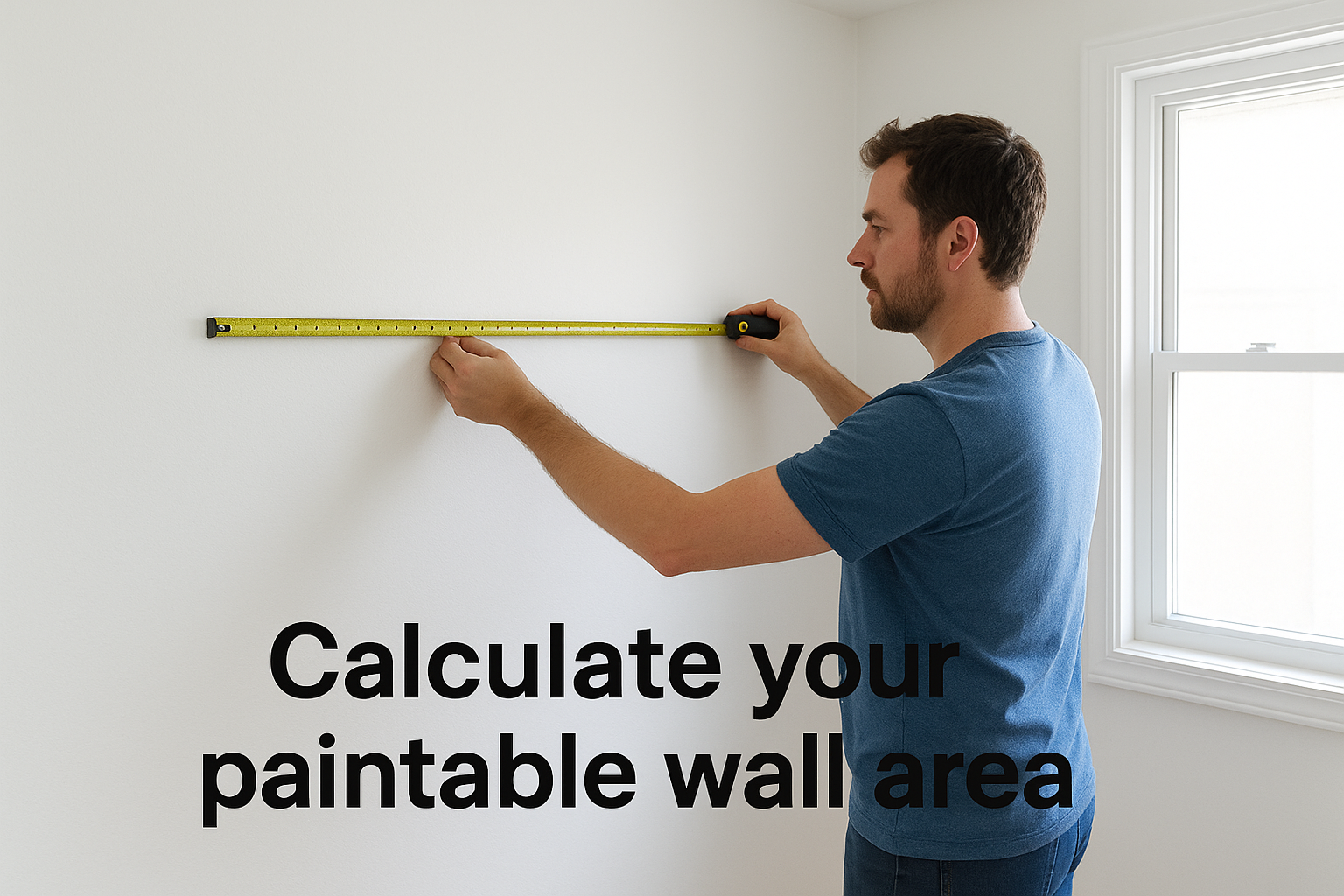
Start by measuring each room you plan to paint. For each one, measure the total wall perimeter (add all four wall lengths together) and multiply that number by the ceiling height. A standard 12×14 foot bedroom with 9-foot ceilings works out to roughly 468 square feet of gross wall area. From that number, subtract approximately 15 to 20 square feet per standard door and 15 square feet per average window, since those surfaces won’t be painted.
Run this calculation for every room on your list, then add all the totals together to get your full project square footage. If you’re working through a larger Tampa home, keep each room’s subtotal on its own line so you can break the job into phases or prioritize rooms if your budget has a hard ceiling.
If your ceilings exceed 9 feet, factor the actual height into your wall measurement rather than using a standard figure, since taller rooms consistently push labor costs higher due to the extra equipment and time involved.
Apply the cost range to your square footage
Once you have your total, multiply it by both the low and high ends of the relevant price tier from the section above. For example, 1,200 square feet of standard wall area multiplied by $2.50 and $3.50 produces a budget window of $3,000 to $4,200. That range is more useful than a single number because it accounts for variables you won’t know until a painter inspects your walls, like whether primer is included or minor repairs are baked into the base rate.
Bring this calculated range to every quote conversation. It gives you a concrete reference point to compare bids against the same baseline rather than weighing dollar amounts in a vacuum.
What drives the cost up or down
The interior painting cost per square foot rarely lands at a single fixed number because several variables push it in different directions before a painter opens a can. Understanding which factors carry the most weight helps you anticipate where your project falls in the pricing range and plan your budget before the first quote arrives.
Surface condition and prep requirements
Wall condition is the single biggest variable that separates a low-end bid from a high one. Walls with significant damage, heavy texture, or stain bleed-through require substantially more prep time before a brush touches the surface. Painters charge for that labor directly, whether they itemize it or fold it into a higher per-square-foot rate.
In Tampa specifically, high humidity accelerates mold growth and wood rot, which often adds moisture treatment and primer steps that would not appear on a dry-climate project of the same size.
Paint grade and number of coats
The paint you choose has a direct impact on material costs and total coat count. Budget-grade paint typically requires two to three coats to achieve full coverage, while a high-quality low-VOC formula often covers more thoroughly in fewer passes. That difference in coat count affects labor hours and shifts your cost per square foot even when the painter’s hourly rate stays constant.
Specialty finishes like eggshell, satin, or semi-gloss cost more per gallon than flat paint and require more precise application to avoid lap marks. If you’re painting a bathroom or kitchen, those finishes are worth the added cost for durability, but factor the price difference into your estimate from the start.
Room layout and accessibility
Tight rooms, tall ceilings, and built-in features all slow down a painter’s pace, which translates directly into higher labor costs. A room with crown molding, detailed window casings, or floor-to-ceiling built-ins requires extra masking time and careful brushwork around every edge.
Rooms that require scaffolding or extension ladders for high walls or vaulted ceilings add rental costs on top of standard labor. If your home has multiple rooms with these features, expect the per-square-foot cost to sit closer to the upper end of the range.
How to check a painter quote and cut costs
A written quote tells you more than just the final number. When you receive one, compare the line items directly against your calculated interior painting cost per square foot to confirm the math holds up. A quote that lumps everything into a single total gives you no way to verify what you’re actually paying for, so ask for an itemized breakdown before you agree to anything.
If a contractor refuses to itemize their quote, treat that as a clear signal to get a second opinion.
Break down what each line item covers
Look for explicit callouts for primer, surface prep, and coat count in the itemized list. These are the steps most commonly dropped from low bids, and they’re also the ones that determine how long your paint job lasts. If the quote doesn’t mention primer on walls that clearly need it, or skips surface repairs you know exist, ask the painter to explain what their prep process actually includes before signing.
Check the paint brand and product grade listed in the quote as well. Some contractors price a job using premium paint in the estimate but substitute a cheaper brand on the day of the job. Ask them to write the specific product name into the agreement so there’s no room for substitution without your approval.
Reduce costs without cutting quality
Doing your own furniture moving and wall patching before the painter arrives is one of the most effective ways to lower your total without affecting the finished result. Labor time spent shifting furniture or filling minor holes is billable, and most painters will reduce their quote if that prep work is already done when they show up.
You can also phase larger projects across a few months instead of repainting your entire home at once. Tackle high-traffic rooms first, then schedule additional rooms as your budget allows. Painting contractors often offer a slightly lower per-room rate on follow-on bookings from the same client, so splitting the work doesn’t always mean paying the full rate twice.
Quick recap and next step
The interior painting cost per square foot in Tampa runs between $2 and $6 for most residential projects, depending on surface condition, paint grade, room complexity, and prep requirements. You now know how to calculate your own wall area, interpret the price tiers, and read a contractor’s quote line by line to verify it holds up. That combination puts you in a much stronger position than most homeowners who walk into this process without a baseline.
Getting an accurate quote means working with someone who knows Tampa’s specific conditions, not a generic estimate built around national averages. At Fenelon Handyman Services, we give every customer at least three solution options at different price points so you control the budget without sacrificing the result. If you’re ready to move forward, request a free interior painting quote from Fenelon Handyman Services and get transparent, itemized pricing based on your actual project.