
A dent from moving furniture, a doorknob-sized hole, or a water stain spreading across your ceiling, drywall damage shows up in almost every home eventually. The immediate question is always the same: what will drywall repair cost me? The answer depends on several factors, from the size and type of damage to whether you grab a putty knife yourself or hire a licensed professional to handle it.
Pricing for drywall work can range from under $50 for a simple patch kit to well over $1,500 for large-scale repairs involving water damage or full panel replacement. Without a clear breakdown of what drives those numbers, it’s easy to either overpay for a basic fix or underestimate a job that really does need expert hands and proper materials. Both mistakes cost you money, and sometimes the structural integrity of your walls.
At Fenelon Handyman Services, we’ve been repairing and restoring drywall across the Tampa metro area since 2014. Our team sees every type of drywall issue Florida homes can throw at us, from humidity-driven nail pops to storm-related ceiling damage. This guide breaks down 2026 pricing by repair type, walks through labor costs, and gives you an honest comparison of DIY versus professional work, so you can make the right call for your home and your budget.
Why drywall repair costs vary so much
Drywall repair cost doesn’t land on a single predictable number because too many variables push it up or down. A nail hole and a water-damaged ceiling panel are both "drywall repairs," but the materials, time, and skill required are completely different. Understanding what drives the price range helps you spot a fair quote and avoid paying more than a job is worth.
Damage size and repair scope
Small repairs like nail pops, hairline cracks, or doorknob holes require minimal material and usually less than an hour of labor. A larger repair involving multiple panels, structural framing behind the wall, or widespread cracking requires more time, more drywall sheets, and often a second visit to sand and finish after the compound dries. Most contractors price by the square foot for larger jobs, while small patches typically carry a flat minimum service fee.
The bigger the affected area, the more the total cost climbs, because labor hours and material quantities both increase at the same time.
Here’s how scope generally breaks down by hole size:
- Holes under 1 inch: patch compound only
- Holes 1 to 6 inches: mesh patch or backer board needed
- Damage over 6 inches: full panel section replacement likely required
- Multiple areas: technicians often group them into a single project quote
Damage type and underlying causes
Water damage is one of the most expensive drywall issues to fix because it rarely stops at the surface. In Tampa’s humid climate, moisture behind the wall can mean mold remediation, insulation replacement, or framing repairs before the new drywall even goes up. Fire or smoke damage, pest intrusion, and impact damage each bring their own set of pre-repair steps that add to the final bill.
Cracks from settling or shifting foundations also require more than a simple patch. If the underlying cause isn’t addressed, the crack comes back, and you end up paying again. Your handyman should identify the root cause before starting any surface work.
Texture matching and finish work
Finishing drywall is a skill that separates a visible patch from one you can’t locate after painting. Matching existing texture, whether it’s orange peel, knockdown, skip trowel, or smooth finish, takes experience and sometimes multiple coats of compound to get right. Paint matching adds another variable, especially in rooms where the original color has faded or changed over the years.
Repairs in highly visible areas, like a living room accent wall or a freshly painted bathroom, will cost more than a patch inside a closet or utility room. The labor involved in feathering edges and blending the texture often takes longer than the actual patching step.
Location and accessibility
Ceiling repairs consistently cost more than wall repairs. Working overhead is physically demanding, requires scaffolding or a stable ladder, and makes precision finishing much harder. Tight or obstructed spaces, like a repair behind built-in shelving or inside a narrow hallway, add time and therefore cost to any job.
Geographic location plays a role as well. Labor rates in the Tampa metro area reflect the local cost of living and demand for skilled trades, which is why national averages won’t always match what appears on your local quote. Knowing these factors helps you understand why two jobs that look similar on the surface can come in at very different prices.
Average drywall repair costs in 2026
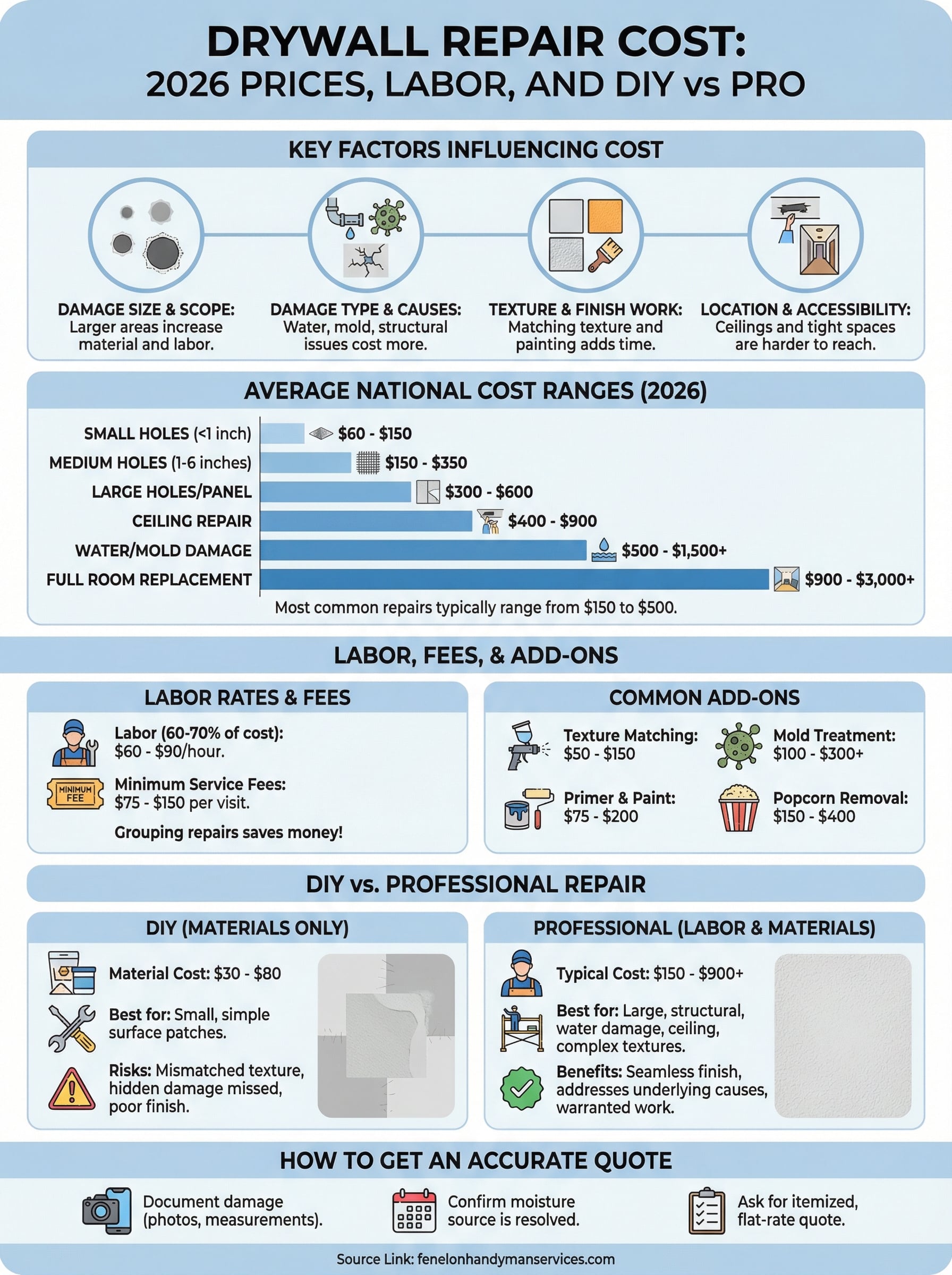
Before calling anyone for a quote, it helps to know the ballpark numbers so you can tell a fair price from an inflated one. Drywall repair cost in 2026 typically falls between $150 and $900 for most residential jobs, with outliers on both ends depending on complexity, location, and whether additional work like mold remediation or texture matching is involved.
National cost ranges by job size
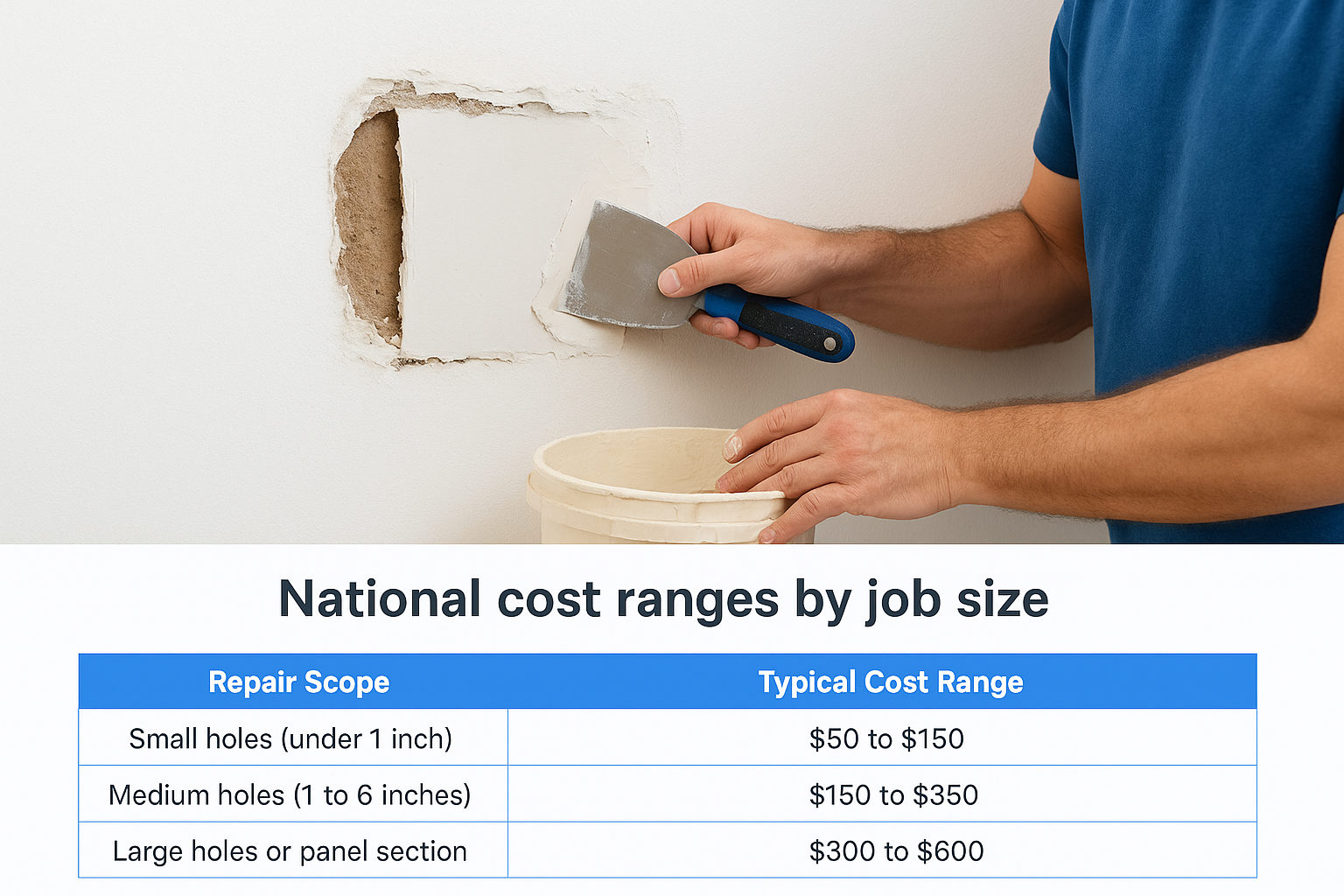
Most repair jobs group into predictable price tiers based on the size and complexity of the work involved. Smaller cosmetic patches sit at the lower end of the range, while full panel replacements or ceiling repairs push toward the top. The table below reflects current national averages for 2026.
| Repair Scope | Typical Cost Range |
|---|---|
| Small holes (under 1 inch) | $50 to $150 |
| Medium holes (1 to 6 inches) | $150 to $350 |
| Large holes or panel section | $300 to $600 |
| Ceiling repair | $400 to $900 |
| Water or mold-related damage | $500 to $1,500+ |
| Full room drywall replacement | $900 to $3,000+ |
For most homeowners, the majority of common repairs fall between $150 and $500 when handled by a licensed professional.
What the Tampa market looks like in 2026
Local labor rates in the Tampa metro area align closely with national figures but can trend slightly higher due to demand for licensed and insured tradespeople. Florida-specific issues like moisture infiltration, wood rot behind walls, and storm-related ceiling damage frequently push jobs into the mid-to-upper tier of cost ranges, because the visible drywall damage is often just the starting point.
Pricing in the Tampa area also factors in material costs, which have remained relatively stable after the post-pandemic supply shifts of earlier years. Drywall sheets, joint compound, and primer are all reasonably priced in 2026, meaning labor is where most of your quote comes from. A professional technician’s time typically accounts for 60 to 70 percent of the total job cost on small-to-medium repairs, which is why minimum service fees matter and why grouping multiple small repairs into one visit saves you money.
Costs by repair type and damage severity
Not all damage is equal, and the type of repair often matters more than the size of the hole when calculating your final drywall repair cost. A small crack from foundation settling can cost more to fix properly than a fist-sized impact hole in an interior wall, because the settling crack requires addressing the underlying cause first. Knowing what category your damage falls into helps you set a realistic budget before any contractor walks through your door.
Common surface repairs
Surface-level repairs cover the majority of drywall jobs homeowners deal with: nail pops, small holes from screws or doorknobs, hairline cracks from normal settling, and minor dents from everyday wear. These repairs primarily involve patching compound, mesh tape, and a light sanding pass before priming. Labor time stays short, often under two hours, which keeps costs closer to the lower end of the pricing range.
Here is a breakdown of typical costs for common surface repairs in 2026:
- Nail pops or small holes (under 1 inch): $50 to $150
- Medium holes from doorknobs or screws (1 to 6 inches): $150 to $350
- Hairline cracks along seams: $100 to $250
- Larger impact damage requiring backer board: $250 to $450
Water damage and structural repairs
Water-damaged drywall is in a category of its own. When moisture soaks into the panel, the gypsum weakens, mold can begin forming within 24 to 48 hours, and the insulation behind the wall often needs replacement as well. In Florida’s climate, this type of damage is more common than homeowners expect, and it rarely stops at the visible stain on the surface.
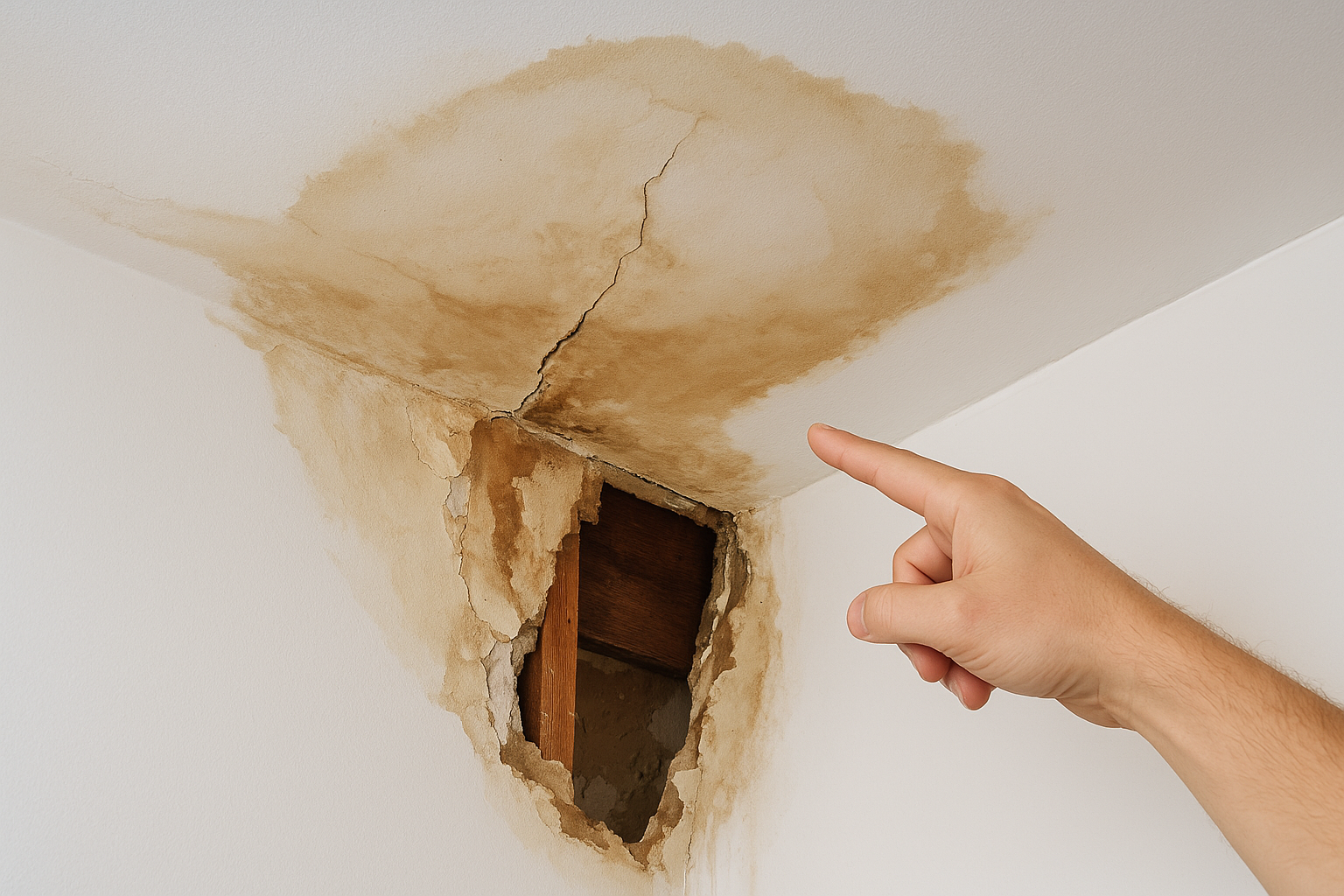
Structural repairs, where the framing or backing behind the drywall is compromised, require the most time and carry the highest costs. Technicians must remove damaged material, repair or replace framing, treat for mold if present, and then install and finish new drywall before any painting begins. Costs for water or structurally compromised repairs typically run from $500 to $1,500 or more, depending on how far the damage has spread.
If you see a water stain on your ceiling or wall, treat it as urgent: delaying the repair almost always makes the final bill larger.
Labor, minimum service fees, and add-ons
Understanding the full drywall repair cost means looking past the patch itself and accounting for what you’re actually paying for: a skilled technician’s time, a minimum trip charge, and any extras that come with your specific job. These line items can shift your total significantly, and knowing what to expect before you book prevents surprises on the final invoice.
What labor rates actually look like
Professional drywall repair labor in the Tampa metro area typically runs between $60 and $90 per hour in 2026, depending on the technician’s experience level and the complexity of the work. Finish work, including texture matching and feathering compound edges, usually takes longer than the patching step itself and accounts for a substantial share of the total labor time on any visible repair.
On small-to-medium repairs, labor accounts for 60 to 70 percent of your total bill, which means the quality of the person doing the work matters as much as the price they quote.
Most professional handymen estimate job time before starting and give you a flat project rate rather than an open-ended hourly charge. This protects you from runaway costs and gives the technician an incentive to work efficiently without cutting corners on finish quality.
Minimum service fees
Minimum service fees exist because every job, no matter how small, requires a technician to travel, set up, and spend time at your home. In the Tampa area, most reputable handyman companies charge a minimum fee ranging from $75 to $150 for any visit, even if the actual repair takes only 20 minutes. Factoring this into your decision matters most when you have a single small nail pop or hairline crack, since the minimum call-out fee will likely exceed the material cost by a wide margin.
Booking multiple small repairs in a single visit is the most cost-effective approach. If you have three nail holes, a loose door hinge, and a scuffed section of baseboard, one visit handles all of it under a single minimum fee rather than three separate call-out charges.
Common add-ons that raise your total
Several additional services frequently appear on drywall repair invoices and are worth knowing about before you approve any quote. These are not padding; they reflect real work required to leave your walls in finished condition.
- Texture matching: $50 to $150 depending on the pattern and area size
- Primer and paint: $75 to $200 depending on coverage needed
- Mold treatment: $100 to $300 or more if moisture damage is confirmed
- Popcorn ceiling removal and refinish: $150 to $400 per affected area
- Access panel installation: $100 to $200 if wall access is needed for plumbing or electrical behind the repair zone
Asking your contractor to itemize each add-on in the written quote lets you compare what different companies include in their base price versus what they charge separately.
DIY drywall repair costs and when DIY fails
Taking on a small drywall patch yourself can save money on labor, but the savings depend entirely on the type of damage and your comfort level with finish work. Understanding the true drywall repair cost for a DIY approach means accounting for both materials and the realistic possibility that a poor finish will cost you more to fix later.
What DIY materials actually cost
Patch kits and compound are inexpensive and widely available, which makes small repairs an appealing weekend project for handy homeowners. The material cost for a basic DIY repair typically falls well below what a professional visit costs, but that gap shrinks once you factor in tools you may not already own.
Here is what you can expect to spend on materials in 2026:
- Small patch kit (mesh and compound for holes under 4 inches): $8 to $20
- Pre-mixed joint compound (one quart): $10 to $18
- Drywall sheet (4×8 foot panel): $15 to $25
- Sandpaper, primer, and paint: $20 to $50
- Drywall screws and backer board: $10 to $20
- Texture spray (for orange peel or basic patterns): $8 to $15
Most straightforward DIY patches cost $30 to $80 in materials total, assuming you already own basic tools like a putty knife, sanding block, and drill.
When DIY makes the problem worse
Texture matching is where most DIY attempts fall apart. Replicating knockdown, skip trowel, or orange peel texture consistently across a patched area takes practice, and a mismatched finish in a visible room is often more noticeable than the original hole. If the repair sits in a high-traffic area like a living room or hallway, a botched texture job will likely require a professional to strip and redo the entire section.
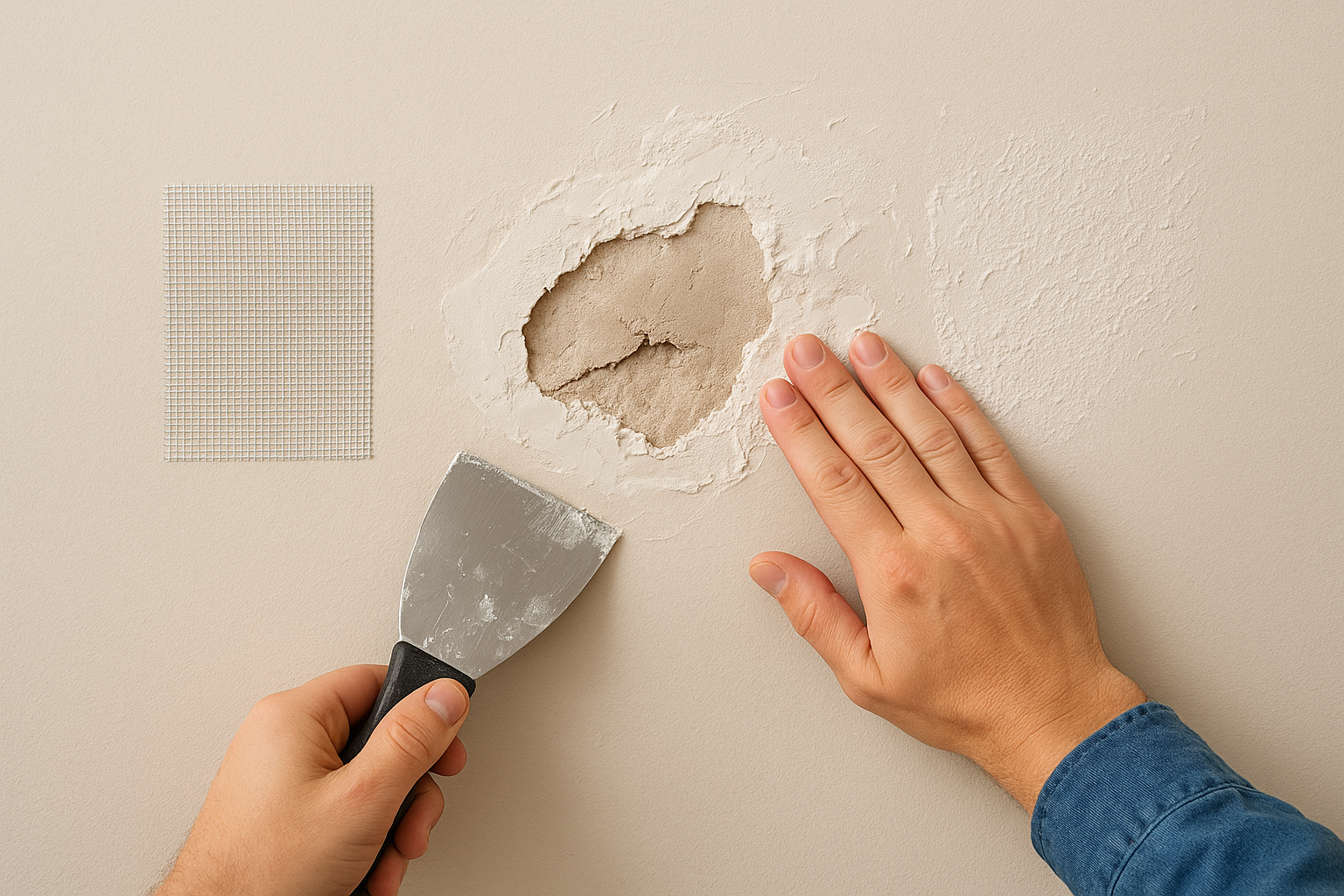
Attempting to fix water-damaged drywall yourself without confirming the moisture source is resolved first is one of the most common and costly mistakes homeowners make.
Structural damage, mold, or any repair involving electrical or plumbing access behind the wall should go straight to a licensed professional. The risk of missing hidden damage or disturbing insulation far outweighs any material savings from handling it yourself. For straightforward surface patches in low-visibility spots, DIY works fine. For anything more complex, the labor cost is worth it.
How to get an accurate drywall repair quote
Getting an accurate drywall repair cost estimate starts before anyone picks up the phone. The more information you give a contractor upfront, the more precise the quote you receive, and the less likely you are to see line items added after work begins. Walking into a quote conversation prepared saves time for both sides and protects you from vague estimates that leave room for unexpected charges.
What to prepare before a technician arrives
Document the damage clearly before reaching out to any handyman or contractor. Take photos of every affected area in good lighting, including close-up shots and wider views showing the surrounding wall or ceiling. Measure the approximate size of each damaged section so you can describe it accurately over the phone. If you know the cause, such as a leaking pipe, a doorknob impact, or storm water intrusion, note that as well because it helps the technician anticipate what may be hiding behind the visible damage.
Providing photos and measurements before an in-person visit often allows contractors to give a reliable ballpark range before they schedule a trip, which saves everyone time.
Confirm whether the source of any moisture damage has been fully resolved before asking for a repair quote. If the leak is still active or the underlying cause is unknown, a reputable contractor will tell you to address that first, and any quote you receive before that step is essentially a guess.
What to ask before signing any quote
When the quote arrives, ask for an itemized breakdown that separates labor, materials, texture matching, and any add-ons like primer or mold treatment. A clear line-item quote makes it easy to compare two bids side by side and understand exactly what each company includes in their base price.
Ask directly whether the quote is flat-rate or subject to change once work begins. Reputable companies will honor a written flat-rate quote barring unexpected structural issues discovered during the repair. You should also confirm whether the contractor is licensed and insured in Florida, since unlicensed work offers you no recourse if the finish quality falls short or damage occurs during the job. Asking these questions upfront is the simplest way to avoid billing disputes after the work is done.
Wrap-up and next steps
Drywall repair cost comes down to a handful of factors you now know how to evaluate: damage size, repair type, labor rates, texture matching requirements, and whether the job carries any hidden complexity like moisture or structural issues. Most residential repairs fall between $150 and $500 when handled by a licensed professional, and grouping multiple small jobs into one visit is the most reliable way to keep your total down.
If you’re dealing with damage anywhere in the Tampa metro area and want a quote with no surprises, Fenelon Handyman Services has been handling every type of drywall repair Florida homes run into since 2014. Our team gives you at least three solution options at different price points, and every quote is flat-rate with no hidden fees. Reach out to Fenelon Handyman Services today to schedule your assessment and get your walls looking right again.