
Choosing the best flooring for rental properties comes down to one question: what gives you the most value for the least headache? Tenants are tough on floors, that’s just reality. The wrong material means you’re replacing it between every lease turnover, eating into your profits instead of building them.
The right flooring strikes a balance between durability, appearance, and cost. It needs to handle foot traffic, pets, spills, and moves without falling apart. And ideally, it should look good enough to attract quality tenants willing to pay fair rent. At Fenelon Handyman Services, we’ve installed and repaired every type of flooring across rental properties throughout the Tampa area since 2014, so we know firsthand what holds up and what doesn’t in Florida’s heat and humidity.
Below, we break down five flooring options ranked by how well they perform in real rental conditions, what they cost, and how easy they are to maintain. Whether you own a single rental unit or manage a portfolio, this guide will help you make a smarter investment on your next flooring project.
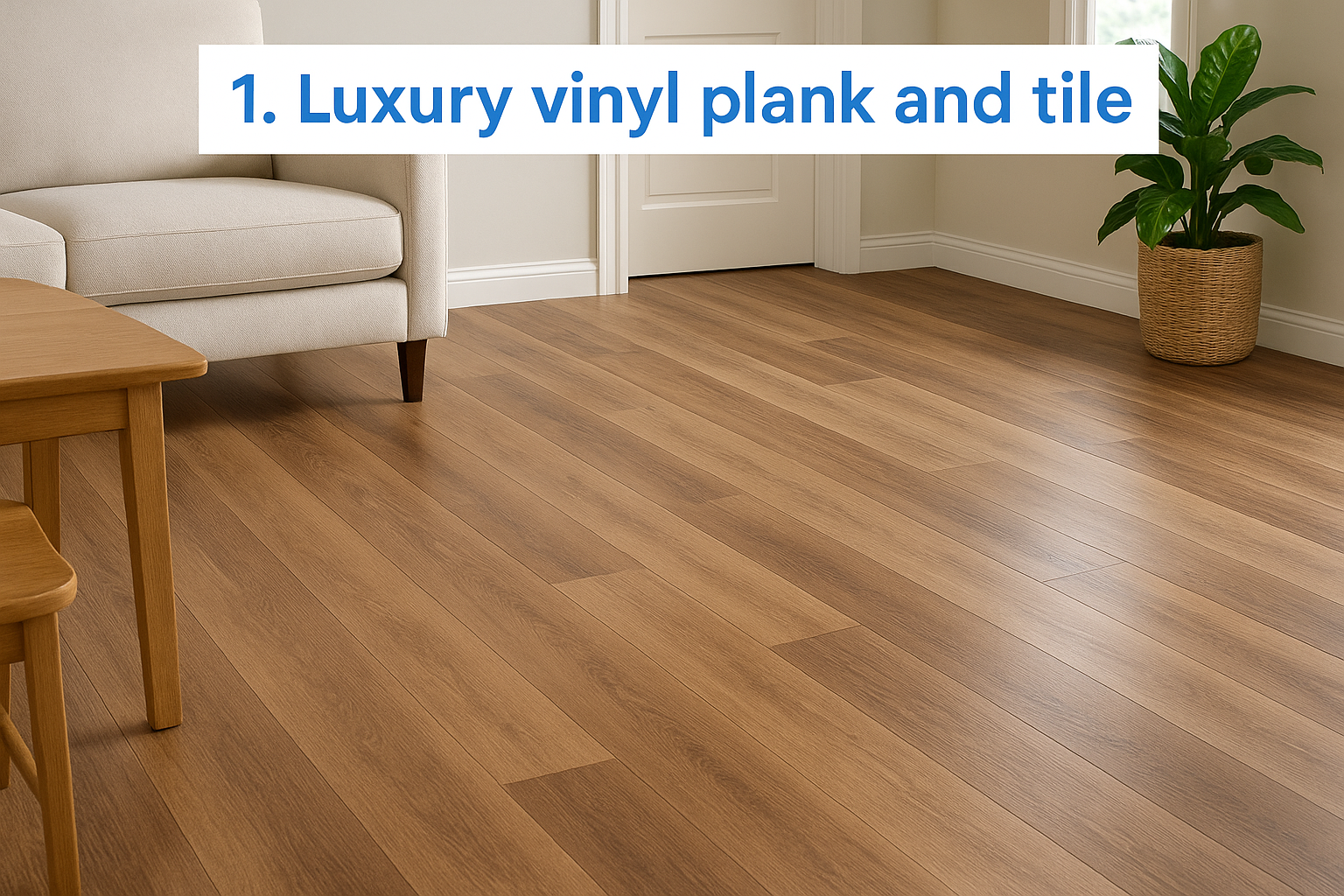
1. Luxury vinyl plank and tile
Luxury vinyl plank (LVP) and luxury vinyl tile (LVT) consistently rank as the best flooring for rental properties across most markets, and Tampa is no exception. This material delivers a realistic wood or stone appearance without the fragility or cost of the real versions, making it the top choice for property owners who want durability and style in one package.
What it is and why it fits rentals
LVP and LVT are multi-layer synthetic flooring products built around a rigid or semi-rigid core, topped with a printed design layer and a clear wear layer. For rentals, you want a wear layer of at least 12 mil to resist the scratches, scuffs, and surface damage that build up across multiple tenants and lease cycles.
Where it works best in a rental unit
Luxury vinyl is one of the few materials that performs well across all areas of a rental unit because it’s fully waterproof. Unlike laminate, humidity and standing water won’t cause swelling or buckling here. It thrives in:
- Kitchens and bathrooms
- Laundry rooms
- Entryways and hallways
- Living rooms and bedrooms
What it handles well and where it fails
LVP handles moisture, pet accidents, and heavy foot traffic without showing significant wear over time. Where it struggles is under prolonged direct sunlight, which can cause cheaper products to soften or expand. In Tampa, this is a real concern near sliding glass doors and south-facing windows.
Always check the spec sheet for UV-stabilized coatings before purchasing, since budget vinyl often skips this protection entirely.
Cost, lifespan, and turnover impact
Expect to spend $2 to $5 per square foot on materials, with installation running another $1 to $3. A quality LVP floor will last 15 to 25 years under normal rental conditions, which reduces how often you replace flooring and cuts your per-unit maintenance costs significantly over time.
Installation and maintenance tips for Tampa humidity
Before installation, give LVP at least 48 hours to acclimate to the room’s temperature and humidity. Always leave expansion gaps at walls to prevent buckling during Tampa’s summer heat spikes. For ongoing care, a damp mop and a pH-neutral floor cleaner keeps the surface looking clean between tenants without any specialized effort.
2. Porcelain and ceramic tile
Tile is a proven performer in Florida rentals and remains a top contender when you’re looking for the best flooring for rental properties in humid climates. It’s been the go-to material for Tampa homes for decades, and for good reason.
What it is and why it fits rentals
Porcelain and ceramic tile are fired clay products that resist water, stains, and wear at a level most flooring materials can’t match. Porcelain is denser and harder than ceramic, which makes it the stronger choice for high-traffic rental spaces where durability matters most.
Where it works best in a rental unit
Tile performs best in bathrooms, kitchens, entryways, and laundry rooms. In Tampa, many landlords extend tile throughout the entire unit to eliminate moisture concerns and simplify cleaning between tenants.
What it handles well and where it fails
Tile handles spills, humidity, and pet messes without absorbing a drop. Its main weakness is comfort: it’s hard underfoot and cold in air-conditioned spaces. Grout lines also collect dirt over time if a tenant doesn’t clean them regularly.
Use epoxy grout instead of standard cement grout to reduce staining and extend the life of the floor between tenants.
Cost, lifespan, and turnover impact
Ceramic tile runs $1 to $3 per square foot, while porcelain costs $3 to $7. Both can last 20 to 30 years with minimal upkeep, making them one of the highest long-term value options available.
Installation and maintenance tips for Tampa humidity
Proper installation requires a stable, level subfloor to prevent cracking from shifting. During Tampa’s rainy season, ensure grout lines stay sealed annually to keep moisture from working underneath the tile and weakening the adhesive bond.
3. Laminate flooring
Laminate is a budget-friendly option that many Tampa landlords use when they need an attractive floor without the higher upfront cost of luxury vinyl or tile. It mimics the look of hardwood at a fraction of the price, which helps rental units show well without a major capital investment.
What it is and why it fits rentals
Laminate consists of a high-density fiberboard (HDF) core topped with a photographic layer and a hard protective coating. It’s one of the most affordable ways to achieve a wood-look floor, which is why it still shows up frequently when landlords compare the best flooring for rental properties on a tighter budget.
Where it works best in a rental unit
Laminate works well in living rooms, bedrooms, and hallways where foot traffic is consistent but moisture exposure stays low. Keep it away from bathrooms and kitchens entirely.
What it handles well and where it fails
Laminate resists surface scratches and everyday scuffs better than real hardwood. Its critical weakness is moisture. Water that seeps into the seams causes swelling and warping, which is a serious problem in Tampa’s high-humidity environment.
Never install laminate in any room where water pooling or high humidity is a regular occurrence.
Cost, lifespan, and turnover impact
Materials run $1 to $3 per square foot, making it the most affordable wood-look option. Expect a lifespan of 10 to 15 years in dry areas with reasonable tenant care.
Installation and maintenance tips for Tampa humidity
Let laminate acclimate for 72 hours before installation. Always use a moisture barrier underlayment to slow any humidity-related damage, and clean spills immediately to prevent seam penetration.
4. Engineered hardwood
Engineered hardwood brings real wood aesthetics to your rental without the full vulnerability of solid hardwood, giving you a mid-range option that appeals to higher-end tenants willing to pay more per month.
What it is and why it fits rentals
This material consists of a real wood veneer layer bonded over a plywood or HDF core. That construction reduces how much the floor expands and contracts with temperature changes, making it more stable than solid hardwood while still ranking among the best flooring for rental properties in the premium segment.
Where it works best in a rental unit
Engineered hardwood performs best in living rooms and bedrooms where tenants want warmth and natural appeal underfoot. Keep it out of bathrooms and avoid kitchens unless you take extra precautions with sealing.
What it handles well and where it fails
The floor handles moderate humidity and foot traffic reasonably well. Its weakness is direct water exposure and deep scratches, since the veneer layer can only be sanded down once or twice before you hit the core.
If you install engineered hardwood, choose a veneer thickness of at least 3mm to allow for at least one refinishing cycle between tenants.
Cost, lifespan, and turnover impact
Materials run $3 to $7 per square foot, with a lifespan of 20 to 30 years if you manage moisture and maintain the finish consistently.
Installation and maintenance tips for Tampa humidity
Always acclimate engineered hardwood for 72 hours before installation and run your HVAC to keep indoor humidity below 55 percent, which protects the floor from warping in Tampa’s climate.
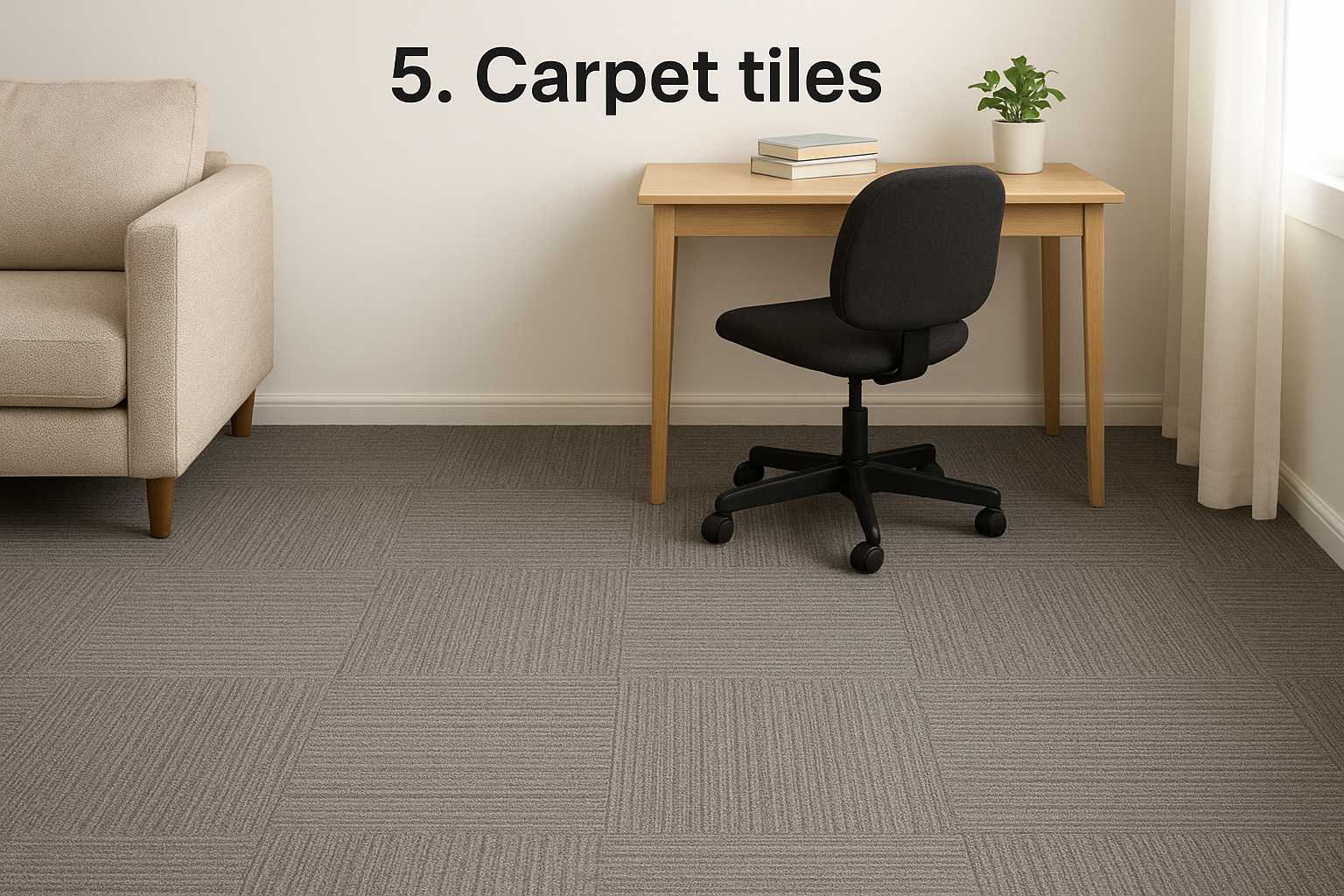
5. Carpet tiles
Carpet tiles give you the comfort of carpet with a major practical advantage: you can replace individual squares instead of pulling up an entire floor.
What it is and why it fits rentals
Carpet tiles are modular carpet squares typically measuring 18 or 24 inches across. They’re one of the more practical picks when evaluating the best flooring for rental properties on a tight budget because damage to one section doesn’t require a full replacement.
Where it works best in a rental unit
Use carpet tiles in bedrooms and home office spaces where tenants want softness underfoot. Avoid kitchens, bathrooms, and laundry rooms since moisture penetration will cause mold to develop quickly in those spaces.
What it handles well and where it fails
Carpet tiles handle everyday foot traffic and minor spills reasonably well when treated with a stain-resistant coating. Their main weakness is deep moisture penetration, which breeds mold fast in Tampa’s humid climate.
Always use a moisture-barrier underlayment beneath carpet tiles in any Tampa rental to reduce mold risk.
Cost, lifespan, and turnover impact
Materials run $1 to $3 per square foot, and a well-maintained installation lasts 8 to 12 years. The real turnover advantage is spot replacement: swap out a damaged tile in minutes rather than scheduling a full flooring job.
Installation and maintenance tips for Tampa humidity
Keep your HVAC running consistently to hold indoor humidity below 55 percent. Vacuum carpet tiles weekly and treat stains immediately to prevent the fibers from holding odors between tenants.
Final takeaways
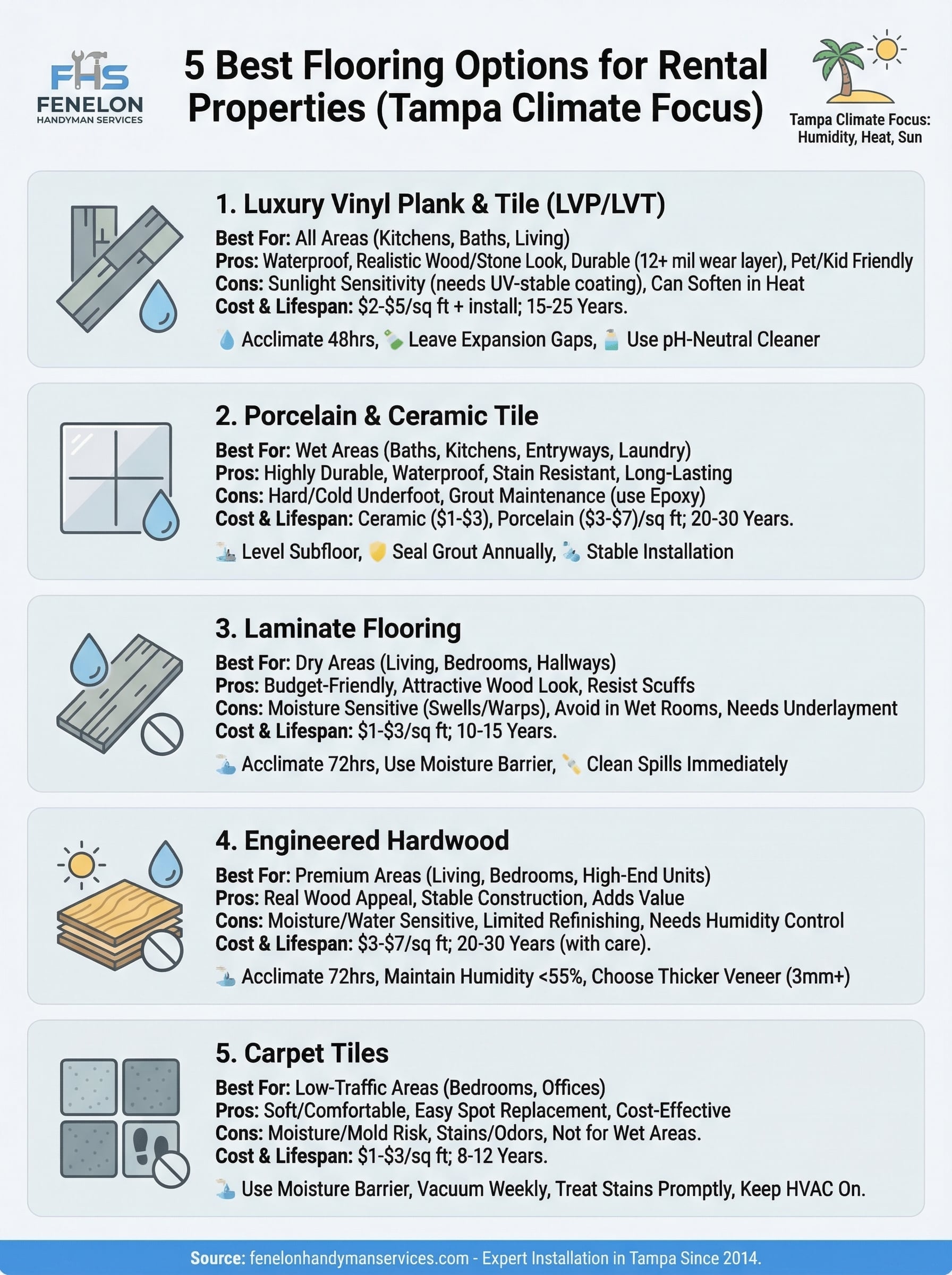
No single material wins for every rental unit, but the pattern is clear: waterproof and low-maintenance flooring consistently outperforms the alternatives across Tampa’s climate. Luxury vinyl plank covers the most ground for most landlords, while porcelain tile remains the most durable choice in wet areas. Laminate and carpet tiles work when you’re managing a tight budget and placing them in the right rooms. Engineered hardwood earns its keep in premium units where higher rents justify the investment.
Your best move is to match the material to the specific room and your tenant profile, not just the upfront price tag. A flooring decision made today will follow you through multiple lease cycles, so getting it right the first time matters. If you’re ready to install or replace flooring in your Tampa rental, the team at Fenelon Handyman Services can walk you through your options and handle the job from start to finish.