
You searched for flooring installer near me, and now you’re staring at a dozen options with no clear way to tell who’s actually worth hiring. That’s a frustrating spot to be in, especially when new flooring is one of the bigger investments you’ll make in your home.
The wrong choice can mean warped planks, cracked tiles, or a contractor who disappears mid-project. The right one gives you floors that look great and hold up for years, which matters even more here in Tampa where humidity and heat put materials to the test. At Fenelon Handyman Services, we’ve been installing and repairing flooring across the Tampa Bay area since 2014, so we’ve seen what happens when homeowners skip the vetting process.
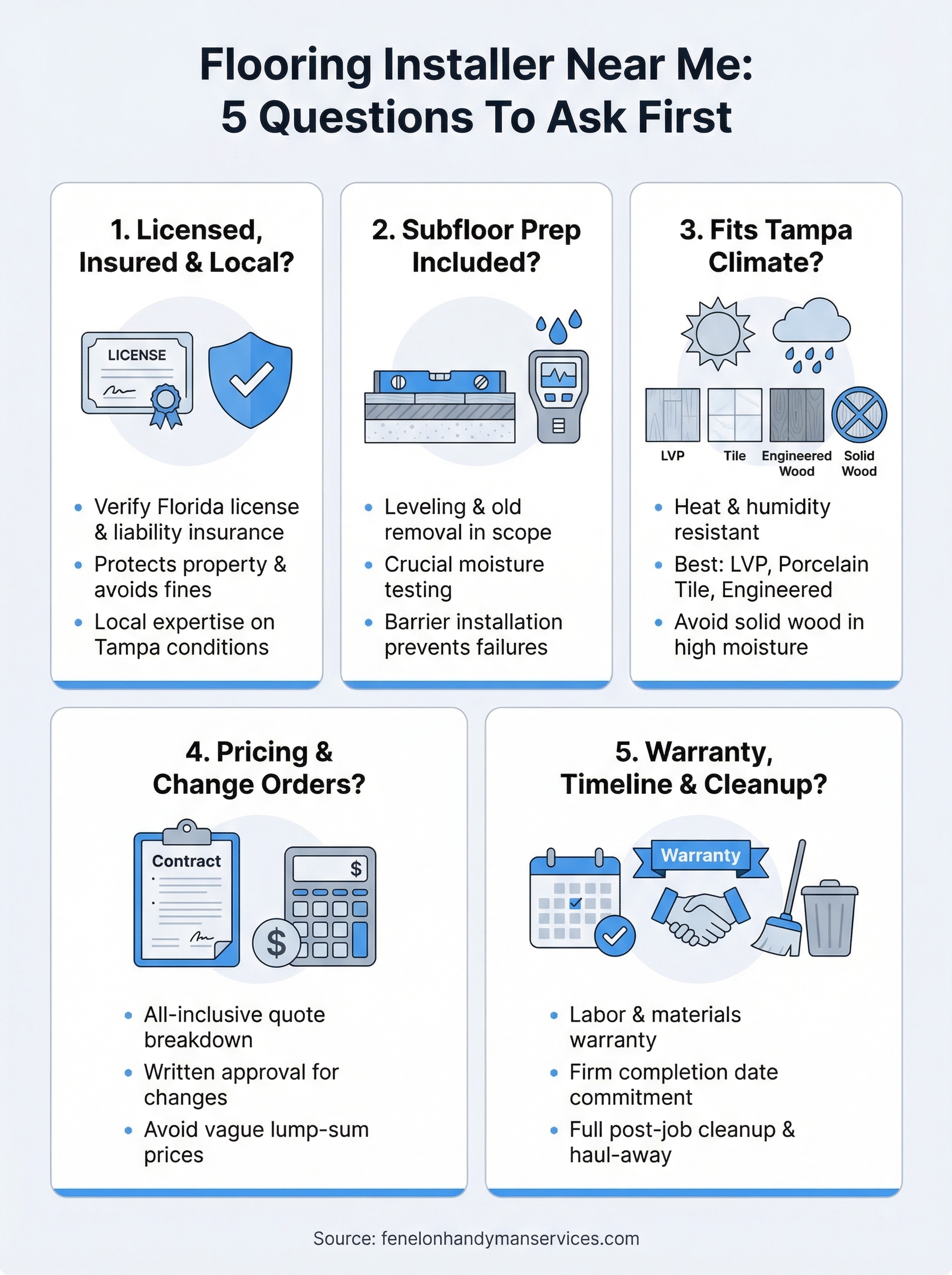
Before you book anyone, ask these five questions first. They’ll help you separate the professionals from the problems, and make a decision you won’t regret six months from now.
1. Are you licensed, insured, and truly local?
This is the first question you should ask every flooring installer near me search result before you go any further. Licensing and insurance aren’t just bureaucratic checkboxes; they protect you when something goes wrong on your property.
Why this question matters
Florida requires contractors to hold valid state or county licenses for certain types of work, and flooring installation often falls under those requirements depending on scope. If a contractor isn’t licensed and something goes wrong, you could face fines or be left footing the bill for repairs out of pocket. Liability insurance matters just as much: if a worker gets hurt on your property or damages your home, you need to know you won’t be the one paying for it.
What a good answer sounds like
A trustworthy installer gives you their license number without hesitation and tells you exactly what their insurance covers. They should also be genuinely local, meaning they know Tampa’s specific building conditions, not just someone who drove in from three counties over. Local contractors understand how humidity affects subfloor adhesion, which materials perform best here, and what local code requires.
Asking for proof of insurance and a license number before signing anything is the single fastest way to filter out unqualified contractors.
Red flags to watch for
Be cautious of anyone who gets vague or defensive when you ask for credentials. Phrases like "we’re in the process of renewing" or "we work under someone else’s license" are serious warning signs. Also watch out for contractors who list no physical address or give only a cell number and no verifiable business presence.
What to get in writing before work starts
Request a copy of their insurance certificate and confirm their license number is active through the Florida Department of Business and Professional Regulation. Make sure both documents are dated and current before you agree to anything.
2. What prep and subfloor work do you include?
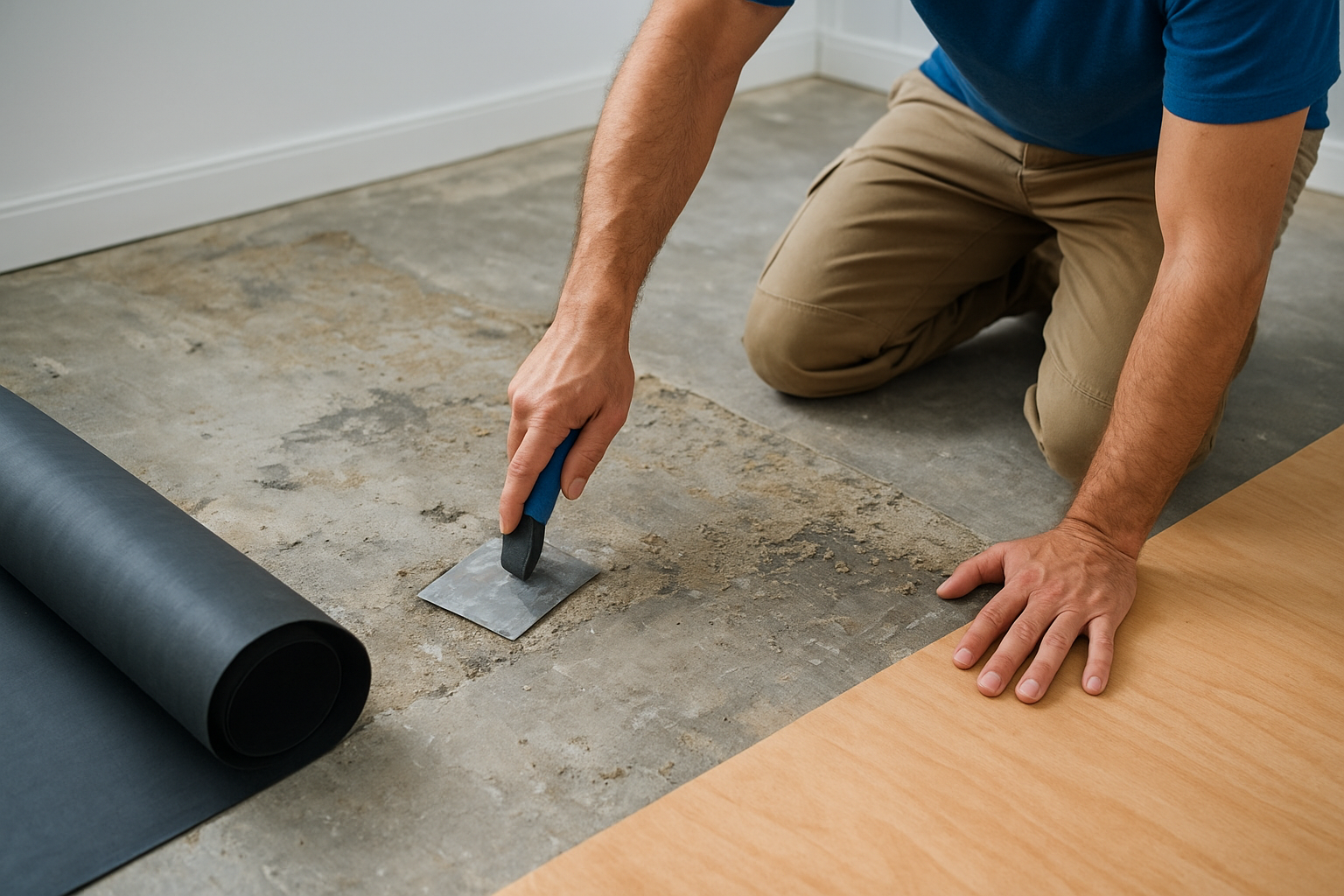
Subfloor preparation is where many flooring jobs go wrong, and it’s often invisible until it’s too late. Before you hire any flooring installer near me result, understand exactly what their quote covers below the surface.
Why this question matters
A new floor is only as good as what’s underneath it. Skipped or rushed subfloor prep leads to squeaky boards, tile cracks, and floors that fail within years rather than decades.
In Tampa, moisture in the subfloor is a constant threat. Without proper testing and a moisture barrier, even high-quality materials will warp, buckle, or grow mold.
What a good answer sounds like
Any reliable installer explains leveling, moisture testing, and old material removal as part of their standard scope. They should tell you upfront if those steps are included or billed separately.
If a contractor skips moisture testing in Florida’s climate, they’re cutting corners where it matters most.
Red flags to watch for
Watch out for quotes that don’t mention subfloor work at all. Surprise charges mid-project or skipped prep steps are both signs of a contractor you don’t want on your floor.
What to get in writing before work starts
Your contract should list every prep step by name, including leveling, moisture barrier installation, and debris removal. Confirm who supplies materials and at what cost before signing.
3. Which flooring fits Tampa heat and humidity best?
Not every flooring material holds up equally in Florida’s climate. Before you trust any flooring installer near me result to make this call for you, ask them directly how local conditions shape their material recommendations.

Why this question matters
Tampa’s combination of high humidity and heat can destroy the wrong flooring type within a few years. Materials that perform well in dry climates often warp, swell, or delaminate here, costing you a full replacement far sooner than expected.
What a good answer sounds like
A knowledgeable installer recommends moisture-resistant options like luxury vinyl plank, porcelain tile, or engineered hardwood over solid hardwood for most Tampa homes. They explain the tradeoffs clearly and let your lifestyle and budget guide the final choice.
A contractor who pushes one material without discussing your specific rooms and conditions isn’t giving you the full picture.
Red flags to watch for
Be cautious of anyone who recommends solid hardwood for high-moisture areas like bathrooms or laundry rooms, or who never asks about your home’s ventilation and AC habits before suggesting materials.
What to get in writing before work starts
Your contract should name the exact product, brand, and moisture rating of every material being installed so there’s no substitution after you’ve agreed.
4. How do you price it and handle change orders?
A flooring installer near me quote can look reasonable until unexpected costs start stacking up mid-project. Understanding exactly how pricing works and what triggers a change order before the job starts is critical for protecting your budget.
Why this question matters
Flooring jobs frequently expand in scope once work begins. Hidden subfloor damage or unexpected material shortfalls can balloon your original estimate if you haven’t established clear rules upfront for how those situations get handled and billed.
What a good answer sounds like
A reliable installer gives you an all-inclusive quote that breaks down labor, materials, and disposal costs separately. They explain their change order process clearly, including what triggers one, how you’ll be notified, and that you must approve any additional cost before work continues.
Never allow a contractor to proceed past a scope change without your written approval first.
Red flags to watch for
Walk away from any contractor who gives you a vague lump-sum price with no line-item breakdown, or who adds charges verbally without documentation. Pressure to approve cost changes quickly mid-project is another sign you’re dealing with the wrong crew.
What to get in writing before work starts
Your contract should include a detailed cost breakdown and a written change order clause requiring your signature and approval before any additional work or expense gets added.
5. What warranty, timeline, and cleanup do you provide?
The final details of any flooring job often separate a professional operation from an amateur one. Before you commit to any flooring installer near me result, get clear answers on how they handle the end of the job, not just the beginning.
Why this question matters
A flooring job without a warranty or a firm completion timeline leaves you with no leverage if something goes wrong. Cleanup responsibilities are equally important, since leftover debris, adhesive residue, or damaged furniture from the installation process becomes your problem if nobody addresses it upfront.
What a good answer sounds like
A solid installer commits to a specific completion date and offers a written warranty covering both labor and materials. They handle full cleanup as part of the job, not as an afterthought you negotiate at the end.
A contractor who won’t put a timeline and warranty in writing is telling you something important about how they operate.
Red flags to watch for
Be cautious of vague commitments like "we’ll finish when we finish" or warranties that cover materials only. Contractors who leave debris removal as your responsibility are cutting corners on professionalism.
What to get in writing before work starts
Your contract should state the completion date, full warranty terms, and a clear statement that the crew handles all cleanup and haul-away before final payment is due.
Next steps
You now have five direct questions that cut through the noise when you search for a flooring installer near me. Ask every one of them before you sign anything, and pay attention to how each contractor responds. Vague answers, missing credentials, or resistance to putting things in writing are all signals to keep looking.
Getting this right means floors that hold up in Tampa’s heat and humidity for years, not something you’re repairing or replacing in three. The contractors worth hiring will welcome your questions because it shows them you’re a serious homeowner who expects professional work.
If you’re in the Tampa Bay area and want a team that brings transparent pricing, local expertise, and a satisfaction guarantee to every flooring project, contact Fenelon Handyman Services to schedule your estimate. No pressure, no hidden costs, just a straightforward conversation about what your floors need.