
You just finished rolling paint on your living room wall, and now you’re wondering, how long does interior paint take to dry before you can apply a second coat or move your furniture back? Touch it too early, and you’ll leave fingerprints or peel the finish. Wait too long between coats, and you’re burning daylight on a project that should have been done hours ago.
Here’s what most people don’t realize: drying and curing are two different things. A wall can feel dry to the touch in under an hour but still be weeks away from reaching full hardness. That distinction matters, especially in Tampa’s humidity, where moisture in the air can slow everything down and even affect how well your paint holds up over time.
At Fenelon Handyman Services, we handle interior painting projects across the Tampa metro area, from single accent walls to full-home repaints. After more than a decade of working in Florida’s climate, we’ve learned exactly how local conditions affect dry and cure times. Below, we’ll break down the specific timelines for latex and oil-based paints, explain what influences those timelines, and give you practical ways to speed things up safely.
Why dry time vs cure time matters
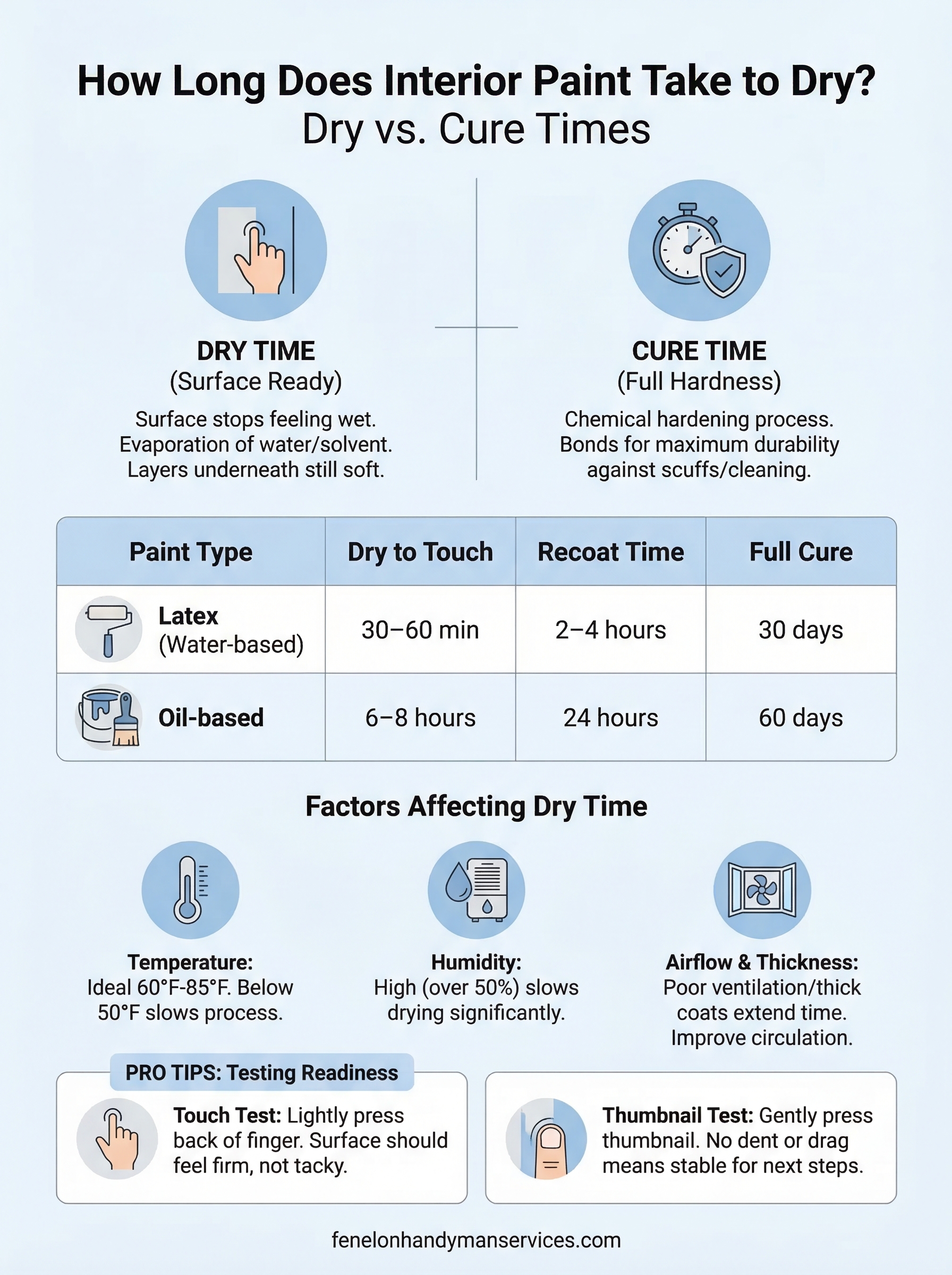
When people ask how long does interior paint take to dry, they’re usually asking two different questions without realizing it. Dry time refers to how quickly the surface stops feeling wet, while cure time refers to how long the paint takes to reach its full hardness and durability. Treating these as the same thing is one of the most common mistakes homeowners make, and it leads to scratched walls, peeling second coats, and finishes that wear out faster than they should.
What "dry" actually means
Paint feels dry to the touch when enough water or solvent has evaporated from the surface layer. At that stage, the paint looks set, but the layers underneath are still soft and vulnerable. If you apply a second coat too early, the solvents in the fresh paint can reactivate the layer below, causing wrinkling, lifting, or an uneven sheen that’s difficult to fix without stripping back to bare wall. In Tampa’s humid summers, that surface layer takes longer to firm up because moisture in the air slows evaporation significantly.
Dry to the touch does not mean ready for another coat. Always check the recoat window printed on your specific paint can before you pick up the roller again.
What "cure" actually means
Curing is a chemical hardening process that continues long after the paint feels dry. During curing, the paint film hardens and bonds to the surface at a molecular level, building the resistance it needs for daily life. A fully cured coat holds up against scuffs, cleaning products, and furniture contact far better than one that has only surface-dried. Most latex paints reach full cure in about 30 days, while oil-based paints can take up to 60. Moving furniture back too soon or scrubbing walls before the cure is complete can leave marks that won’t buff out.
Typical dry, recoat, and cure times by paint type
Understanding how long does interior paint take to dry depends heavily on the type of paint you’re using. The two most common choices for interior work are latex (water-based) and oil-based, and they behave very differently once applied to your walls.
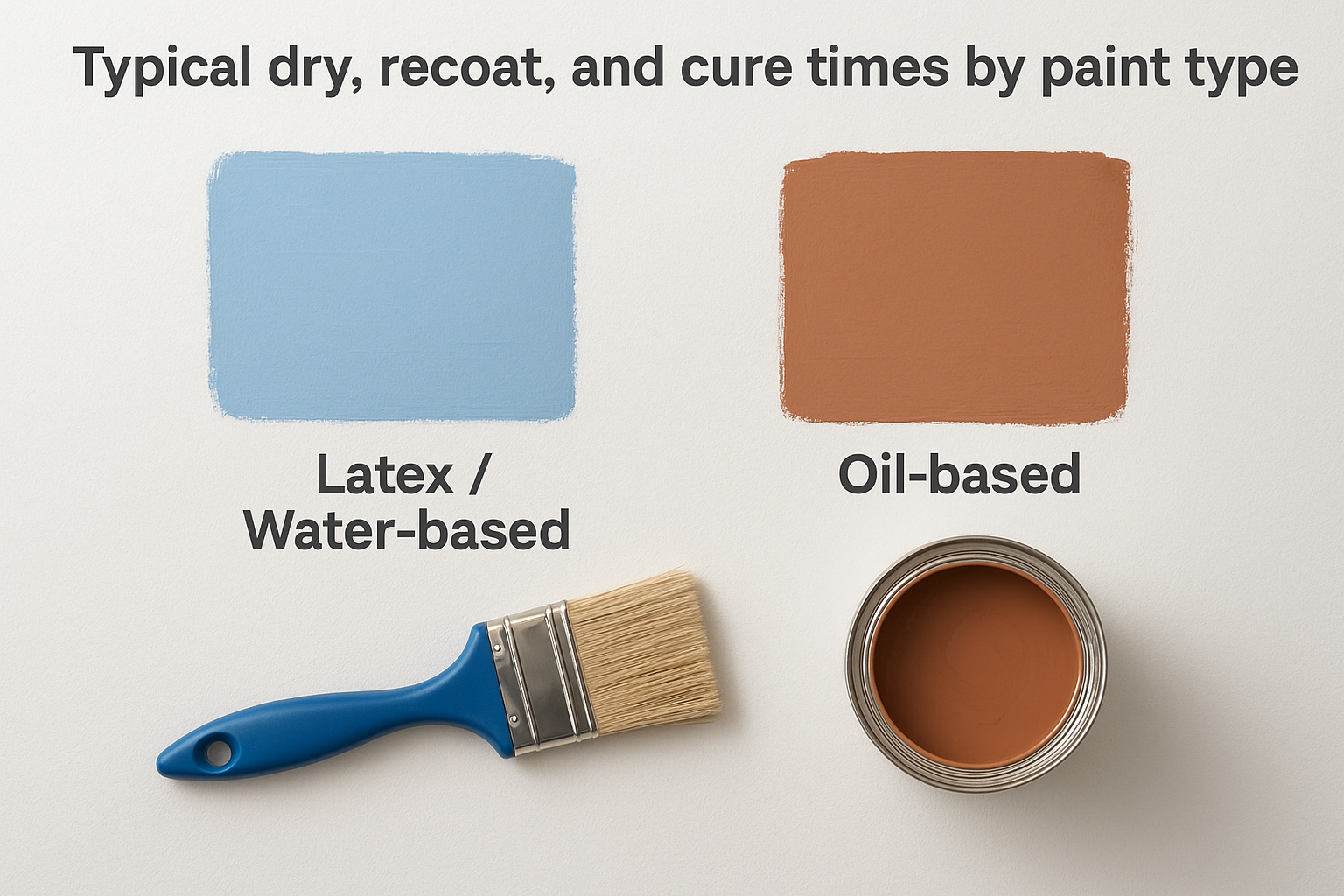
| Paint Type | Dry to Touch | Recoat Time | Full Cure |
|---|---|---|---|
| Latex / Water-based | 30–60 min | 2–4 hours | 30 days |
| Oil-based | 6–8 hours | 24 hours | 60 days |
Latex paint timelines
Latex paint dries to the touch in 30 to 60 minutes under normal conditions and is ready for a second coat within 2 to 4 hours. Full cure takes around 30 days, so treat your walls gently during that first month.
Applying a second coat before the 2-hour mark on latex paint risks dragging the first layer and leaving visible streaks that are hard to fix.
Oil-based paint timelines
Oil-based paints take 6 to 8 hours to dry to the touch and need a full 24-hour wait before you recoat. Full cure stretches to 60 days, which is why most painters reserve oil-based products for trim and high-contact surfaces rather than large wall areas.
What changes interior paint drying time
Several conditions affect how long does interior paint take to dry beyond just the product you choose. Understanding these factors helps you plan your project timeline and avoid common mistakes that ruin finishes.
Humidity and temperature
High humidity is the biggest enemy of fast drying times. When moisture in the air is above 50%, water-based paint struggles to evaporate efficiently, which stretches dry time well beyond the label estimate. Tampa homeowners deal with this regularly during summer months when indoor humidity can climb even with air conditioning running. On the flip side, temperatures below 50°F slow down the chemical reactions in both latex and oil-based paints, leading to soft, uneven finishes.
Keep your indoor temperature between 60°F and 85°F and humidity below 50% for the most reliable drying results.
Ventilation and coat thickness
Poor airflow traps evaporating solvents near the wall surface, which extends dry time and can cause bubbling or uneven sheen in the final finish. Open windows, run ceiling fans, or use a box fan to keep air circulating. Coat thickness also plays a direct role. Applying thick, heavy coats instead of two thinner ones can double your wait time between layers and increase the risk of sagging or cracking before the paint firms up.
How to tell when paint is ready for the next step
Knowing how long does interior paint take to dry on paper is useful, but knowing how to test your specific wall in your specific conditions is what actually protects your finish. Labels give you estimates, not guarantees, so always verify before picking up the brush or moving furniture.
The touch test
Lightly press the back of your finger against an inconspicuous section of the wall. If the paint feels tacky or leaves any impression, it is not ready. You should feel a firm, smooth surface with no stickiness before you consider applying the next coat.
The thumbnail test
The thumbnail test tells you whether the paint has moved past surface drying into a more stable state. Press your thumbnail gently into the painted surface. If it leaves a dent or drags the paint, the layer is still too soft. A wall that is truly ready for the next step will resist light pressure without any visible mark.
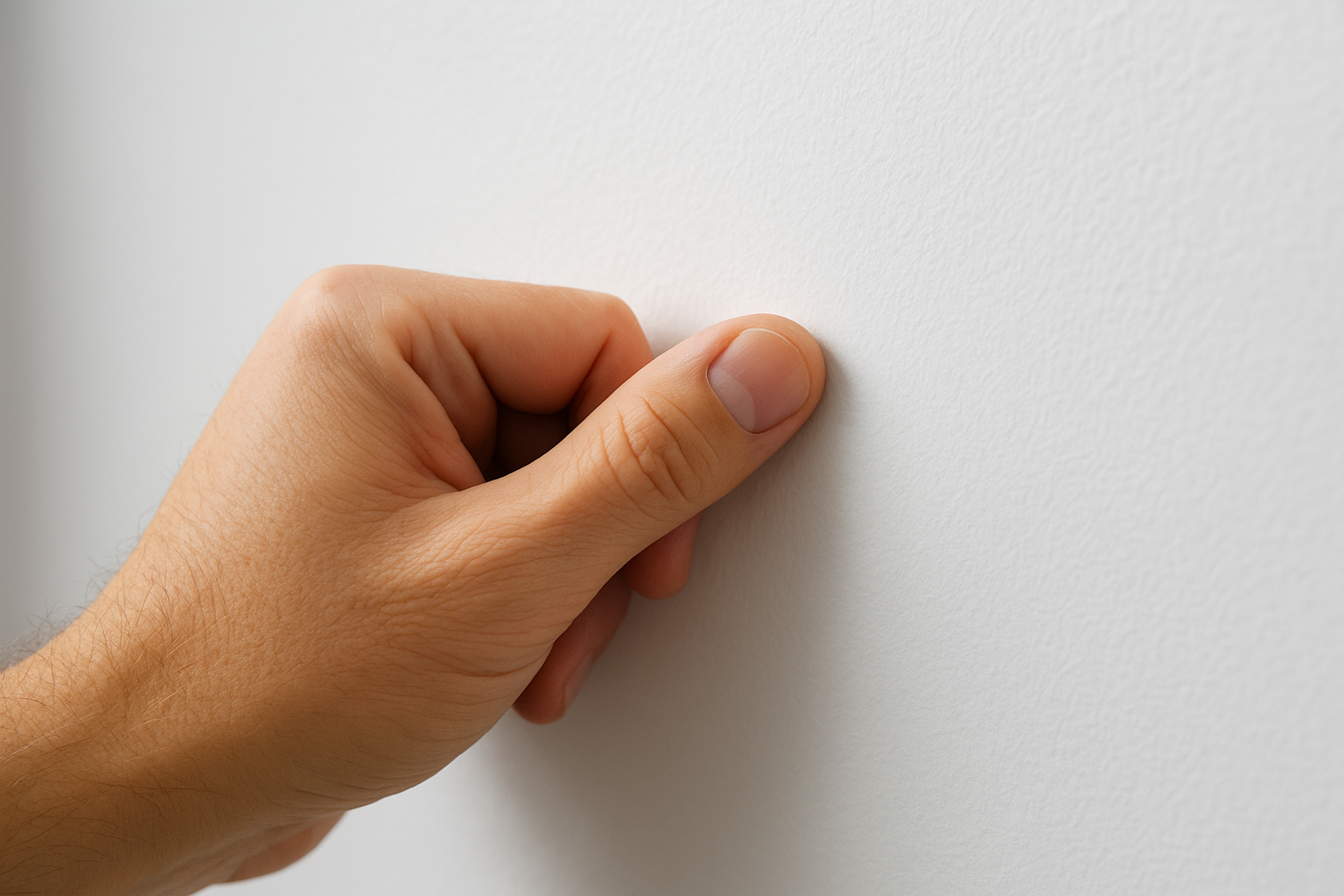
Run both tests in a low-traffic corner of the wall before committing to a full second coat or placing any furniture against the surface.
How to make interior paint dry faster safely
If you need to cut down how long interior paint takes to dry, a few targeted environment adjustments make a real difference. Avoid shortcuts like pointing a heat gun at the wall since concentrated heat dries the surface layer while trapping moisture underneath, which leads to cracking. The right approach supports natural evaporation by adjusting the conditions already in your space rather than forcing the process.
Control temperature and airflow
Set your thermostat between 70°F and 75°F and run ceiling fans on a low setting while the paint dries. Moving air carries evaporating moisture away from the wall surface, which shortens dry time between coats without stressing the paint film. Keep doors open between rooms so air circulates through the whole space rather than pooling near the wet wall.
Avoid pointing a box fan directly at the wall from close range. Indirect airflow across the room works better than blasting air at one concentrated spot.
Lower the humidity
Running a dehumidifier in the room is one of the most practical moves you can make in a humid climate like Tampa. Keeping indoor humidity below 50% gives water-based paint the dry air it needs to set on schedule, especially during summer months when ambient moisture stays high even with the air conditioning running.
Quick recap and what to do next
How long does interior paint take to dry depends on paint type, temperature, humidity, airflow, and coat thickness working together. Latex paint dries to touch in 30 to 60 minutes and is ready to recoat in 2 to 4 hours. Oil-based paint needs up to 24 hours between coats. Neither type reaches full cure for at least 30 days, so handle your freshly painted walls gently during that entire window.
Rushing any step costs you time and money through streaked finishes, peeling coats, and surfaces you’ll have to repaint. Controlling temperature and humidity in your space while testing the wall before moving forward are the two habits that protect your finish most reliably.
If you’d rather leave the project to someone who understands Tampa’s climate and what it does to a fresh coat of paint, reach out to Fenelon Handyman Services to get a quote on your next interior painting project.